The Longevity Patient: Who They Are, What They Want, and How to Market to Them
A 2026 Patient Profile and Marketing Guide for Entrepreneurs Building a Longevity Medicine Practice
Marketing to Everyone Is Marketing to No One
Ask a new longevity clinic owner who their target patient is and the answer is frequently 'anyone who cares about their health' — which is not a marketing strategy, it is the absence of one. The longevity clinic that spends its launch budget speaking to the broadest possible health-conscious audience gets the lowest-quality consultation bookings and the weakest conversion rates, because the messaging never lands specifically enough with anyone to move them from curious to enrolled.
The actual longevity patient has a specific, identifiable profile — not because every patient fits it exactly, but because understanding this profile in detail is what allows a clinic's marketing, consultation framework, and messaging to speak directly to the person most likely to enroll rather than diffusing across a general wellness audience.
For the full market and business case behind the longevity clinic opportunity, see The Longevity Clinic Business Opportunity.
The Core Demographic Profile
The data on healthy aging consumer behavior is consistent and specific. According to McKinsey's Future of Wellness research, roughly 70 percent of consumers in the United States report purchasing more in the healthy-aging category over the past year than in prior years, with the pattern holding consistently across age groups rather than being concentrated in any single generation.
The concentration of longevity clinic patients specifically, however, does skew toward a narrower band — adults between 40 and 65, with above-median household income and an established pattern of investing in their health before symptoms force the issue. This is not the patient reacting to a diagnosis. It is the patient who has watched their own biological markers of aging begin to shift — energy, recovery, body composition, cognitive sharpness — and who has the income and inclination to address it proactively rather than waiting.
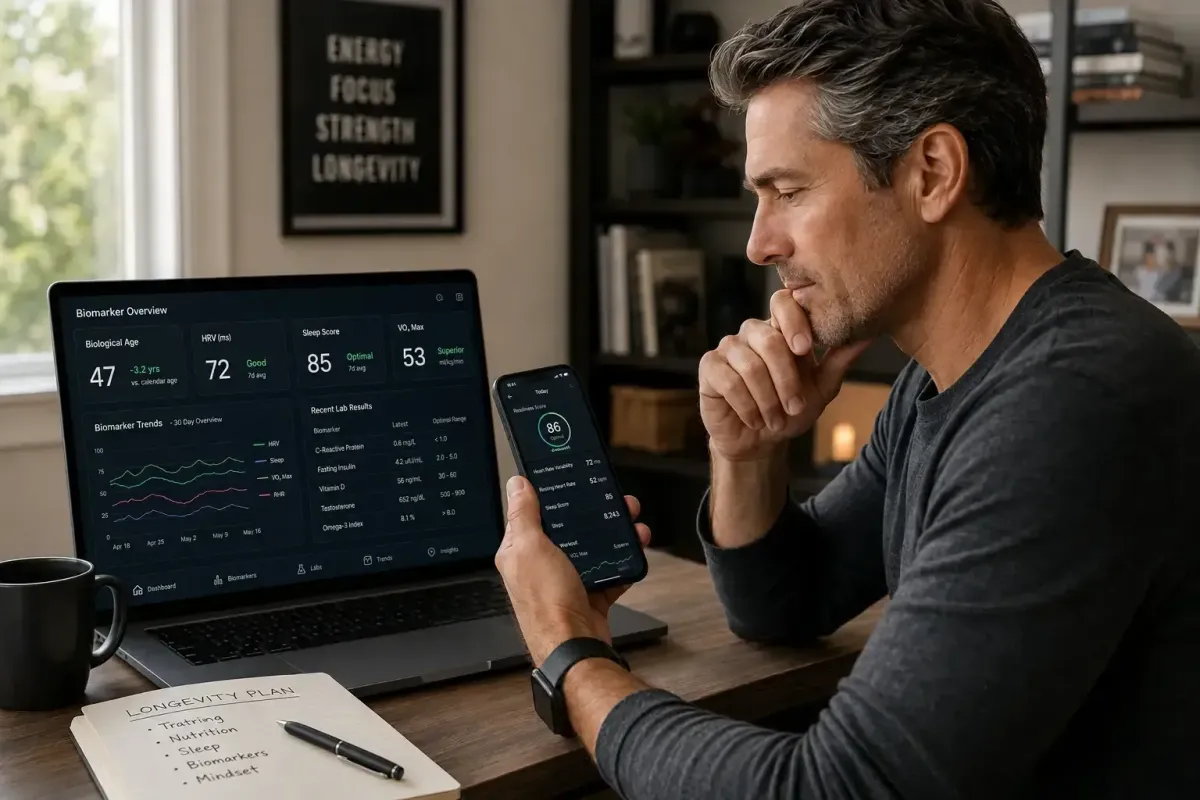
This patient is frequently already engaged with wearable health technology, has likely tried supplements or at-home testing kits, and arrives at a longevity clinic consultation having already done meaningful research. They are not being introduced to the concept of proactive health optimization for the first time. They are looking for a clinical partner sophisticated enough to take their existing health awareness further than a wearable device or a supplement subscription can.
What Motivates Them — Function, Not Appearance
The single most important distinction between the longevity patient and the traditional med spa patient is what they are optimizing for. The med spa patient is primarily motivated by how they look. The longevity patient is primarily motivated by how they function — their energy across a demanding workday, their recovery from exercise, their cognitive sharpness in high-stakes professional situations, their sleep quality, and increasingly, objective data points like inflammatory markers and biological age that they can track over time.
This distinction should shape every piece of marketing content a longevity clinic produces. Messaging built around appearance — 'look younger,' 'turn back the clock' — consistently underperforms with this patient relative to messaging built around function and data. A patient who is motivated by wanting to keep pace with their kids, perform at the top of their professional field into their sixties, or simply feel like themselves again responds to specific, functional language far more than to youth-focused aesthetic framing.
Where They Are Already Spending Money
Understanding where the longevity patient is already directing their health spend before they ever find a clinic reveals both the competitive landscape and the positioning opportunity. This patient is frequently spending on wearable devices that track sleep, heart rate variability, and activity. They are likely purchasing supplements — NAD+ precursors, adaptogens, and longevity-branded formulations are among the fastest-growing categories in the broader wellness market. Some have already tried at-home lab testing kits for hormone or metabolic markers.
None of these existing investments fully satisfy what a longevity clinic provides — clinical interpretation of the data, a licensed medical team capable of prescribing and adjusting protocols based on the results, and the ongoing monitoring relationship that a consumer device or supplement subscription cannot replicate. The marketing opportunity is positioning the clinic explicitly as the next step beyond what this patient has already tried on their own — the clinical partner that turns their existing health data and health spend into an actionable, medically supervised program.
The Messaging That Actually Converts This Patient
Specificity outperforms broad wellness language consistently with this demographic. 'Optimize your hormonal health' converts better than 'feel your best.' 'Track your biological age with quarterly comprehensive panels' converts better than 'personalized wellness plans.' This patient has encountered enough generic wellness marketing to be numb to it — what earns their attention is language that sounds like it came from someone who actually understands their specific physiology rather than a template that could apply to any health business.
Avoid youth-obsessed framing entirely. This patient does not want to be reminded of their age or told they can 'feel 25 again.' They want their current functional capacity protected and extended. Content and advertising that centers their present and future performance — rather than nostalgia for a younger version of themselves — consistently produces stronger engagement and higher-quality consultation bookings.
The Channels Where They Actually Are
This patient demographic is disproportionately active on professional networks, particularly for the higher-income segment of the longevity patient population — meaning organic and paid content on platforms with a professional audience skew often outperforms consumer-focused social platforms for this specific service category. Podcasts focused on longevity, biohacking, and executive performance are a genuine influence channel for this demographic and represent a meaningful sponsorship or guest-appearance opportunity for clinic owners willing to invest the time.
Local search remains critical — a significant share of this patient's journey ends with a search for a specific service in their specific market, which is exactly the search intent the pillar and cluster content architecture in this blog is built to capture. Physician referral relationships matter more for the more skeptical segment of this demographic, particularly patients who have had negative experiences with less rigorous wellness providers in the past and are specifically looking for a clinic that a trusted physician has vouched for.
To discuss the marketing strategy and patient acquisition approach for your specific market, visit altosconsultinggroup.com/survey.
Frequently Asked Questions
Is the longevity patient the same as the med spa patient?
They overlap at the margins but are motivated differently. The med spa patient is primarily focused on appearance. The longevity patient is primarily focused on function — energy, cognitive performance, recovery, and objective biological data. Marketing that works for one frequently underperforms with the other, which is why clinics serving both audiences under one brand need distinctly different messaging for each rather than a single generic wellness message.
What income level should I target for a longevity clinic?
Above-median household income for the specific market is the general benchmark, since the cash-pay membership pricing model requires discretionary income that lower-income households are less likely to have available for ongoing health optimization spending. The exact income threshold varies significantly by market and by the specific pricing tier structure the clinic adopts, which is why market-specific demographic analysis matters more than a single national income benchmark.
Does the longevity patient respond to social media marketing?
Yes, but the platform and content style matter significantly. Generic aesthetic-focused wellness content underperforms with this demographic. Data-driven, function-focused content — particularly content that demonstrates genuine clinical expertise rather than lifestyle marketing — performs meaningfully better. Professional networking platforms and podcast advertising often outperform consumer social platforms for the higher-income segment of this patient base specifically.
How is marketing to men different from marketing to women in this category?
Men in this demographic are frequently drawn in through performance and recovery framing — energy, strength, cognitive sharpness under professional pressure. Women are frequently drawn in through a combination of function and the hormonal health conversation, particularly around perimenopause and menopause, which represents one of the fastest-growing and most underserved segments of the longevity patient population. Both audiences respond to specific, data-driven language over generic wellness messaging, but the specific pain points worth leading with in marketing content differ meaningfully between them.