Why Regenerative Health Clinics Are Winning the Longevity Patient — And How to Make Sure Yours Is One of Them
The Longevity Patient Has Options. Most of Them Are Disappointing.
The patient who walks into a Regenerative Health Clinic in 2026 has typically tried several things before finding their way to you. They have purchased supplements. They have tried a med spa IV bar. They may have had a conversation with their primary care physician who told them their labs were normal and sent them home. They are still looking for a clinical relationship that meets them where they are — proactive, data-driven, and interested in optimization rather than disease management.
This is the opportunity. And it is one that a well-positioned Regenerative Health Clinic is structurally better equipped to capture than almost any other provider in the market right now. 73 percent of global consumers rate healthy aging as a top or very important priority, according to Innova Market Insights. The question is not whether the longevity patient exists. The question is whether your clinic is built to capture them.
Here is the structural case for why Regenerative Health Clinics are winning in the longevity medicine space — and what the clinics that win consistently do differently from those that do not.
The Four Structural Advantages of the Regenerative Health Clinic Model
1. Service Depth That Supports Integrated Protocols
A med spa offers aesthetic services. A supplement brand offers products. A primary care physician offers reactive care. A well-positioned Regenerative Health Clinic offers something none of these can match: an integrated clinical protocol that addresses multiple biological systems simultaneously.
NAD+ therapy supports mitochondrial resilience. GLP-1 programs address metabolic health. Hormone optimization builds hormonal resilience. Peptide protocols support tissue repair and inflammatory regulation. When these services are organized around a unified biological resilience goal — not sold as isolated treatments — a Regenerative Health Clinic offers a depth of clinical support that no single-modality competitor can replicate.
This service depth also creates natural cross-enrollment pathways. A patient who begins with a GLP-1 metabolic program discovers that hormone optimization amplifies their results. Every service becomes an entry point into a broader clinical relationship — which is the structural driver of long-term patient value.
2. Biomarker-Driven Consultation That Replaces Guesswork With Data
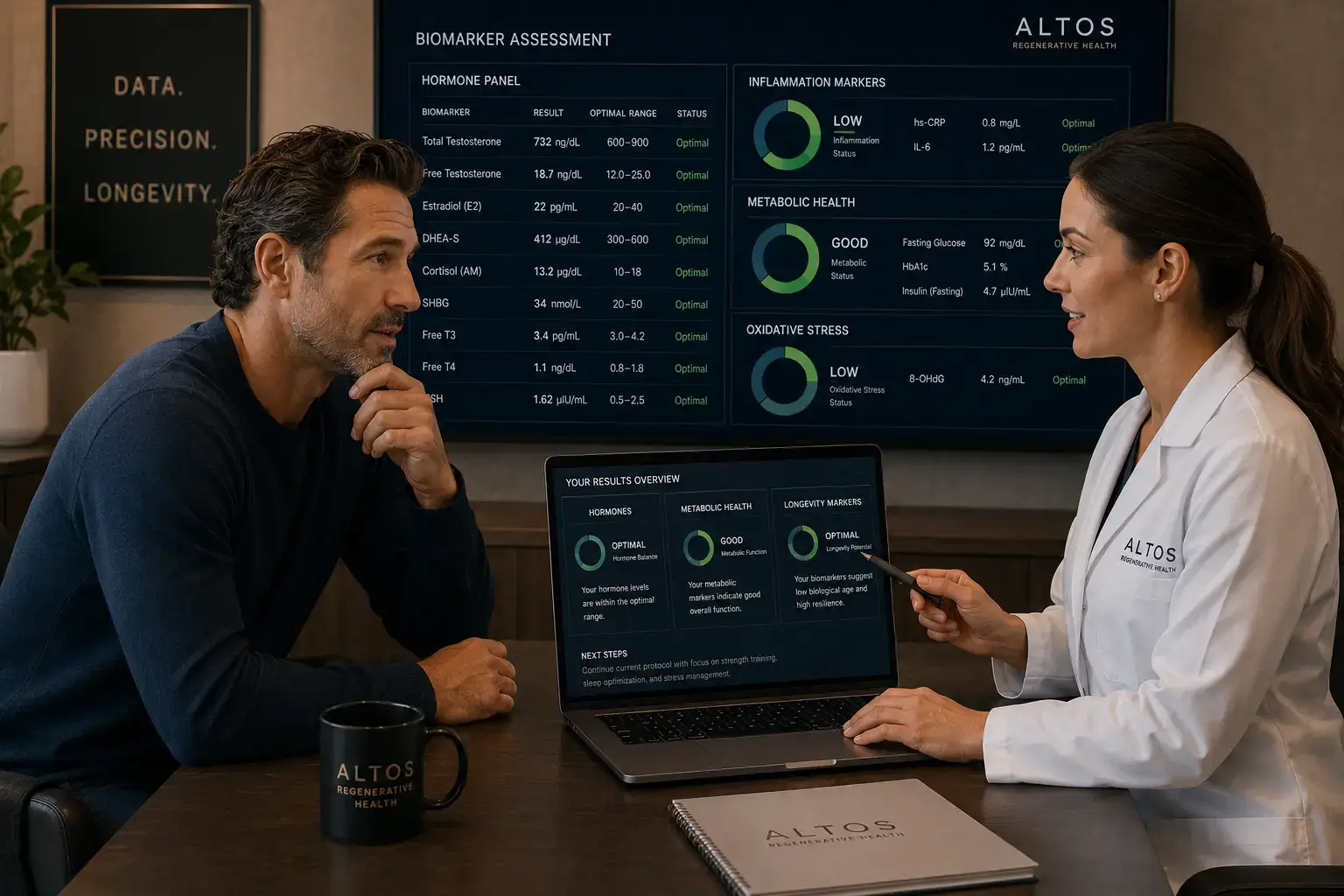
The longevity patient is data-driven. They want to see numbers. They want to know where they are, where they could be, and what the gap between those two positions looks like in measurable biological terms.
The clinics winning with this patient are the ones who can show them. Expanded biomarker panels — covering hormonal status, inflammatory markers, metabolic health, and mitochondrial function — give the clinic and the patient a shared picture of current biology. From that baseline, a protocol is not a sales pitch. It is a data-driven path to a goal that both parties can see and measure.
Patients who see measurable change in their biomarkers over time do not cancel their memberships. They refer their friends.
3. Membership Economics That Create Predictable Recurring Revenue
The Regenerative Health Clinic that sells individual services is a transactional business. The one that sells membership programs built around ongoing biological optimization is a recurring revenue business. The economic difference between these two models is not marginal — it is structural.
A transactional clinic resets its revenue every month. A membership clinic builds a compounding base of recurring income that grows with every new enrollment. In 2026, with longevity patient demand at historically high levels, the clinics that have built membership infrastructure — clear membership tiers, ongoing lab monitoring, regular protocol review — are generating the most predictable, defensible revenue.
The membership model also aligns the clinic's economic incentives with the patient's health outcomes. A membership clinic profits from a patient staying enrolled — which means staying well, seeing results, and continuing to invest in their optimization. This alignment is rare in healthcare. It is one of the most defensible features of the Regenerative Health Clinic business model.
4. Language Positioning That Attracts the Right Patient From the First Touchpoint
Clinics that have adopted the vocabulary of healthspan, biological resilience, optimization medicine, and precision longevity are not just describing their services more accurately. They are pre-qualifying their patients.
A patient who searches for a healthspan clinic or optimization medicine clinic is already at a different point in their journey than a patient searching for anti-aging treatments. They have done more research. They have higher intent. They are looking for a clinic that speaks their language — which is itself a credibility signal before they have even walked in the door.
What the Clinics That Win Do Differently at Launch
Altos Consulting Group has worked with more than 350 clinics across the United States. The ones that establish durable competitive positions quickly share a consistent set of launch decisions:
•They choose their market deliberately — identifying demographics, competitive density, and income levels that support premium positioning before signing a lease.
•They build membership infrastructure before they open — not as an afterthought once the initial transactional revenue feels insufficient.
•They invest in biomarker capabilities early — because the data-driven consultation is the single most powerful conversion and retention tool available to a longevity clinic.
•They adopt healthspan and biological resilience language from day one — in their website, advertising, consultation scripts, and patient communications.
•They position the consultation as a clinical conversation, not a sales event — asking about patient goals before presenting services, and using lab data to build the protocol recommendation.
These are sequencing decisions — and the ACG consulting engagement is built around ensuring that clinic owners make them in the right order, before they open, rather than retrofitting them after they are already operating.
To learn more about what the ACG launch process looks like from market validation through the first 60 days of operation, visit altosconsultinggroup.com/new-clinic-launch. To speak directly about your specific market and situation, schedule a no-obligation strategy call at altosconsultinggroup.com/survey.

Frequently Asked Questions
How is a Regenerative Health Clinic different from a med spa?
A med spa is primarily focused on aesthetic services — injectables, skin treatments, laser procedures. A Regenerative Health Clinic focuses on biological optimization — services that address the underlying health of the body's major systems, including mitochondrial function, metabolic health, hormonal balance, and inflammatory regulation. The patient profiles are different, the consultation structures are different, and the membership economics are fundamentally different. A well-positioned Regenerative Health Clinic is not competing with a med spa — it is serving a different patient with a different goal.
What makes a Regenerative Health Clinic competitive in a market with existing wellness providers?
Service depth, data-driven consultation, membership economics, and language positioning that resonates with the proactive health patient. These four structural advantages are difficult to replicate quickly by a general wellness provider. A yoga studio or supplement brand cannot offer biomarker-driven protocol design. The competitive moat is built through the combination of clinical capability, consultation sophistication, and positioning precision.
How long does it take to establish competitive positioning in a new market?
The clinics that establish strong competitive positions fastest are those that enter with deliberate market selection, clear positioning, and a launch marketing strategy designed to build local authority before opening day. In ACG's experience across more than 350 clinic launches, clinics that enter with this intentionality establish recognizable market presence within the first 90 days of operation. Clinics that improvise positioning after opening typically spend 12 to 18 months correcting the initial trajectory.
Written by Nova, Senior Content Strategist at Altos Consulting Group.