Home / Clinics Supported / Metabolic & Weight Loss
Open a Medical Weight Loss Clinic Built on FDA-Approved GLPs.
The compounded shortcut is closed. The weight loss clinics that win now build a metabolic program around FDA-approved medications, and ACG helps you open an independent one.
Book a Strategy CallNo medical background is required to own the business. An independent, state-licensed Medical Director directs all clinical care.
Weight Loss Clinic Demand Is Real,
and So Is the Commoditization Risk
Patients search for GLP-1 medications by name: tirzepatide alone draws 1 million to 10 million U.S. searches a month (Google Keyword Planner).
Much of that market once ran on compounded copies sold below the branded price, a model now closed for routine use. The clinics built on price are rebuilding; the ones built on a real metabolic program are still standing.
Our new clinic launch process helps you open your own, without the lifetime royalties of a weight loss clinic franchise.
ACG builds metabolic health partners, not semaglutide dispensers. That decides whether you have a patient relationship or a one-time transaction.
Google Keyword Planner, U.S., Sep 2025 to Aug 2026, in the ranges Google reports. Local demand varies by market.
What Separates a Weight Loss Clinic From
a GLP-1 Vending Machine
Metabolic coaching, body composition tracking and muscle preservation give patients a reason to stay beyond the prescription. That program is where the revenue lives; see what to offer beyond GLP-1.
Wegovy and Zepbound, FDA-approved for chronic weight management, prescribed and managed by your Medical Director.
Baseline and follow-up panels that make the clinic a metabolic health partner, not just a prescriber.
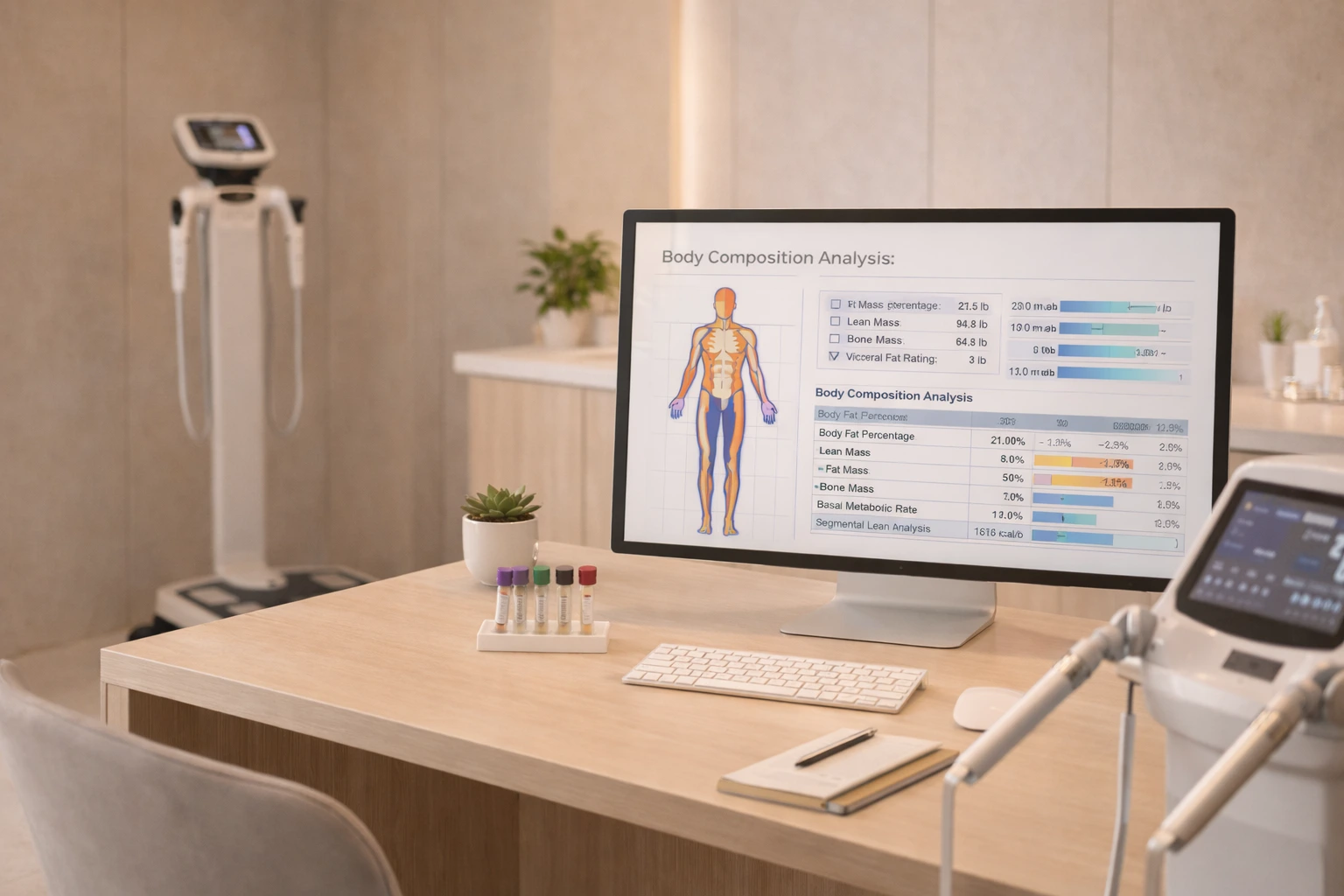
DEXA or bioimpedance scans that show patients fat and lean mass changing between visits.
Protein targets, resistance training and lean-mass monitoring. AOD-9604, often marketed for this, cannot be lawfully compounded; see Peptide Therapy.
Structured dietary support that keeps patients coming back beyond the prescription.
Patients who see progress are natural candidates for hormone optimization and longevity care, lines ACG can help you add later.
Where Compounded GLP-1 Stands for Weight Loss Clinics
Compounded semaglutide is not a question under review. The shortages that made routine compounding lawful have ended, the enforcement deadlines have passed, and the FDA is moving to close the remaining bulk pathway.
The FDA has said a lower price is not a clinical need.
A clinic built on the price gap between a compounded copy and the branded product no longer has a business model. It has a transition problem.
The FDA declared the shortages resolved: tirzepatide in December 2024, semaglutide in February 2025. That ended routine compounding.
Wind-down deadlines followed in 2025. Courts denied the compounders' injunctions, and in August 2026 the Fifth Circuit affirmed the FDA in both cases.
On April 30, 2026 the FDA proposed excluding semaglutide, tirzepatide, and liraglutide from the 503B bulks list, citing no clinical need.
A 503A pharmacy may still compound for a prescriber-documented need, such as an ingredient allergy. Beyond that, compounded semaglutide and tirzepatide require an FDA-regulated clinical study: an IRB-approved protocol under an IND. Routine copies of an approved product remain off-limits.
Current as of October 2026, when we found no final FDA determination on the April 2026 proposal. Check for one before any decision, and confirm the legal basis for any compounded prescription with your pharmacy of record and counsel. ACG is a business consulting firm; this is not legal, medical, or regulatory advice.
Medical Weight Loss Clinic Consulting,
From Market to Opening Day
GLP-1 prescribing changed faster than the industry's marketing did. ACG builds your clinic on the approved products and the program around them, with marketing planned for platform rules.
Demand, competitors and pricing in your market, then a program on FDA-approved GLP-1s priced so the margin comes from the care.
Your state's ownership rules, the Medical Director agreement and the prescribing structure, plus the IRB application and IND if you choose the clinical study route.
Intake, informed consent and lab monitoring, with GLP-1 protocols set by your Medical Director.
A strategy built for platform restrictions and claim limits, with no price-against-brand compounding messages. Marketing execution is a separate engagement.
ACG keeps you current on GLP-1 changes in compounding, prescribing and marketing rules.
Questions About Opening
a Medical Weight Loss Clinic
The questions founders ask before opening a weight loss clinic. Anything else, ask on the strategy call. No pressure, no pitch.
View All FAQsCan my clinic still offer compounded semaglutide or tirzepatide?
Do I need to be a physician to open a medical weight loss clinic?
Should I buy a weight loss clinic franchise or open my own?
How does a weight loss clinic stay profitable without compounded GLP-1?
How long does it take to open a medical weight loss clinic?
What staff does a medical weight loss clinic need?
Next Steps for Your Weight Loss Clinic

Open Your Medical Weight Loss Clinic With the Team Behind Hundreds of Launches
Talk with Grayson Miller about GLP-1 demand in your market, the compliance picture and the program that sets your clinic apart. No pitch. No obligation.
- Local demand review
- An approved-product program
- An honest read on fit
ACG is a consulting and advisory firm, not a medical practice; an independent, state-licensed Medical Director directs all clinical care. Results are not guarantees of income. Individual outcomes vary. The 60-day target begins from clinic keys received, market and regulatory conditions permitting.
Structured to keep you on the right side of the line.
Knowing the rules is the foundation of every clinic we help launch.
Your Medical Director Directs Care
You own and run the business. An independent, state-licensed Medical Director makes every clinical, prescribing and treatment decision, structured for your state's Corporate Practice of Medicine laws. We connect you to a vetted network; you retain your own provider.
We Know the Regulatory Lines
PRP, peptides, GLP-1 medications and cellular products each carry federal and state rules, and not every product or use is FDA-approved. Exosomes for therapeutic use are not FDA-approved at all, and we steer you away from them. Your menu and marketing are built to hold up to FDA, FTC and state medical board scrutiny.
No Hype. No Guarantees.
We show real ranges and never promise an income or a clinical outcome. What you earn depends on your market, your capital and your execution.
Altos Consulting Group is a business consulting and advisory firm, not a medical practice, and does not provide, prescribe or sell any drug, biologic, device or therapy. The FDA has stated there are currently no FDA-approved exosome products for the treatment of any disease; clinic owners are responsible for the compliance of every product, therapy and claim. See the full regulatory notice below.