
Common Planning Errors That Delay Regenerative Health Clinic Launches
Most delays in launching a Regenerative Health Clinic don’t come from bad luck or external obstacles. They come from planning errors that compound quietly until timelines collapse.
Founders often assume delays are caused by vendors, permitting, or market conditions. While those factors matter, the reality is more uncomfortable: most launch delays are self-inflicted. They stem from unclear decisions, poor sequencing, and planning that prioritizes speed over structure.
This article breaks down the most common planning errors that delay regenerative health clinic launches, explains why they happen, and shows how founders can avoid them without adding unnecessary complexity.
If you’re looking for the full launch framework this blog supports, review Altos’ New Clinic Process here:
https://altosconsultinggroup.com/new-clinic-launch
Why Planning Errors Hurt More Than Execution Errors
Execution mistakes are visible and fixable. Planning mistakes are subtle and expensive.
When planning is flawed, every execution step that follows becomes slower, more expensive, or both. Founders then react by working harder instead of correcting the underlying issue — which creates burnout without progress.
Strong regenerative health clinic consulting focuses on planning because it’s the highest-leverage phase of the entire launch.
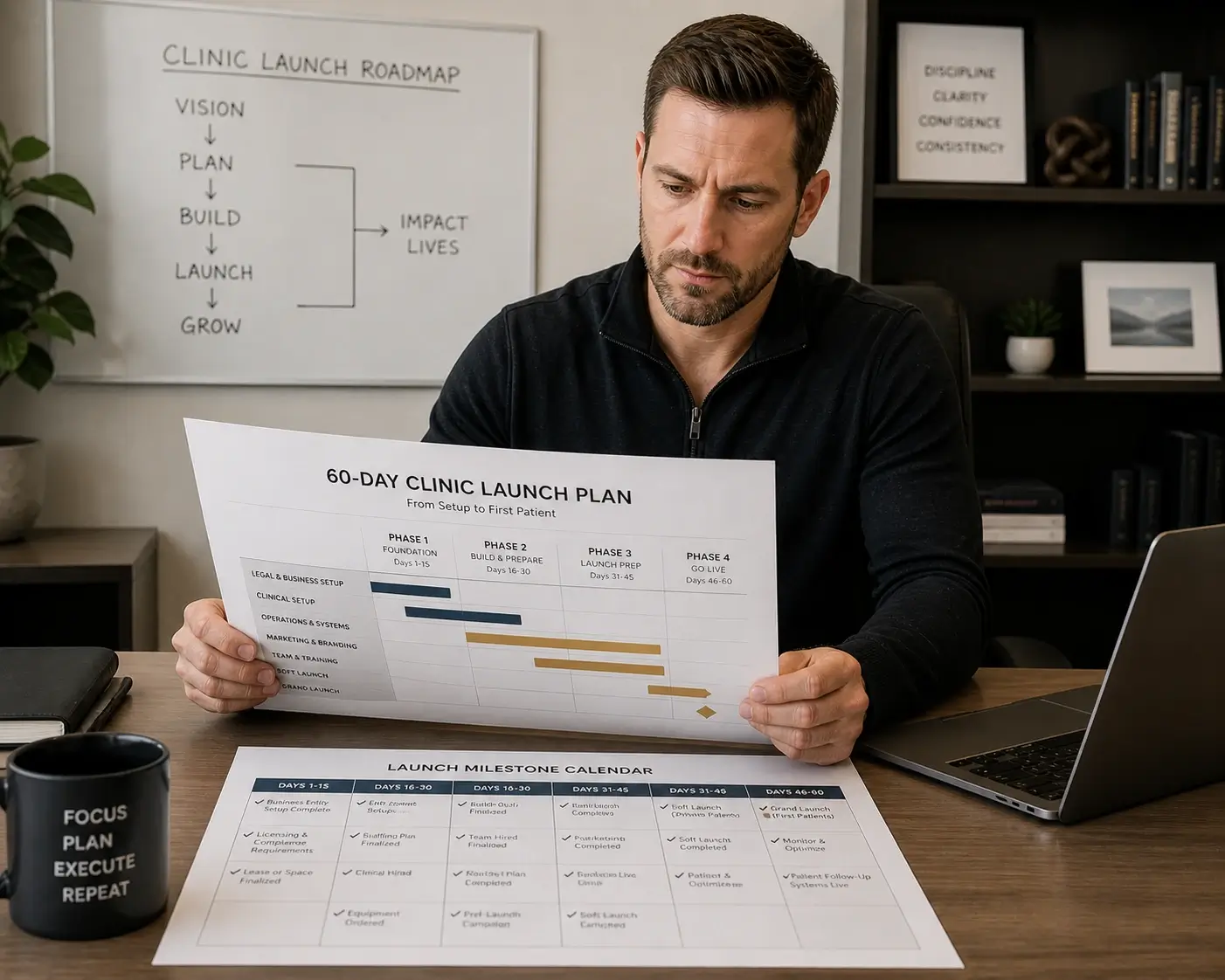
Error #1: Treating “Launch” as a Single Event Instead of a Process
One of the most common planning errors is thinking of the launch as a date on the calendar.
Founders often ask:
“When can we open?”
“What’s our launch date?”
“How fast can we go live?”
These questions are backwards. A clinic opens when dependencies are resolved, not when a date is chosen.
When founders fixate on a date too early:
Decisions are rushed
Shortcuts are taken
Dependencies are ignored
Rework becomes inevitable
A regenerative health clinic launch is a sequence, not a moment. When planning reflects that reality, timelines stabilize instead of slipping.
Error #2: Starting With Aesthetics Instead of Operations
Another major delay driver is prioritizing what feels tangible and exciting — branding, décor, logos, websites — before operational clarity exists.
This creates two problems:
Operational decisions are forced to conform to aesthetic choices
Branding has to be revised when operations change
Founders end up redesigning, rewriting, or rebuilding assets they should have delayed.
Regenerative health clinic setup should always begin with:
Workflow design
Staffing structure
Space requirements
Operational roles
Aesthetics should support operations, not define them.
Error #3: Locking a Lease Before Confirming Workflow Fit
Physical space decisions are some of the hardest to reverse — and some of the most common sources of delay.
Founders often:
Fall in love with a space
Sign a lease quickly to “secure the location”
Discover later that the space doesn’t support the intended workflow
This leads to:
Costly build-out changes
Operational compromises
Delays while layouts are reworked
Proper planning requires at least a high-level workflow model before committing to space.
This is where regenerative health clinic business consulting prevents months of unnecessary delay.
Error #4: Assuming Staff Will “Figure It Out”
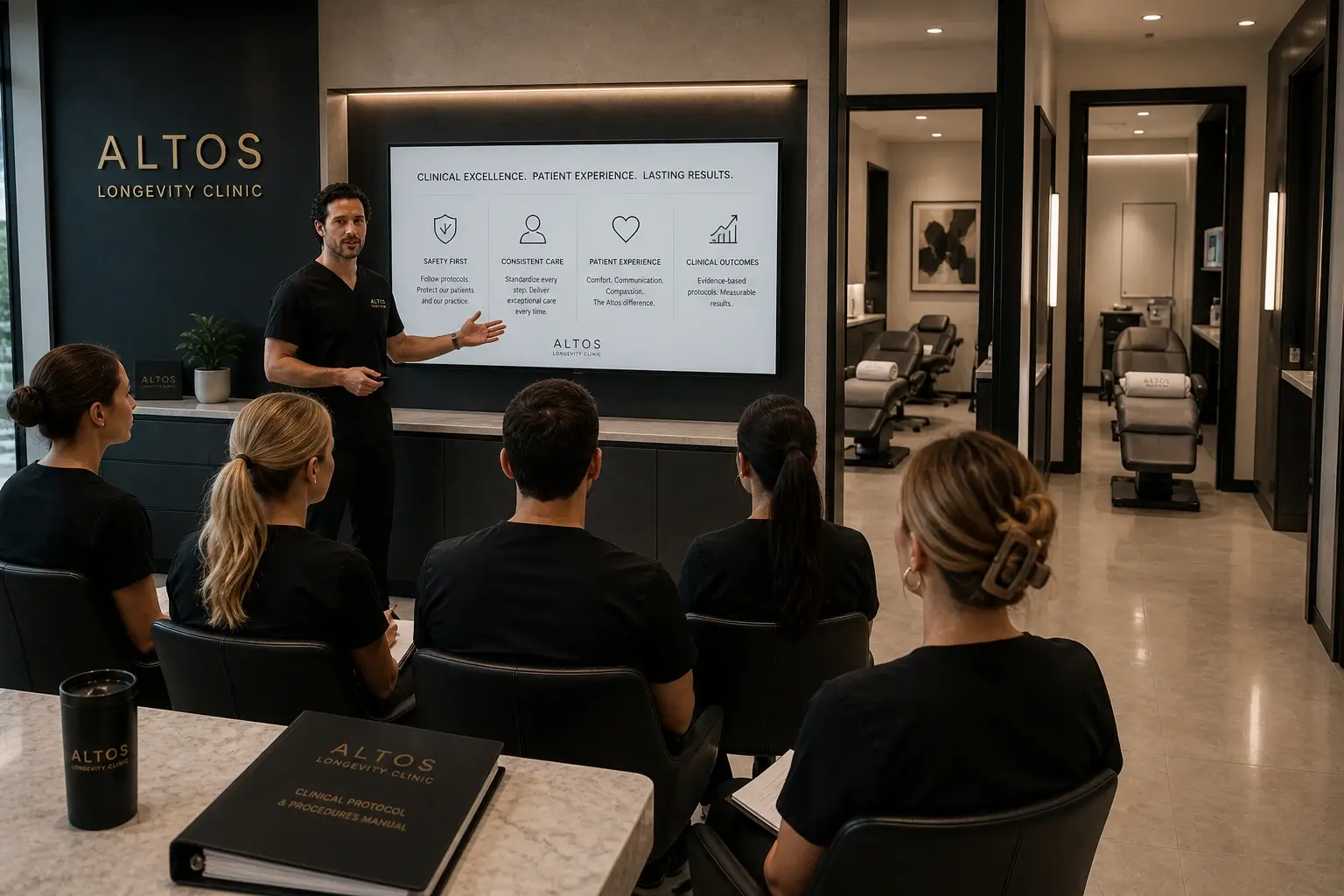
Staffing-related delays are rarely about hiring speed. They’re about unclear expectations.
Founders delay launches by:
Hiring before defining roles
Training before workflows are finalized
Assuming smart staff will improvise correctly
When staff lacks clarity:
Training must be repeated
Mistakes multiply
Founder time is consumed fixing issues
Launch confidence drops
Planning should define:
Who does what
When handoffs occur
What staff can and cannot say
How issues are escalated
Staff should be trained once systems are ready — not before.
Error #5: Overestimating What Can Be Done in Parallel
Parallel work accelerates progress only when dependencies are respected. Founders often assume everything can happen at once.
Common examples:
Marketing setup before intake systems exist
Staff training before workflows are locked
Equipment purchases before space is finalized
This leads to rework and delays that feel mysterious but are completely predictable.
The solution is dependency mapping — a core element of professional regenerative health clinic consulting.
Error #6: Planning in Silos Instead of Systems
Founders often plan in isolation:
Operations are planned separately from staffing
Staffing is planned separately from systems
Systems are planned separately from space
This creates misalignment:
Systems don’t support staff
Staff doesn’t support workflow
Space doesn’t support systems
Planning must treat the clinic as a single system, not a collection of tasks.
This systems-based planning reduces delays because fewer decisions have to be revisited.

Error #7: Ignoring Decision Lock Points
Founders delay themselves by:
Keeping options open too long
Avoiding commitment
Waiting for “perfect” information
This creates a bottleneck where downstream tasks stall.
Good planning identifies:
Which decisions must be locked
When they must be locked
What depends on them
Progress requires commitment, not perfection.
Error #8: Treating Marketing as Separate From Operations
Marketing is often planned in isolation, which leads to misaligned timelines.
Founders launch visibility before:
Staff is trained
Intake is smooth
Follow-up is consistent
The result:
Missed opportunities
Poor early impressions
Slower momentum
Delayed stabilization
Marketing should be timed as part of the regenerative health clinic launch sequence — not bolted on independently.
Error #9: Underestimating Pre-Launch Testing
Many founders assume testing is optional or can happen “live.”
Skipping testing leads to:
Scheduling breakdowns
Intake confusion
Staff uncertainty
Opening-week chaos
Pre-launch testing should simulate:
A full day of operations
Multiple patient scenarios
Errors and exceptions
Testing reveals problems when they’re cheap to fix — not when they’re public.

Error #10: Mistaking Activity for Progress
Founders often stay busy without moving forward.
They:
Research endlessly
Change plans repeatedly
Add tools instead of clarity
This creates the illusion of momentum while timelines slip.
Progress comes from:
Locked decisions
Completed dependencies
Clear next steps
This is why founders benefit from a defined launch process instead of self-directed trial and error.
Why These Errors Are So Common
These planning mistakes aren’t about intelligence. They’re about context.
Most entrepreneurs:
Haven’t launched clinics before
Don’t see how decisions interact
Underestimate operational complexity
Overestimate speed gains from rushing
That’s why how to open a regenerative health clinic is rarely solved by effort alone. It requires structure.
Altos’ role is to reduce blind spots and help founders move forward with clarity instead of guesswork.
If you want to understand how Altos structures planning to avoid these delays, start here:
https://altosconsultinggroup.com/new-clinic-launch
Final Takeaway: Planning Errors Are Predictable — and Preventable
Delayed launches don’t happen randomly. They follow patterns.
When founders:
Respect sequencing
Lock decisions intentionally
Plan systems instead of tasks
Timelines shorten, stress drops, and launches stabilize.
If you’re early in planning or already feeling delayed, the fastest fix is often stepping back and correcting the plan — not pushing harder.
For more founder-focused guidance, visit the Altos blog:
https://altosconsultinggroup.com/blog
