How to Open a Stem Cell Clinic in 2026: The Compliant Business Model Built on FDA's Same Surgical Procedure Exception
A Regulatory-First Business Guide for Entrepreneurs Entering One of the Most Scrutinized Categories in Regenerative Health
The Stem Cell Clinic Category Has a Credibility Problem. That Is Exactly Where the Opportunity Is.
Nearly 170 direct-to-consumer stem cell businesses were operating in just six southwestern states, part of a nationwide landscape of hundreds of businesses offering stem cell interventions that have never gone through FDA premarket approval, according to a 2019 peer-reviewed study in Stem Cell Reports. A companion study of the marketing practices at these clinics found that most of the research these businesses cite is not randomized clinical trial evidence but what researchers term "ambiguous evidence": information with some scientific basis whose interpretation is left almost entirely to the patient trying to evaluate it.
This is the honest starting point for anyone evaluating the stem cell clinic business opportunity in 2026. The category has genuine, well-documented patient demand: musculoskeletal is the largest application segment in the stem cell category (Coherent Market Insights, 2024), patients are actively searching for alternatives to surgery, and the same demographic and financial dynamics that make every other regenerative health category attractive apply here too. It also has a well-earned reputation problem, built by operators who blur the line between a narrow, genuinely compliant clinical model and a much broader, much riskier one that regularly draws FDA warning letters and state medical board scrutiny.
The opportunity in 2026 and beyond is not to compete with the operators contributing to that reputation problem. It is to build the version of this business that operates unambiguously within the compliant framework, communicates that distinction clearly to patients, and can capture the demand that exists specifically because so few local operators are doing this correctly. Altos Consulting Group is aware of the regulatory requirements this category carries and structures every stem cell clinic engagement to operate within them, not around them. See what it takes, with ACG, to open a stem cell clinic.
Altos Consulting Group (ACG) is a consulting firm that helps entrepreneurs open and grow cash-pay clinics across 13 clinic types, stem cell clinics among them. ACG is not a medical practice: it does not provide care, and every clinical decision rests with independent, state-licensed providers. Our team has launched hundreds of clinics.
What 'Stem Cell Clinic' Actually Means Under FDA Regulation
The FDA regulates cell-based products under a framework called Human Cells, Tissues, and Cellular and Tissue-Based Products, commonly abbreviated HCT/P. Every HCT/P a clinic might offer falls into one of two regulatory paths under this framework unless an exception applies, and the distinction between them is the single most important thing a new clinic owner needs to understand before making any other business decision.
The first path is Section 351 of the Public Health Service Act, the same regulatory pathway that governs drugs and biologics. Products regulated this way require an Investigational New Drug application, formal clinical trials, and premarket approval before they can be legally administered to patients outside a research setting. This is not a pathway a cash-pay clinic pursues. It is the multi-year, multi-million-dollar process that pharmaceutical and biotech companies use to bring an approved cell therapy to market.
The second path is Section 361 of the Public Health Service Act, paired with the regulations in 21 CFR Part 1271. Products that meet all four criteria in section 1271.10(a), among them minimal manipulation and homologous use, qualify for regulation solely under Section 361 and do not require premarket FDA approval; miss even one, and a product is a Section 351 biological product. Separate from both paths is the same surgical procedure exception for autologous tissue, and qualifying for it depends on meeting specific, narrow criteria that this post covers in detail below.
The Same Surgical Procedure Exception: The Pathway That Makes This Business Model Possible
The specific regulation that governs many compliant stem cell clinics is 21 CFR 1271.15(b), commonly called the same surgical procedure exception. In the FDA's own language, an establishment is not required to comply with the requirements of Part 1271 if it "removes HCT/P's from an individual and implants such HCT/P's into the same individual during the same surgical procedure."
The FDA has published detailed guidance clarifying exactly how this exception applies, and it sets out three specific criteria that must all be met. First, the tissue must be autologous: removed from and implanted back into the same individual, with no donor material involved. Second, removal and implantation must occur within the same surgical procedure, which the guidance generally describes as "a single operation performed at the same establishment." Third, and most technically important, the tissue must remain "such HCT/P" throughout processing, meaning the only steps performed are rinsing, cleansing, sizing, or shaping. The FDA has been explicit that this is a narrower standard than the general "minimal manipulation" test used elsewhere in the same regulation, which is why the specific processing method a clinic uses matters enormously to whether it genuinely qualifies for the exception.
This is not a technicality a clinic owner can safely skip past. It is the entire legal foundation the compliant stem cell clinic business model is built on, and the core of whether it is legal to open a stem cell clinic. Get it right, and a clinic can offer autologous procedures that qualify for the exception without the premarket approval burden that makes the drug and biologic pathway commercially impossible for a cash-pay practice. Get it wrong (by using processing methods that go beyond rinsing, cleansing, sizing, or shaping, or by sourcing material from a donor rather than the patient) and a clinic is operating outside the exception entirely, exposed to exactly the enforcement risk that has defined this category's reputation problem.
The Compliant Service Model: What Actually Qualifies
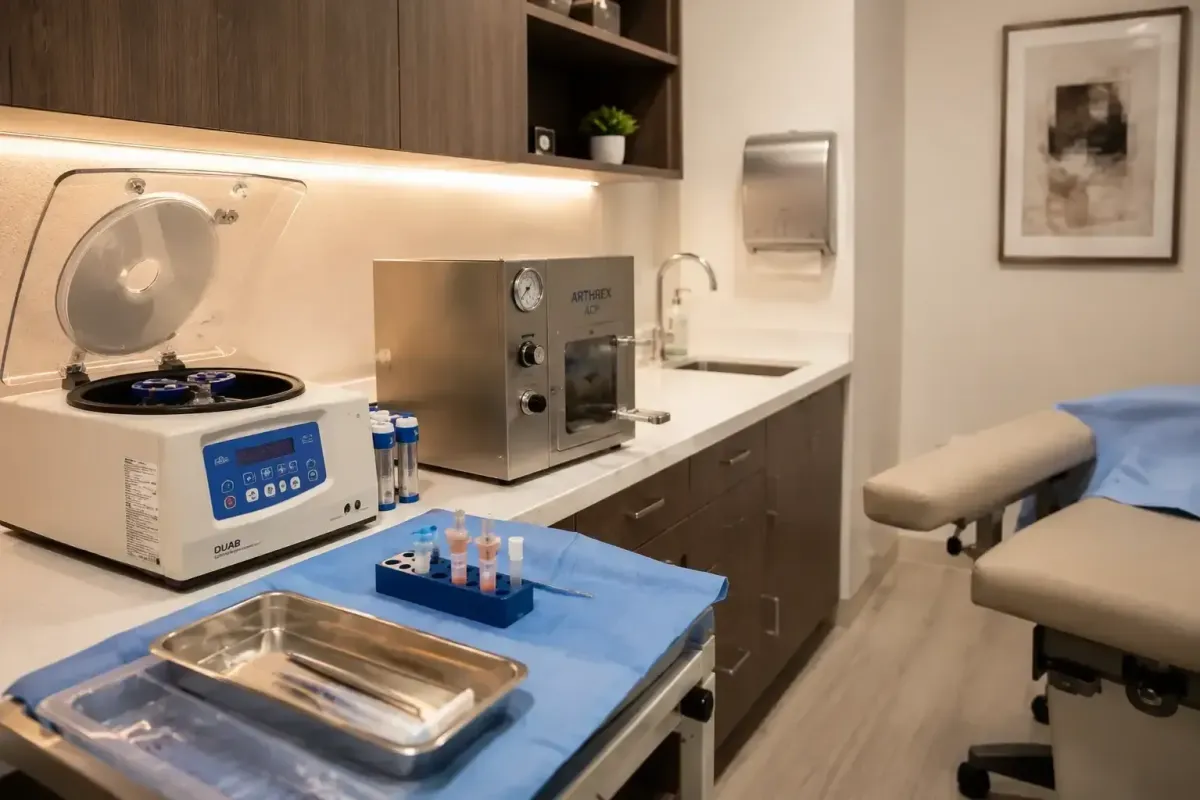
Two modalities account for many of the autologous procedures offered at stem cell and orthobiologics clinics in the United States. Both are sourced from the patient's own body, processed through centrifugation to concentrate the relevant cell populations, and re-implanted within the same procedure, but neither qualifies for the same surgical procedure exception automatically: FDA's guidance accepts centrifugation or filtration solely to remove debris, while processing for cell isolation or enzymatic digestion generally takes a tissue outside it.
Bone Marrow Aspirate Concentrate
Bone marrow aspirate concentrate, commonly abbreviated BMAC, is drawn from the patient's iliac crest, processed through centrifugation to concentrate the marrow's nucleated cells, platelets, and growth factors (mesenchymal stem cells are a small share of those cells), and reinjected into the target joint or tissue in the same procedure. BMAC has one of the deepest clinical research bases among autologous orthobiologic products offered in a cash-pay setting. Under 21 CFR 1271.3(d), minimally manipulated bone marrow for homologous use, not combined with another article, is not an HCT/P at all, so whether a BMAC protocol fits that definition is for your medical director and counsel to decide.
Adipose-Derived Concentrate
Adipose-derived concentrate, sometimes called mini lipoaspirate or referenced by the cell fraction it yields, stromal vascular fraction, is harvested through a small-volume liposuction procedure, processed through mechanical or enzymatic methods to concentrate the regenerative cell population present in fat tissue, and reinjected in the same procedure. Adipose tissue yields a higher concentration of mesenchymal stem cells per volume than bone marrow, which is part of why this modality has grown in popularity, but it also carries more regulatory scrutiny around processing method: FDA's guidance says isolating cells, whether by enzymatic digestion or by mechanical disruption (such as isolating the stromal vascular fraction), generally takes adipose tissue beyond what the same surgical procedure exception's narrow "rinsing, cleansing, sizing, and shaping" standard allows. This is a technical distinction that requires genuine legal and clinical expertise to navigate correctly, not a judgment call made at the equipment vendor level.
Both modalities serve largely the same patient population covered in depth on our page about what it takes to open a joint pain clinic: adults living with chronic joint degeneration or a tendon injury, and the active recovery patient population seeking a non-surgical alternative. A stem cell clinic and a joint restoration clinic are, in practice, frequently the same business with overlapping service menus.
What Does Not Qualify, and Why It Is the Single Biggest Risk in This Category
The same academic research cited earlier in this post documents that a meaningful share of the clinics operating in this space source material that does not meet the exception's autologous standard at all. Laboratory testing has repeatedly found that many commercially marketed "amniotic" and "umbilical cord" stem cell products (donor-derived, allogeneic material sold to clinics for injection) contain no living stem cells at all by the time they reach the patient, despite being marketed under the same terminology as genuine autologous procedures, according to a 2021 review in The American Journal of Sports Medicine.
This distinction is not academic. It is the exact fault line the FDA's enforcement activity in this category has concentrated on. Allogeneic products (anything sourced from a donor rather than the patient being treated) do not qualify for the same surgical procedure exception under any circumstances, because that exception explicitly requires autologous use. FDA treats birth-tissue and umbilical-derived products marketed for uses it considers non-homologous, such as orthopedic conditions, as Section 351 products, so a clinic offering donor-derived amniotic or umbilical cord products as "stem cell therapy" for those uses is operating under the Section 351 drug and biologic pathway whether it intends to or not, without the premarket approval that pathway requires.
Culture-expanded cells (material grown and multiplied in a lab setting before reimplantation) carry the same exposure. So does any marketing claim that a procedure treats, cures, or reverses a specific named disease, since disease claims draw FTC and state action whatever the FDA route. A clinic that processes tissue correctly but then markets it as a cure for autoimmune disease, neurological conditions, or any other named disease has created a second, entirely separate compliance problem regardless of how clean the clinical procedure itself is.
The compliant version of this business is narrower than the version much gray-market marketing suggests exists. It is autologous. It stays within the same surgical procedure. It is processed through rinsing, cleansing, sizing, or shaping only, or, for bone marrow, fits 21 CFR 1271.3(d). It is marketed without disease-cure language or promises of what a procedure does for a condition, commonly inside a joint and musculoskeletal program. Every clinic ACG helps launch in this category is built to operate precisely within those boundaries.

The Patient and Market Opportunity
The patient who seeks out a compliant stem cell clinic overlaps substantially with the joint and musculoskeletal clinic patient covered elsewhere on this blog: an adult managing chronic joint degeneration, a tendon or ligament injury, or persistent inflammatory pain who has exhausted conservative management and is evaluating options short of surgery. What distinguishes the stem cell-specific segment of this patient population is the degree of research they have already done. This patient has typically encountered the term stem cell therapy repeatedly, has some awareness that the category includes both legitimate and questionable operators, and is actively trying to distinguish between them before committing to treatment.
This creates a genuine competitive opening for a clinic willing to lead with its compliance posture rather than treating it as fine print. A website, consultation framework, and informed consent process that explicitly explains the clinic's autologous model, cites the specific regulatory framework the clinic operates under, and draws a clear contrast with donor-derived or lab-expanded alternatives is speaking directly to the skepticism this patient already carries. That transparency can be a conversion advantage, not a liability, precisely because so few competitors in this specific category are willing to be this specific about how their procedures are regulated.
Even one of the largest branded networks in this category has struggled with exactly this transparency question, a pattern examined in Stem Cell Clinic vs. Franchise, which looks at what happened when marketing decisions made at the network level exposed dozens of affiliated locations at once. It is precisely the kind of exposure an independently owned, compliance-forward clinic does not carry, and it is a genuine differentiator worth making explicit to a patient who is already trying to tell the legitimate operators apart from the rest. Franchises also typically charge a franchise fee plus royalties of 5 to 8% of revenue for the life of the agreement; the full comparison is in independent clinic vs. franchise.
Building the Compliance Infrastructure Before You See a Patient
The medical director relationship carries more weight in a stem cell clinic than in almost any other regenerative health category covered on this blog, because the medical director, with healthcare counsel, determines whether a given processing protocol genuinely stays within the narrow same surgical procedure exception. A medical director for this clinic type needs specific, demonstrable comfort with the HCT/P regulatory framework, not simply a willingness to sign a supervision agreement. ACG introduces you to vetted Medical Directors with this specific background, through partner networks that cover all 50 states, rather than treating the role as interchangeable across clinic types.
Informed consent documentation for a stem cell clinic needs to address the investigational and unapproved status of the specific procedure being offered, in language that is accurate to the regulatory category the clinic is actually operating under. Chain-of-custody documentation (proving that the tissue implanted was in fact removed from and returned to the same patient within the same surgical procedure) is not optional record-keeping. It is the evidentiary basis for the entire regulatory exception the clinic depends on.
Marketing materials require a level of discipline that goes beyond the general no-efficacy-claims standard ACG applies across every clinic type. Language implying that a procedure will regenerate cartilage, reverse a diagnosed condition, or produce a guaranteed outcome creates liability specific to this category's heightened FDA enforcement posture. For every stem cell clinic ACG helps launch, the marketing strategy is planned to this standard, and healthcare counsel reviews the materials before anything goes live. Paid search is limited too: Google does not allow ads that promote stem cell therapy, other cell therapies or PRP; in the U.S. the exception is an FDA-licensed or approved therapy, advertised by the license holder (its cell and gene therapy policy). New patients come mostly through organic search, owned content and referrals; ACG plans that SEO and content strategy, and marketing execution is a separate engagement.
What ACG Provides
ACG's launch engagement for a stem cell clinic covers market validation for the specific orthopedic and musculoskeletal patient demographic in the target market, entity structure, medical director introduction to a practitioner with genuine HCT/P regulatory experience, equipment sourcing at preferred pricing for the processing systems your medical director and counsel approve, same surgical procedure documentation support with medical director sign-off, intake and consent workflows for your medical director to approve, branding and market positioning, marketing strategy, and 60 days of post-launch advisory support. Websites and marketing execution are separate engagements. For the startup budget, see how much it costs to open a stem cell clinic.
To learn more about the full ACG launch process, see our wellness clinic launch consulting. To start the conversation about the stem cell clinic opportunity in your specific market, book a free 30-minute strategy call.
Questions About Opening a Stem Cell Clinic
Is it legal to open a stem cell clinic in the United States?
Yes, when the clinic operates within the same surgical procedure exception under 21 CFR 1271.15(b): autologous tissue, processed through rinsing, cleansing, sizing, or shaping only, and re-implanted within the same procedure. This is the pathway that allows a cash-pay clinic to offer these procedures without the premarket FDA approval required for drugs and biologics. Operating outside this narrow standard (through donor-derived material, lab-expanded cells, or processing methods beyond what the exception allows) moves a product into the drug and biologic regulatory pathway unless it meets all four criteria in section 1271.10(a) or, for bone marrow, fits 21 CFR 1271.3(d), and that pathway requires FDA approval that a cash-pay clinic realistically cannot pursue.
What is the difference between BMAC and amniotic or umbilical cord stem cell products?
BMAC and adipose-derived concentrate are autologous: sourced from and returned to the same patient in the same procedure, the starting point for the same surgical procedure exception, though how each is processed still decides whether it qualifies. Amniotic and umbilical cord products are allogeneic, meaning they are sourced from a donor rather than the patient being treated. Allogeneic products do not qualify for the same surgical procedure exception under any circumstances. Independent research has also found that many commercially available amniotic and umbilical cord products marketed as stem cell therapy contain no living stem cells by the time they reach the patient, which is part of why this category has drawn significant regulatory scrutiny.
Do I need FDA approval to offer stem cell therapy at my clinic?
Not if the clinic's procedures qualify for the same surgical procedure exception: autologous tissue, minimal processing limited to rinsing, cleansing, sizing, or shaping, re-implanted within the same procedure. Procedures that fall outside this standard need no premarket approval only if each product meets all four criteria in section 1271.10(a) or, for bone marrow, fits 21 CFR 1271.3(d); otherwise they require the same premarket approval pathway used for drugs and biologics, which involves an Investigational New Drug application and formal clinical trials, a process that is not commercially viable for a cash-pay clinic. This is precisely why the specific tissue source and processing method a clinic uses is the single most important compliance decision it makes.
Can I claim that stem cell therapy cures or treats a specific condition?
No. Marketing language claiming that a procedure cures, reverses, or guarantees improvement in a diagnosed medical condition creates significant regulatory exposure, independent of whether the underlying procedure itself is compliant. Homologous use (the product performing the same basic function in the recipient that it performed in the donor) is one of the four 1271.10(a) criteria for products outside the exception, and marketing claims that go beyond this appropriate use are one of the most common triggers for FDA warning letters in this category. ACG plans marketing strategy to this standard, and healthcare counsel reviews the materials before they go live. Marketing execution is a separate engagement. For what a letter sets in motion, see what happens when a clinic gets an FDA warning letter.
How do you market a stem cell clinic?
Mostly through organic channels. Ads that promote stem cell therapy or PRP are not allowed under Google's cell and gene therapy ad policy, though purely educational ads are, so search visibility, physician referrals and reviews carry most of the load. Describe procedures and their regulatory status, never what they cure: in 2018 the FTC brought a case against a stem cell clinic group that advertised treatments for Parkinson's disease, autism and other conditions without the scientific evidence to support them, and its order bars such claims unless competent and reliable scientific evidence backs them (see the FTC's 2018 stem cell clinic case). We plan marketing strategy within those rules; see stem cell clinic marketing. Marketing execution is a separate engagement.