
How Much Does It Cost to Open a Stem Cell Clinic in 2026?
A Compliant Startup Investment Breakdown for Entrepreneurs Entering the Same-Day Autologous Model
Why This Budget Looks Different From Every Other Regenerative Health Clinic
Every clinic type covered on this blog has a startup budget shaped by its specific clinical and compliance requirements. The stem cell clinic budget is shaped by one factor almost none of the others share: the equipment used to process tissue is itself a meaningful capital investment, not just a clinical supply line item. A hormone optimization clinic or a peptide therapy clinic spends most of its startup capital on consulting, legal structure, and marketing. A stem cell clinic spends a comparable amount on those same categories — plus a processing system that has no equivalent in most other regenerative health clinic types.
For the complete regulatory framework this business model operates under, see How to Open a Stem Cell Clinic in 2026. This post focuses specifically on what it costs to get there.
Consulting and Compliance-First Legal Structure
The legal structure work for a stem cell clinic costs more than the equivalent work for most other clinic types, and for a specific reason — the entity formation and Management Services Agreement need to be drafted with explicit awareness of the HCT/P regulatory framework this clinic operates under, not a generic healthcare MSA template. Healthcare counsel with genuine experience in this specific regulatory category is less common than counsel experienced in general cash-pay clinic formation, and that expertise commands a premium. Budget $6,000 to $14,000 for legal structure specific to a stem cell clinic, at the higher end of what most other clinic types in this content series require.
Medical Director — The Highest-Stakes Relationship in This Clinic Type
The medical director relationship carries more weight financially and clinically in a stem cell clinic than in almost any other category. This practitioner's judgment determines whether the clinic's processing protocol genuinely stays within the narrow same-day exception standard, and that expertise is not universally available among physicians willing to serve as a medical director. Medical director compensation for a stem cell clinic typically runs $2,000 to $4,000 per month — meaningfully higher than the $1,250 to $2,500 range common across most other clinic types in this series, reflecting the specialized regulatory knowledge the role requires.
Processing Equipment — The Cost Category Unique to This Clinic Type
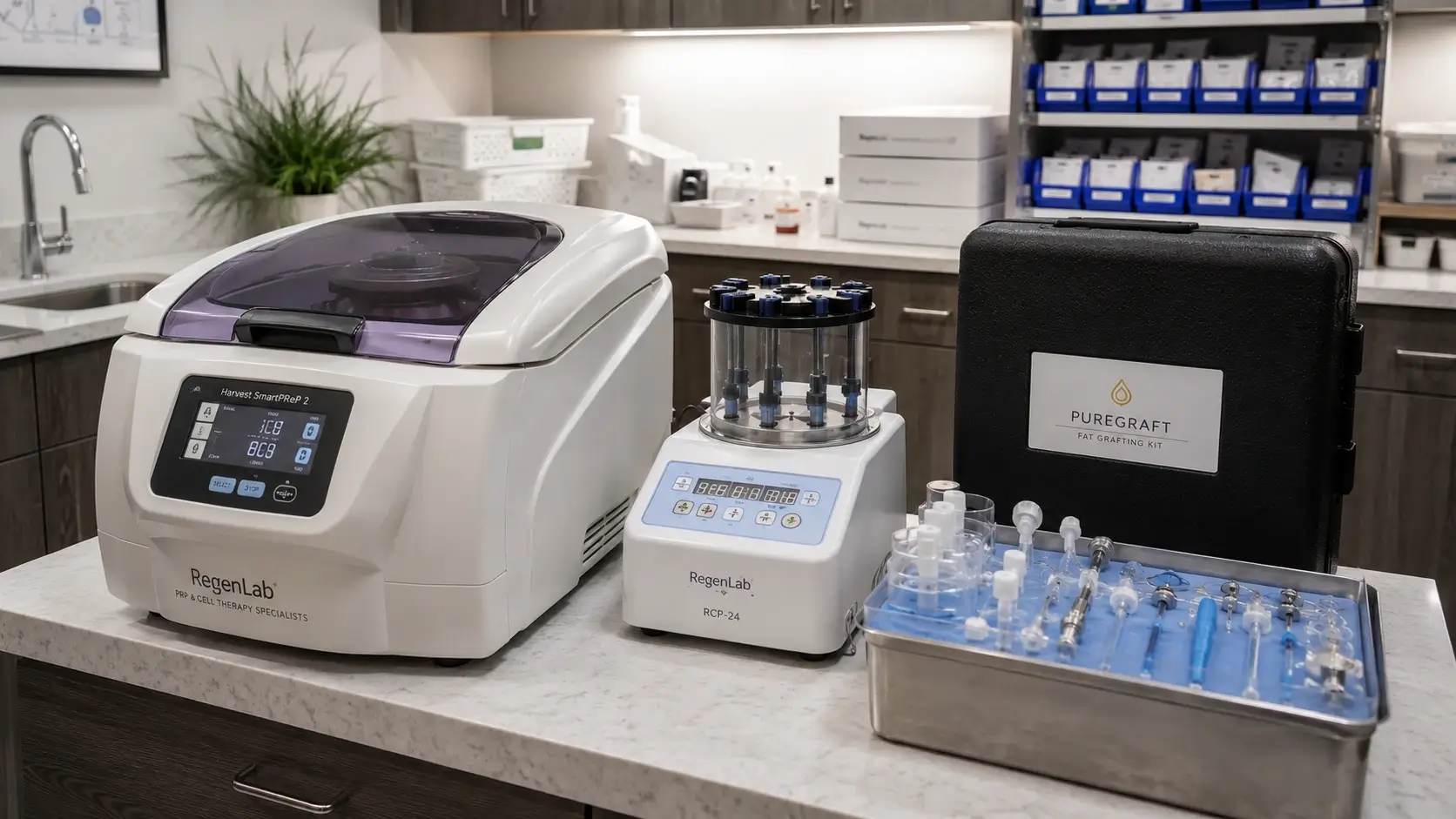
A bone marrow aspirate concentration system — the centrifuge and processing kit used to concentrate mesenchymal stem cells from a bone marrow draw — typically runs $15,000 to $35,000 depending on the manufacturer and throughput capacity. An adipose-derived processing system for mini lipoaspirate concentration runs a comparable range, and many clinics eventually invest in both to offer the full compliant service menu covered in the pillar post. Consumable kits for each procedure — the collection and processing kit used per patient — run $300 to $600 per procedure and should be budgeted as a recurring supply cost rather than a one-time capital expense.
This is the single line item that most distinguishes a stem cell clinic's startup budget from every other clinic type in this content series, and it is also the line item most new owners underestimate before they start pricing equipment seriously. Getting a specific, written quote from an equipment vendor before finalizing the overall startup budget is not optional due diligence — it is the step that determines whether every other number in the budget is realistic.
Facility Requirements
A stem cell clinic needs a procedure room built to a higher clinical standard than a consultation-only space — appropriate for the collection procedure (bone marrow aspiration or mini lipoaspirate) and the same-day reimplantation, with a sterile processing area for the centrifuge and handling equipment positioned between them. A clinic offering both modalities typically needs 1,200 to 1,800 square feet, larger than the footprint required for a consultation-driven clinic type like hormone optimization. First and last month rent plus deposit in a Class B medical space in a mid-size market typically runs $8,000 to $14,000 as a startup cost, reflecting the larger footprint requirement.
Compliance Documentation and Chain-of-Custody Systems
Every procedure performed under the same surgical procedure exception requires documentation proving the tissue implanted was removed from and returned to the same patient within the same procedure. Building this chain-of-custody documentation system — whether through a dedicated module in the clinic's EMR or a standalone compliance tracking system — is a startup cost most new owners do not anticipate until their medical director or healthcare counsel raises it. Budget $1,500 to $3,500 for building and configuring this system correctly before the first patient is treated, rather than retrofitting it after the fact.
The Total Investment Picture
A stem cell clinic offering both BMAC and adipose-derived procedures, built with a properly structured legal foundation, an appropriately compensated medical director, both processing systems, adequate facility space, and compliance documentation infrastructure, requires a total startup investment in the range of $145,000 to $185,000 — meaningfully higher than the $107,000 to $130,000 range typical of most other Regenerative Health Clinic types in this content series, almost entirely due to the equipment cost category unique to this business.
Above this startup investment, entrepreneurs should plan a working capital reserve of three to five months of fixed operating costs, which for a stem cell clinic typically run $12,000 to $18,000 per month given the higher medical director compensation and facility footprint. These figures are illustrative planning benchmarks — actual results depend on market conditions, equipment vendor selection, facility costs in the specific market, and execution.
For entrepreneurs evaluating financing options, SBA startup cost planning resources provide a general framework for structuring the capital stack across equipment, working capital, and operating reserves — though the equipment financing conversation for a stem cell clinic specifically should happen directly with the processing system manufacturer, many of which offer equipment-specific financing or leasing arrangements.
ACG partners with vetted lending providers and equipment suppliers to help new stem cell clinic owners structure this specific capital stack. To discuss your specific market and investment position, visit altosconsultinggroup.com/survey.
Frequently Asked Questions
Can I open a stem cell clinic with just one processing system instead of both?
Yes. Many clinics launch with a single modality — most commonly BMAC given its stronger clinical research base — and add adipose-derived processing once the first service line is established and generating revenue. This reduces initial equipment investment by roughly half and follows the same sequencing logic covered in the longevity clinic content on this blog, where launching with one anchor service before expanding produces a stronger first ninety days than splitting attention across two service lines simultaneously.
Is used or refurbished processing equipment a viable way to reduce startup costs?
It can be, provided the equipment comes with documented maintenance history and the manufacturer confirms continued technical support and consumable kit availability for that specific model. A processing system that produces inconsistent results due to equipment issues creates a compliance and patient safety problem that costs significantly more to resolve than the money saved on a discounted unit. Any used equipment purchase should be vetted by the clinic's medical director before purchase, not just by price.
Why is the medical director cost higher for a stem cell clinic than other clinic types?
The medical director's clinical judgment is what determines whether the clinic's specific processing protocol genuinely qualifies for the same surgical procedure exception — a determination that requires genuine familiarity with the HCT/P regulatory framework, not just general medical licensure. Physicians with this specific expertise are less common than physicians willing to serve as a general medical director for other cash-pay clinic types, and that scarcity is reflected in compensation.
Does the total investment change if I add stem cell therapy to an existing chiropractic or orthopedic practice instead of opening a new clinic?
Yes, significantly. An existing practice already has facility space, an established patient base, and in many cases existing relationships with a collaborating physician. The incremental investment to add stem cell procedures to an existing practice is typically limited to the processing equipment, compliance documentation, and any facility modification needed for the procedure room — often $40,000 to $70,000 rather than the full startup figure required to open a new clinic from scratch.
Written by Nova, Senior Content Strategist at Altos Consulting Group.