Stem Cell Clinic vs. Franchise: What the R3 Stem Cell Enforcement History Actually Teaches Independent Owners
A 2026 Business Model Comparison for Entrepreneurs Evaluating Network Licensing vs. Independent Ownership
The Comparison That Actually Matters in This Category
Many franchise-versus-independent comparisons on this blog focus on the numbers: franchise fee, total investment, ongoing royalty percentage. That comparison works cleanly for a category like joint and musculoskeletal clinics, where a franchise such as QC Kinetix publishes a Franchise Disclosure Document with clear, specific figures. The stem cell category does not have a clean equivalent to compare against. One of the largest branded presences in this space, R3 Stem Cell, does not operate as a traditional franchise with a disclosed FDD: it operates as a network of affiliated centers and clinics.
For the numbers-based franchise comparison covering the broader Regenerative Health Clinic category, see our post on independent clinic vs. franchise. This post covers something more specific and, for this category, more important than a fee comparison: what the branded network model has actually produced in terms of regulatory exposure, and what that means for how an independent stem cell clinic owner should think about the decision.
What Actually Happened to One of the Largest Branded Networks in This Space
In 2019, the FDA sent an untitled letter to R3 Stem Cell, LLC after reviewing the company's website. The letter found that the company was promoting stem cell therapies for serious diseases and conditions (including dementia, Parkinson's disease, ALS, diabetes, kidney failure, stroke, and Lyme disease) that had not been demonstrated safe and effective for those uses. The FDA notified each of the company's more than fifty affiliated centers directly, and the letter noted that products marketed this way would be regulated as drugs and biological products requiring premarket approval that the company did not have.
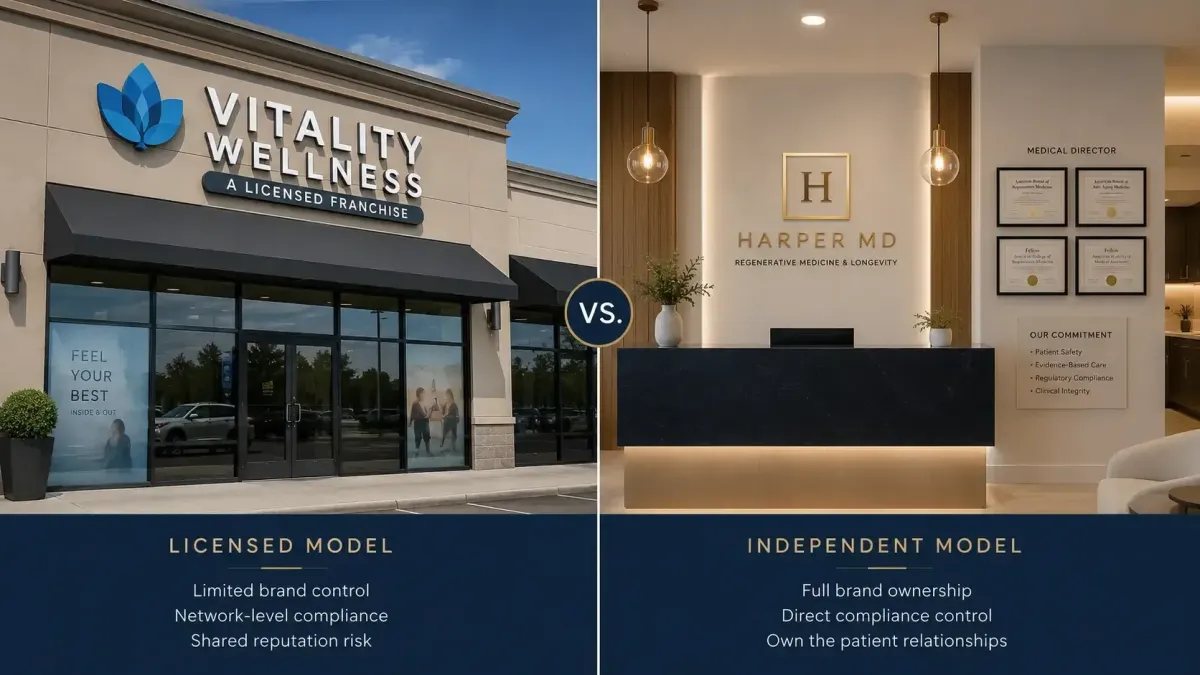
This is not presented here to single out one company unfairly. It is presented because it illustrates a structural risk that is specific to the network and licensing model in this category, distinct from the risk any individual clinic faces on its own. When dozens of affiliated locations operate under a shared brand with shared marketing materials and shared claims about what conditions their treatments address, a compliance failure in the marketing language used at the network level exposes every affiliated clinic simultaneously, regardless of how carefully any individual location might otherwise be operating its actual clinical procedures.
The Structural Difference Between a Network and an Independently Owned Clinic
An independently owned stem cell clinic, built with its own medical director, its own compliance-reviewed marketing, and its own direct relationship with healthcare counsel familiar with the HCT/P framework, does not share this exposure. The marketing claims made are the ones the clinic's own medical director and legal counsel have reviewed and approved for that specific clinic's specific procedures. There is no shared brand-level marketing language written by a corporate office with limited visibility into how each individual location is actually operating.
This is not a claim that independent ownership eliminates compliance risk: every clinic covered in this content series, regardless of ownership structure, carries the responsibility to operate within the same surgical procedure exception correctly. It is a claim that independent ownership eliminates a specific category of risk that comes from operating under a shared brand whose marketing decisions are made outside any individual clinic's direct control.

What You Are Actually Choosing Between
The honest case for the network or licensing model is brand recognition and a degree of built-in patient awareness in markets where the brand already has a presence, the same appeal any recognized brand offers a new business owner. The honest case against it, illustrated concretely by the FDA's 2019 letter to R3, is that the compliance standard of the network you join is not fully within your control, and a marketing decision made at the network level can create exposure for your specific clinic regardless of how carefully you operate it.
The independent model requires building brand recognition from a genuine starting point rather than borrowing an existing one, which is a real trade-off, covered in depth in the marketing and patient acquisition content elsewhere on this blog. What it provides in exchange is complete control over every compliance decision the clinic makes, a brand and business that belong entirely to the owner, and no exposure to marketing decisions made outside the clinic's own walls.
Why This Trade-Off Is More Consequential in This Category Than in Others
The franchise-versus-independent comparison matters in every clinic type covered on this blog, but the stakes are structurally different here. In a category like joint and musculoskeletal clinics, the downside of a franchise decision gone wrong is largely financial: royalties paid, operational flexibility lost, exit value constrained. In the stem cell category, the downside of a compliance decision made at the network level extends further, because the underlying regulatory framework this business operates under has almost no tolerance for the specific kind of marketing overreach (disease-treatment claims made across a shared brand) that drew the FDA's 2019 letter to R3.
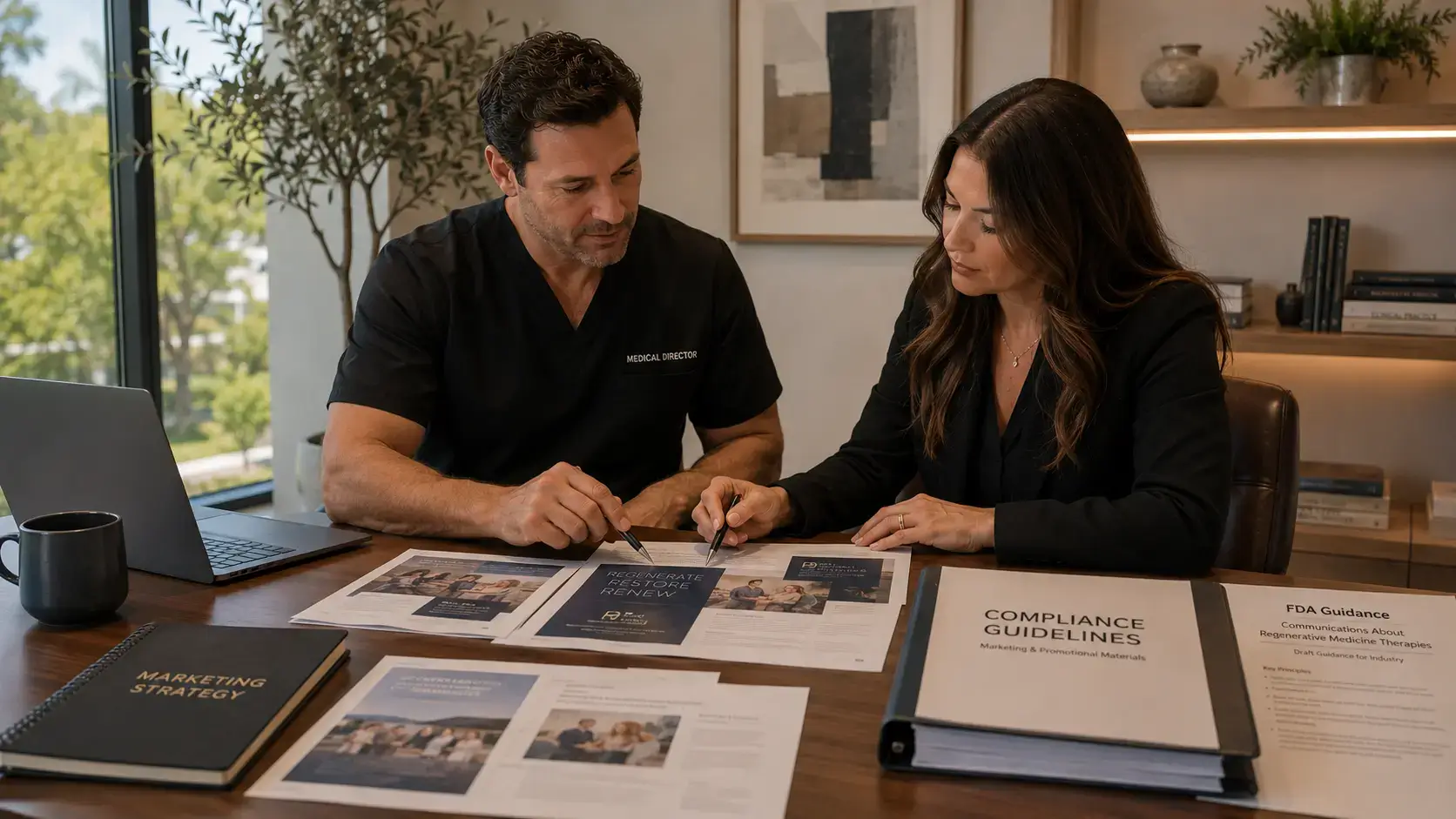
This is precisely why our guide on how to open a stem cell clinic treats marketing discipline as a compliance requirement rather than a stylistic preference for every stem cell clinic, independent or otherwise. An independent clinic that maintains this discipline is not just avoiding a hypothetical risk. It is avoiding the specific, documented failure pattern that one of the largest branded presences in this category has already experienced at scale.
ACG works exclusively with entrepreneurs building independently owned Regenerative Health Clinics, including founders who want to open a stem cell clinic structured for direct compliance control from day one. Our New Clinic Launch program is built as an alternative to a wellness franchise: it maps the full picture before you sign a lease or buy equipment. To discuss what this looks like for your specific market, book a free 30-minute strategy call.
Frequently Asked Questions
Is R3 Stem Cell a true franchise with a Franchise Disclosure Document?
Based on publicly available information, R3 Stem Cell operates more as a network of affiliated and partner clinics than as a traditional franchise with a standardized FDD, published franchise fee, and disclosed total investment range the way a franchise like QC Kinetix operates in the joint and musculoskeletal category. Anyone evaluating this or any similar branded network opportunity should request complete documentation of the actual legal and financial structure directly from the company before making any commitment.
Does joining a stem cell clinic network protect me from FDA enforcement risk?
No, and the FDA's 2019 letter covered in this post illustrates the opposite: the FDA notified every one of the company's affiliate centers or clinics of its letter to R3 Stem Cell, meaning network affiliation did not shield individual locations from the consequences of marketing decisions made at the network level. A brand does not shield a clinic: it still answers for its own marketing, sourcing, and procedures.
Can an independent stem cell clinic still benefit from co-branding or referral partnerships without joining a network?
Yes. Independent clinics regularly build referral relationships with physicians, chiropractors, and other healthcare providers without surrendering control over their own marketing, compliance, or brand identity. This is different from joining a licensed network under a shared brand name and shared marketing materials: a referral partnership does not create the shared compliance exposure that a branded network affiliation does.
What should I look for if I am still considering a branded network opportunity in this space?
Request the company's complete legal and financial disclosure, including any history of FDA correspondence or enforcement action, ask specifically how marketing materials are developed and whether individual locations have review authority over claims made under the shared brand, and have healthcare counsel review the actual agreement rather than the marketing presentation. The same due diligence standard covered in the broader franchise comparison content on this blog applies here, with the added consideration of this category's specific regulatory history.
Written by Nova, Senior Content Strategist at Altos Consulting Group.