Longevity Clinic Membership Pricing Models That Actually Retain Patients
A 2026 Pricing Architecture Guide for Entrepreneurs Structuring a Longevity Medicine Membership Program
Why Single-Tier Pricing Quietly Costs Clinics Their Best Patients
A significant number of new longevity clinics launch with one membership price — a single number that every enrolling patient pays regardless of how many services they actually use. This structure feels simple to build and simple to explain, which is exactly why so many first-time clinic owners default to it. It is also, almost without exception, the wrong structure for a longevity clinic's actual patient base.
A single-tier membership either overprices the patient who genuinely only wants NAD+ maintenance sessions — pushing them to decline enrollment entirely — or underprices the patient who wants the full service stack including hormone optimization, peptide protocols, and quarterly comprehensive biomarker panels, leaving meaningful revenue on the table from the clinic's highest-value patients. Both outcomes hurt the business. The first loses patients who would have enrolled at the right price point. The second undercharges the patients most invested in the clinical relationship.
This post focuses specifically on tier design. For the broader revenue model and unit economics behind longevity clinic memberships, see the companion post on the longevity clinic revenue model within this content series.
The Three-Tier Framework That Works Across Most Markets
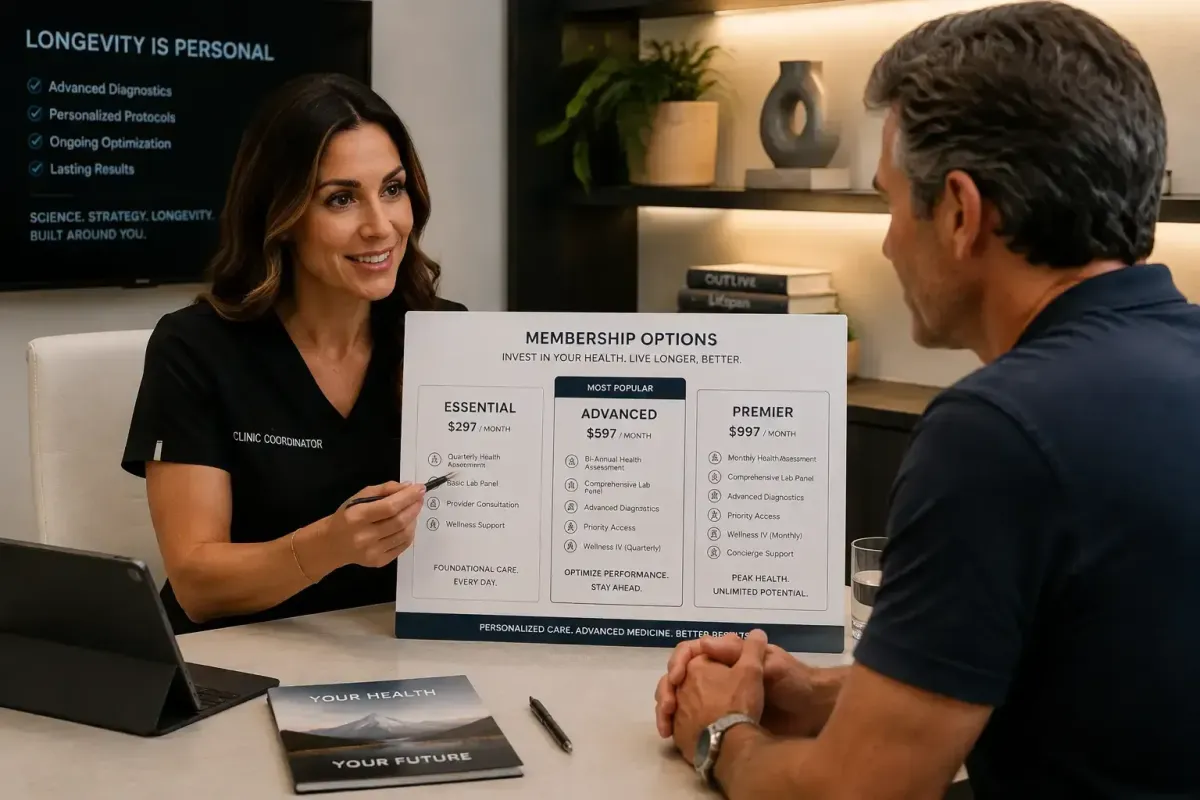
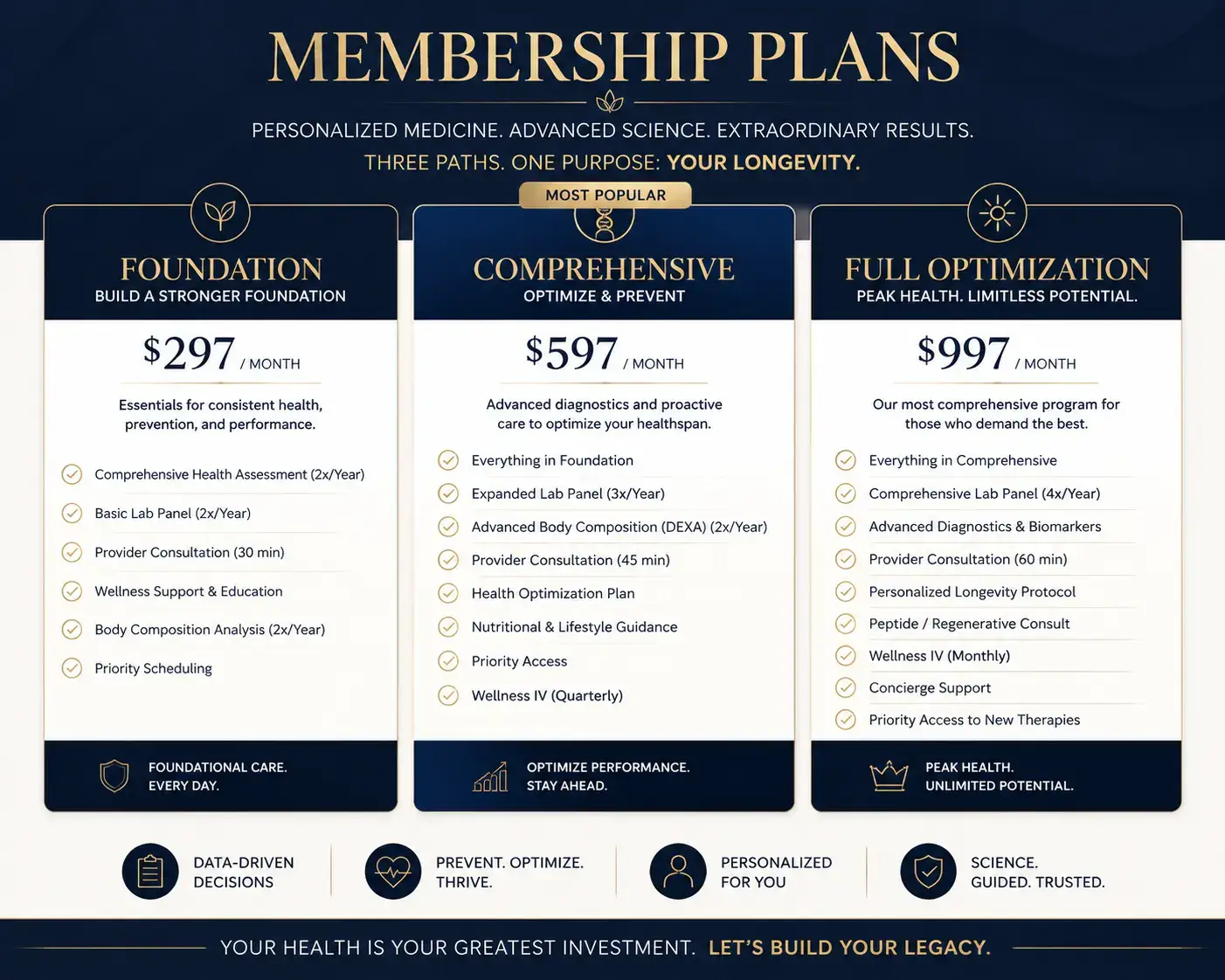
The pricing architecture that consistently performs best across longevity clinics ACG has helped structure is a three-tier model, with each tier corresponding to a genuinely different clinical relationship rather than simply a different price for the same thing.
Tier 1 — Foundation Membership
Priced between $400 and $600 per month, the foundation tier typically includes one core service — most often NAD+ maintenance sessions or a single peptide protocol — along with a baseline biomarker panel at enrollment and a check-in appointment. This tier is the accessible entry point for patients who are curious about longevity medicine but not yet ready to commit to a comprehensive program. It is also frequently the tier a patient starts in before naturally upgrading.
Tier 2 — Comprehensive Membership
Priced between $700 and $1,000 per month, the comprehensive tier combines two service categories — commonly NAD+ paired with hormone optimization, or peptide therapy paired with a metabolic protocol — alongside quarterly comprehensive biomarker panels rather than a single baseline test. This is the tier where the clinical relationship becomes genuinely longitudinal, with regular monitoring driving regular protocol conversations.
Tier 3 — Full Optimization Membership
Priced between $1,000 and $1,500 per month, the top tier includes the full service ecosystem — hormone optimization, peptide protocols, NAD+ maintenance, and an annual comprehensive assessment that can include biological age testing for clinics offering it. This tier represents a small percentage of total enrolled patients at most clinics but generates a disproportionate share of total revenue and tends to include the clinic's most engaged, highest-referring patient population.
What Belongs in Each Tier — Not Just the Price
A pricing tier is only as good as what a patient can clearly see they are getting for it. The most common mistake in tier design is presenting price differences without equally clear service differences, which leaves prospective patients unable to understand why they should choose the higher tier over the lower one.
•Foundation tier: one core service, baseline panel, standard check-in cadence, standard scheduling priority
•Comprehensive tier: two service categories, quarterly comprehensive panels, expanded check-in cadence, priority scheduling
•Full Optimization tier: full service ecosystem, quarterly plus annual comprehensive assessment, direct medical director access for protocol questions, top scheduling priority
Each inclusion should be something the patient genuinely values and can point to as the reason the next tier costs more — not an arbitrary feature added to justify a price gap.
Designing the Upgrade Pathway
The most financially significant design decision in a tiered membership structure is not the price of each tier — it is how naturally patients move upward between them. A pricing model where every patient who enrolls in the foundation tier stays there indefinitely captures a fraction of the revenue available from a well-designed upgrade pathway.
The upgrade conversation should never feel like a sales pitch. It should emerge from the clinical monitoring relationship itself. A foundation-tier patient whose 90-day panel reveals a hormonal imbalance that a comprehensive-tier hormone optimization protocol would address is receiving a genuine clinical recommendation, not an upsell. This is the same principle that makes biomarker monitoring the retention engine described elsewhere in this content series — the data creates the natural bridge from one tier to the next.
Common Pricing Mistakes New Clinic Owners Make
Pricing too low in an attempt to appear accessible is the most common and most damaging mistake. The longevity clinic patient demographic is not price-shopping the way a med spa patient might. Pricing meaningfully below market signals lower clinical quality to a patient demographic that associates price with credibility in this specific category. A foundation tier priced at $250 per month raises more skepticism about clinical seriousness than one priced at $500.
The second common mistake is launching without a clear upgrade pathway designed into the clinical workflow, leaving tier movement to chance rather than to a structured monitoring and consultation cadence. The third is separating lab panels into standalone billed line items rather than folding them into the membership value story, which makes the membership feel like a base fee with hidden costs rather than a comprehensive program.
To discuss the right pricing architecture for your specific market and target patient demographic, visit altosconsultinggroup.com/survey.
Frequently Asked Questions
What's a reasonable starting membership price for a new longevity clinic?
A foundation tier between $400 and $600 per month is the range that performs well across most U.S. markets for a single-service membership with baseline testing included. Pricing below this range tends to undermine the clinical credibility that drives the longevity patient's decision to enroll, while pricing meaningfully above it without a clear service justification can suppress initial enrollment volume during the clinic's early months.
Should longevity clinic pricing include lab panels or bill separately?
Include baseline and quarterly monitoring panels within the membership fee rather than billing separately. Presenting testing as a value-added component of the membership rather than a recurring separate charge makes the overall program feel more comprehensive and reduces the friction of a patient receiving an unexpected bill alongside their monthly membership payment.
How do I raise prices without losing existing members?
Grandfather existing members at their enrolled rate for a defined transition period, communicate the change with adequate notice, and pair any price increase with a genuine service enhancement — an added monitoring panel, expanded scheduling access, or a new protocol option — rather than raising price with no corresponding change in value. Patients who understand what is changing and why tolerate price increases far better than those who simply see a higher number on their statement.
What's the ideal number of pricing tiers?
Three tiers is the number that most consistently balances clarity with genuine differentiation. Two tiers often fails to capture the full range of patient commitment levels, while four or more tiers tends to create decision paralysis at the consultation stage and dilutes the clarity of what each tier actually includes. Three well-differentiated tiers give patients a meaningful choice without overwhelming the enrollment conversation.