
The Longevity Clinic Revenue Model: How the Best Operators Structure Income for Predictable, Recurring Growth
The Revenue Model Is Where Most Longevity Clinics Leave Money on the Table
The longevity clinic market in 2026 is full of operators who built excellent clinical programs and then structured their revenue as though they were running a spa. They priced services individually. They reset their revenue to zero every month and spent the majority of their marketing budget acquiring new patients instead of deepening the relationship with the ones they already had.
The longevity clinic business case starts with the market opportunity — covered in depth in The Longevity Clinic Business Opportunity (altosconsultinggroup.com/post/longevity-clinic-business-opportunity-2026). This post goes deeper on the specific revenue architecture that makes the business financially durable.
To see the longevity clinics ACG has helped structure and launch, visit altosconsultinggroup.com/clinics-supported/longevity.
The Core Revenue Architecture
Membership Programs as the Foundation
A longevity clinic built on membership programs generates predictable monthly revenue from every enrolled patient regardless of how many appointments that patient attends in a given month. The membership fee covers an ongoing clinical relationship — regular protocol management, lab monitoring access, clinical check-ins, and priority access to the clinic's services. This produces predictable revenue, stronger patient retention, and a clinical model that actually delivers the longitudinal care longevity medicine requires.
Protocol Packages as the Entry Point
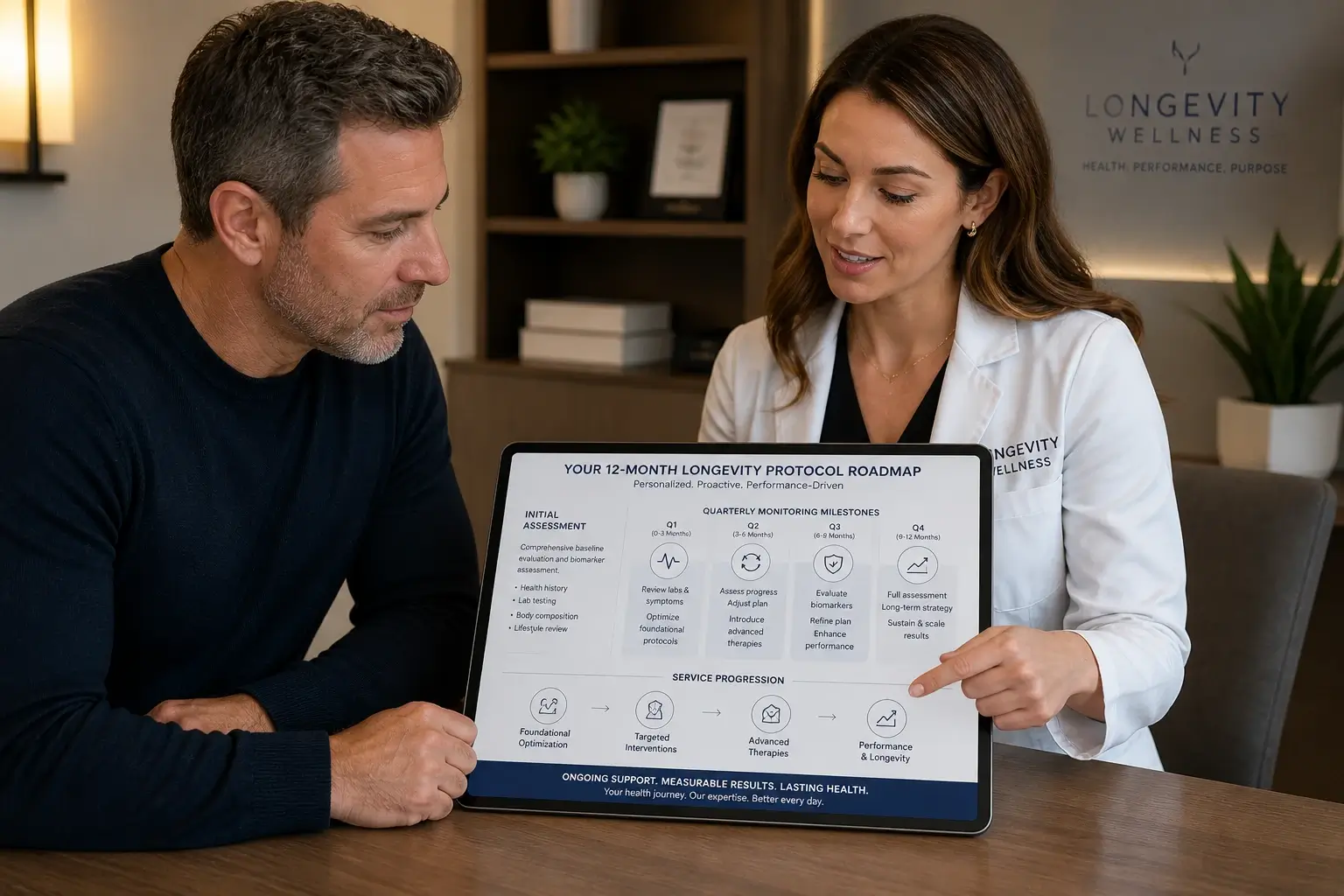
Most longevity clinic patients enter their first membership through a protocol package — a defined program addressing a specific goal such as hormone optimization, metabolic health, or longevity panel assessment. When the initial protocol package is structured as the entry point to an ongoing membership rather than a standalone product, patient continuation rates improve significantly.
Unit Economics at Different Patient Volumes
A well-enrolled longevity clinic membership generates between $500 and $1,500 per patient per month depending on service mix, protocol depth, and market:
•Single service membership — hormone optimization or NAD+ IV therapy with monthly monitoring: $500 to $700 per month
•Dual service membership — two service categories with quarterly biomarker panel and clinical review: $700 to $1,000 per month
•Comprehensive longevity membership — full service ecosystem including hormone optimization, peptide protocol, NAD+ therapy, and annual biomarker panel: $1,000 to $1,500 per month
At 25 enrolled patients at the midpoint of the dual service range, a longevity clinic generates approximately $21,250 per month in recurring revenue. At 50 enrolled patients approximately $42,500 per month. At 75 enrolled patients approximately $63,750 per month. These figures are illustrative planning benchmarks — actual results depend on market conditions, patient volume, pricing, and execution.
How the Revenue Model Compounds Over Time
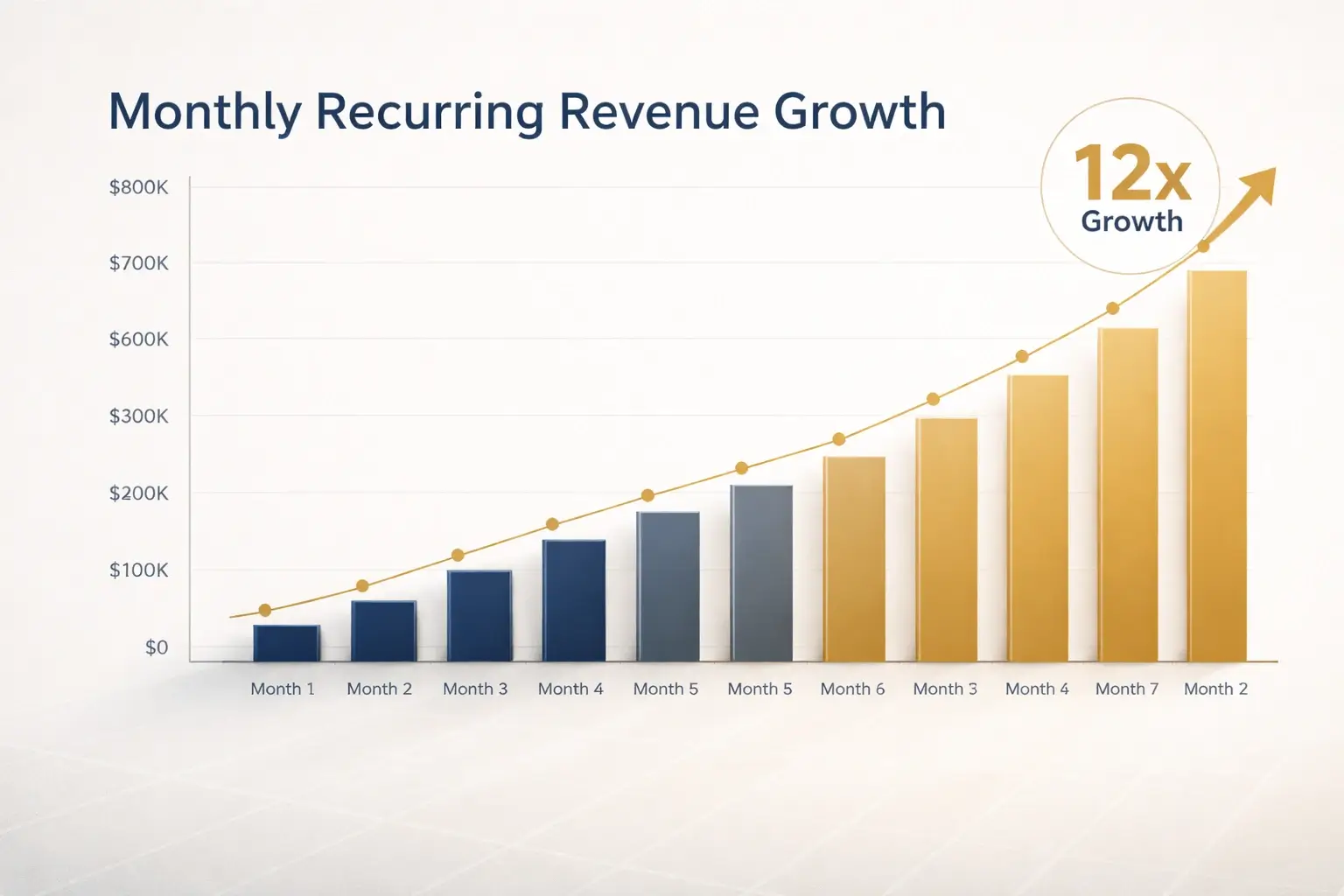
The structural advantage of the membership-based longevity clinic is that its revenue does not reset each month — it compounds. Every patient who enrolls adds to the recurring revenue floor. Every patient who deepens from a single-service to a multi-service membership increases the average monthly revenue per patient without requiring new patient acquisition.
A clinic that opens with 10 enrolled patients and adds 5 new members per month while retaining existing members at a 90 percent rate reaches 50 enrolled patients within eight months. This compounding dynamic is what separates the longevity clinic from the transactional wellness practice.
To discuss how ACG structures the revenue model and membership architecture for new longevity clinic owners, visit altosconsultinggroup.com/survey.
Why Patient Retention Is the Revenue Strategy — Not a Secondary Concern
Most clinic marketing conversations focus on patient acquisition — how much it costs to get a new patient through the door, how to reduce the cost per consultation booking, how to improve the show rate on scheduled appointments. These metrics matter. But the longevity clinic that is focused primarily on patient acquisition is optimizing the wrong variable. The revenue model that produces durable, compounding income is built on patient retention, not patient acquisition volume, and the two require fundamentally different operational investments.
The math is straightforward. A longevity clinic with 75 enrolled patients each generating $700 per month generates $52,500 in monthly recurring revenue. To grow revenue by $10,000 per month through acquisition alone, the clinic needs to add approximately 14 new enrolled patients every month — and sustain that acquisition rate indefinitely. To grow revenue by $10,000 per month through retention and deepening, the clinic needs to move 14 existing patients from a $700 average to a $1,400 average — which happens when those patients add a second service to their protocol. The second path costs the clinic a fraction of what the first path costs in marketing spend, and the patients who deepen their protocol are significantly less likely to churn than patients who are perpetually in their first month of enrollment.
The clinical mechanism that drives retention in a longevity clinic is biomarker monitoring. A patient who receives a quarterly hormone panel, IGF-1 assessment, or comprehensive longevity biomarker review has an objective, data-driven picture of what the protocol is doing. When the data shows improving testosterone levels, declining inflammatory markers, improving IGF-1 response, or measurable changes in biological age metrics, the patient has a reason to continue that is independent of whether they feel subjectively different today versus last month. The monitoring relationship converts the clinical program from a subjective wellness experience into an evidence-based optimization process — and that evidence is what makes the patient relationship durable through life disruptions, budget pressures, and the inevitable moments when motivation fluctuates.
The retention mechanisms that compound over time in a well-structured longevity clinic are the same ones that produce referrals. A patient who has been enrolled for eight months, has seen objective improvement in their biomarker profile, and has been genuinely well-served by the clinical team is not a patient who keeps their relationship with the clinic private. They mention it to a friend who is dealing with fatigue. They recommend it to a colleague who has been told their testosterone is low-normal. They post about it in the private health-oriented communities where the longevity patient demographic is disproportionately active. These referrals arrive with significantly higher trust and significantly lower acquisition cost than any paid advertising channel.
The practice management implication is that the consultation-to-membership conversation — which most clinics treat as a sales event — is actually the first retention conversation. The patient who understands at the initial consultation that they are joining a clinical relationship with ongoing monitoring, quarterly protocol adjustment, and a longitudinal view of their health data is enrolling in something fundamentally different from what a patient who is sold a treatment package understands they are buying. The former patient has a reason to stay. The latter patient has a reason to evaluate whether they are getting value at every renewal. The framing of the initial conversation determines which type of patient the clinic builds its revenue on.
Longevity clinics that compound their revenue year over year — that see month 24 revenue that is two to three times their month six revenue without a proportional increase in marketing spend — are the ones where patient retention was designed into the clinical and operational model from the beginning, not retrofitted after the clinic discovered that acquisition-only growth was exhausting and expensive. The revenue model is the retention model. They are the same decision.
Frequently Asked Questions
What is the right membership price for a longevity clinic?
A single-service longevity membership in a mid-size U.S. market should be priced between $500 and $700 per month. A comprehensive multi-service membership in a premium market can be priced between $1,000 and $1,500 per month. The premium longevity patient shops on credibility, not price — pricing below these ranges tends to signal low quality rather than accessibility.
How does biomarker monitoring fit into the revenue model?
A quarterly biomarker panel that tracks hormonal status, inflammatory markers, metabolic health, and biological age indicators costs the clinic relatively little to run through a vetted lab partner and provides measurable evidence of protocol impact — the single most powerful retention tool available. Patients who see objective improvement in their biomarkers do not cancel their memberships. They upgrade them.
Should a longevity clinic charge membership fees or per-service fees?
Membership fees for ongoing protocol relationships, per-service fees for individual sessions or assessments outside the membership scope. The most effective structure combines both — a membership covering the core service mix, with per-service fees for additional sessions and specialized assessments outside the membership tier.
Written by Nova, Senior Content Strategist at Altos Consulting Group.