How to Start a Mobile IV Business: Rules, Staffing and Setup
A mobile IV business removes the storefront, not the medical practice. Every visit to a living room, office or hotel suite still needs the same chain a clinic needs: a prescriber who examines the patient and writes the order, a clinician the state allows to start the IV, and a Medical Director over the protocols. Then mobile adds problems a storefront never has, from drugs riding in a vehicle to an emergency happening away from any clinic.
This guide from Altos Consulting Group (ACG) explains how a mobile IV hydration business works, the rules that follow it into every home, and what the mobile model adds to the setup. If you are deciding between a storefront, a van or both, start here, then see what it takes to open an IV therapy clinic. Our team has launched hundreds of clinics across the 13 Regenerative Health Clinic types we support.
What Is a Mobile IV Business?
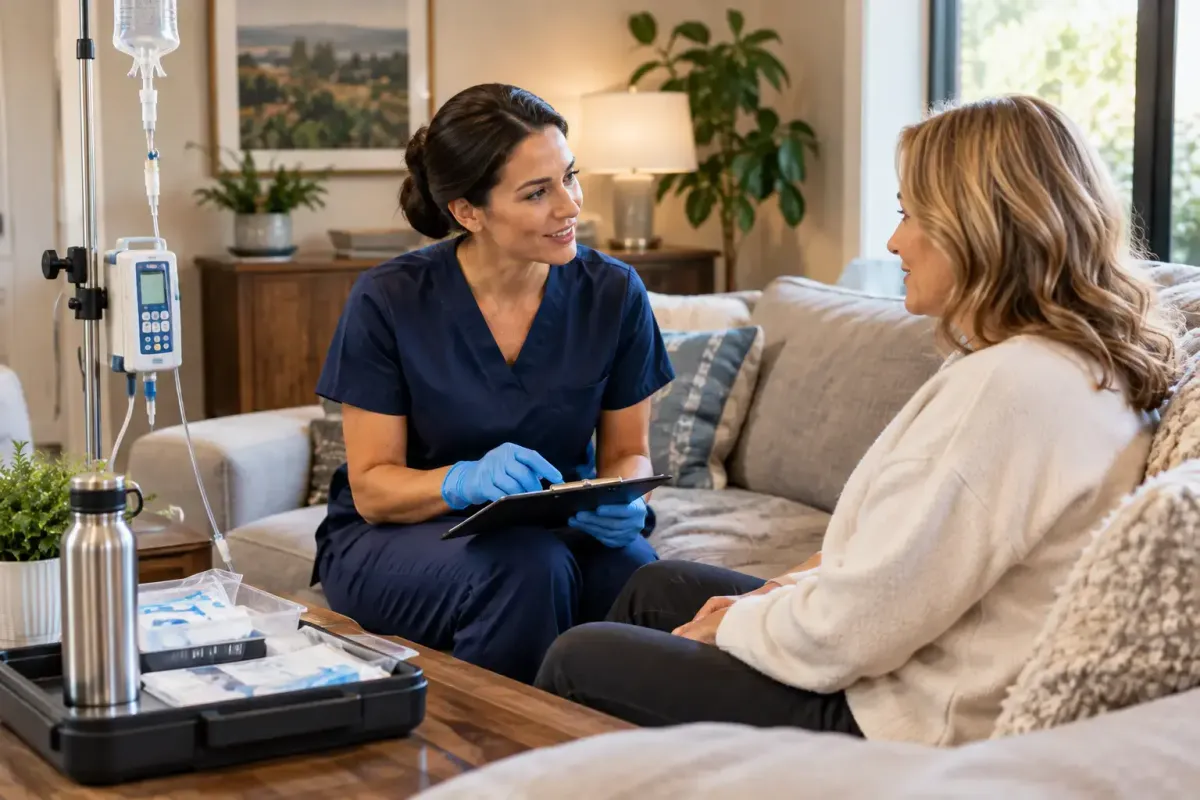
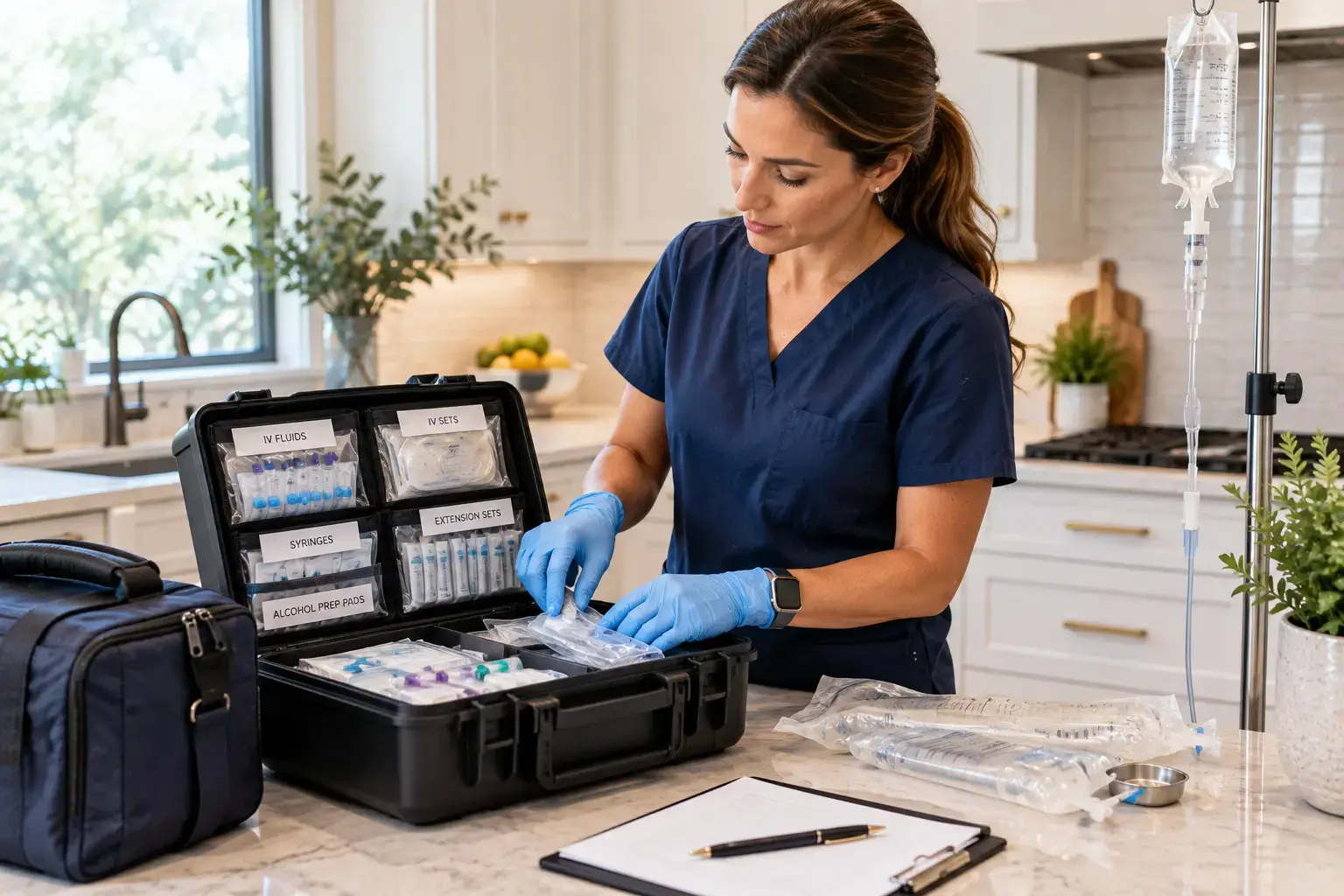
A mobile IV therapy business sends licensed clinicians to deliver infusions at homes, offices, hotels and events. A storefront brings patients to a fixed space with treatment chairs. The difference is real on the cost side: mobile trades rent and build-out for vehicles, travel time and storage on the road.
The difference is small on the rules side. The exam, the order, the scope of the clinician who starts the line, the mixing rules and the supervision all apply in a hotel room exactly as they do in a clinic. This post focuses on what changes, and what does not, when the clinic is on wheels. For the storefront model in full, read our guide to the IV therapy clinic business.
The Medical Chain Every Mobile IV Visit Needs
An exam and an order from a prescriber your state allows
State boards have been direct about this. Alabama's Board of Medical Examiners ruled in 2022 that diagnosing a patient's condition and recommending IV therapy is the practice of medicine, and that a standing order does not satisfy the physician's legal duties to the patient. Mississippi's board said a valid practitioner and patient relationship must exist before IV fluids are prescribed, and that using standing orders to get around that requirement is grounds for discipline. Both rulings are summarized in AmSpa's roundup of state IV therapy guidance.
Guidance issued in Wisconsin in 2025 says the patient must be assessed before any IV hydration treatment is ordered, names physicians, PAs and advanced practice nurse prescribers as the practitioners who may order, and permits standing orders only where a legitimate patient and practitioner relationship already exists, as set out in Wisconsin's IV hydration guidance. Whether the exam may happen by telehealth is a state question; confirm it before you build a model around it.
A clinician your state allows to start the IV
Registered nurses commonly start the IVs in this model, but the scope differs by license and by state. Wisconsin's guidance says RNs or LPNs may administer once an order is received, while the nursing assessment, including vital signs, is outside the scope of an LPN. None of the guidance we reviewed lets an RN or LPN diagnose or order IV therapy.
A Medical Director over the protocols
The Medical Director signs off on protocols, emergency procedures and supervision, and the business owner runs operations. No medical background is required to own the business; an independent, state-licensed Medical Director directs all clinical care, and some states require physician ownership or a management-company structure. ACG works with partner Medical Director networks that cover all 50 states.
Mixing IV Bags: Where a Mobile IV Business Meets Compounding Rules
Adding vitamins to an IV bag is not a simple step in the eyes of regulators. The FDA has consistently stated that adding vitamins to an intravenous solution bag is compounding, according to Gordon Feinblatt's analysis of IV compounding. That brings the federal compounding exemption and the USP <797> sterile compounding standard into play.
USP <797> allows a narrow immediate-use category with tight limits. Wisconsin's guidance lists them: administration begins within 4 hours following the start of preparation, no more than 3 different sterile products are used, and leftover single-dose components are discarded rather than used for another patient. South Carolina's boards have said that compounding must result from a valid practitioner's order, not a patient-driven menu.
Premixed products, preparations made according to the product's approved labeling, and sterile preparations from licensed sources such as 503B outsourcing facilities can remove much of this burden. For a mobile model, that choice also shapes what you carry, how you store it and how long it stays usable.
What a Mobile Model Adds to an IV Business
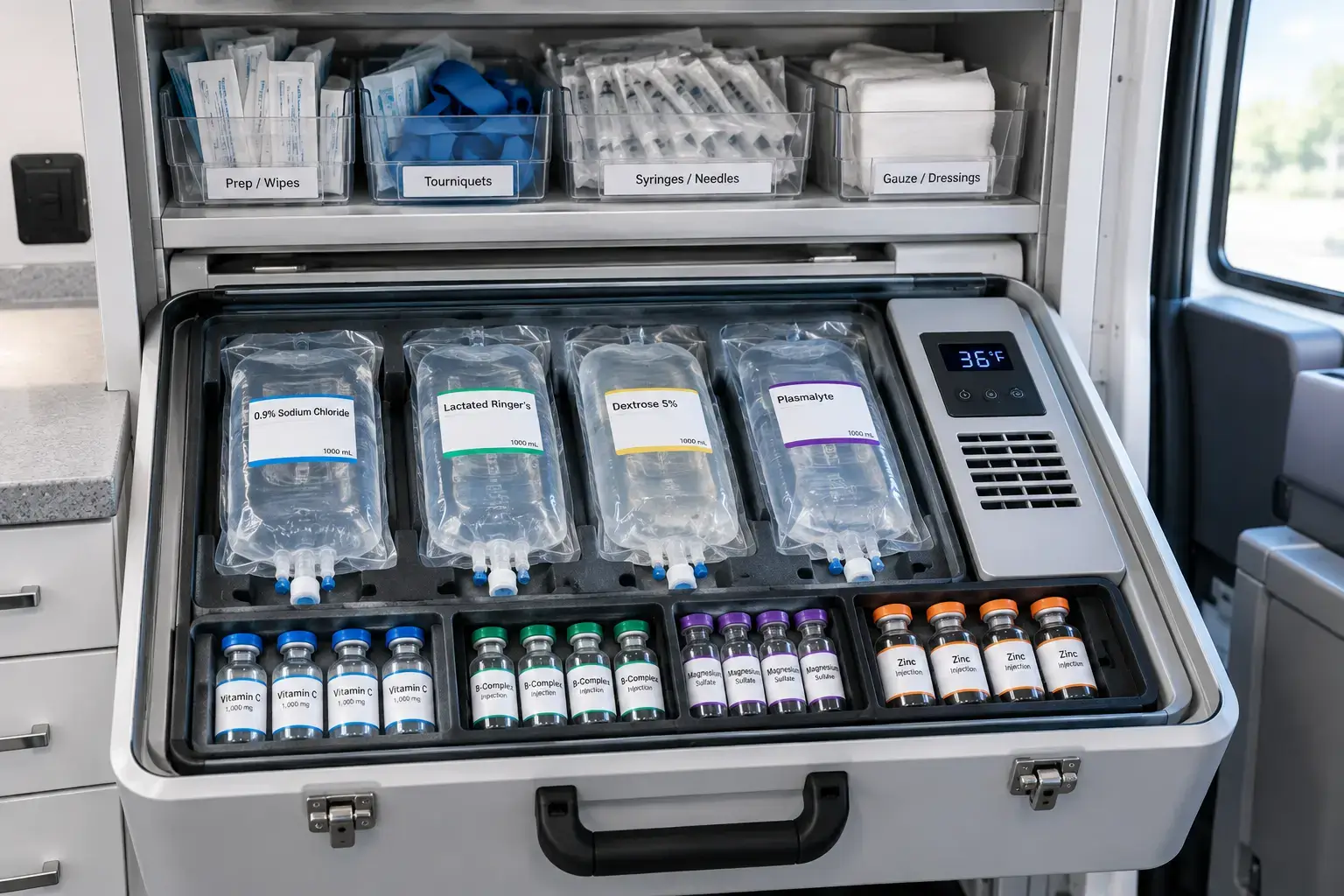
Transport and storage of fluids and drugs
IV fluids and additives are prescription drugs. Wisconsin's guidance requires that they come from FDA-licensed manufacturers, distributors licensed in the purchasing state or 503B outsourcing facilities, and that they be stored according to the manufacturer's instructions. In a vehicle, that means temperature control, secure storage and a log of what left the base and what came back.
Sharps and medical waste
Every visit produces sharps and medical waste that leave with the clinician. Plan approved containers, a pickup or disposal contract and a documented chain from the patient's home to disposal.
An emergency kit and protocol away from a clinic
A reaction in a hotel room has no crash cart down the hall. Your Medical Director should define the emergency kit, the protocol and when to call emergency services, and every clinician should train on it. Texas's 2025 IV law followed a patient's death after an infusion at a spa, where the state medical board found that staff were unprepared to manage complications, according to Jackson Walker's summary of the Texas law.
Vehicle and liability insurance
Mobile adds commercial auto coverage for vehicles used in the business to the professional and general liability a storefront carries. Ask your broker how each policy treats care delivered in a patient's home.
A license in every state the service area crosses
A metro area that spans a state line means two sets of rules: the clinicians and the prescriber must be licensed where the patient is, and each state's IV rules apply on its side of the line. Our guide to the IV hydration business license walks through the full checklist.
State Rules for a Mobile IV Therapy Business Are Tightening
Since September 1, 2025, Texas has limited who may administer elective IV therapy to physicians, PAs, APRNs and RNs under physician supervision, according to AmSpa's summary of Texas HB 3749. Since July 2026, Maine's joint rule requires examination and diagnosis by a licensed physician, physician associate or APRN before IV therapy, according to AmSpa's report on Maine's new IV rules.
These are examples, not a national rule. Check your own state's medical, nursing and pharmacy boards before you price a single visit, and recheck them each year.
Planning a Mobile IV Business With ACG
The rules that close mobile IV businesses are the same ones covered in our guide to what shuts clinics down. Our team puts the exam and order chain, the supplier setup and the state map in place before the first visit, whether you plan a mobile or storefront IV launch. ACG does not build IV menus around EBOO or ozone. To talk through your market, book a free 30-minute strategy call.
Mobile IV Business FAQs
Do I need to be a nurse to own a mobile IV business?
No medical background is required to own the business; an independent, state-licensed Medical Director directs all clinical care, and some states require physician ownership or a management-company structure. The nurses and prescribers deliver and order care; the owner runs the business.
Can a mobile IV business operate in more than one state?
Yes, with a separate compliance setup for each state: clinicians and a prescriber licensed where the patient is, Medical Director coverage in that state and that state's IV rules applied to every visit there.
Is a mobile IV business cheaper to start than a storefront?
It removes rent and build-out but adds vehicles, mobile storage, waste handling and insurance. ACG's planning estimate for the startup investment in any of the 13 clinic types we support is about $107,000 to $130,000, our consulting fee included; working capital sits above it. Pricing for our engagement itself is discussed once the scope is clear.
Can patients choose their own drip from a menu?
Not as an order. South Carolina's boards said compounding must come from a valid practitioner's order, not a patient-driven menu. A menu can describe what is available; the prescriber decides what each patient receives after the exam.
This article is educational and is not legal or medical advice. IV therapy rules vary by state and change often; confirm your model with your state's medical, nursing and pharmacy boards and with healthcare counsel. Status as of October 28, 2026.
Written by Nova, Senior Content Strategist at Altos Consulting Group.