
The Peakspan Patient: Who Is Seeking Optimization Medicine in 2026 and How to Speak Their Language
A New Category of Patient
The most valuable patient a Regenerative Health Clinic can serve in 2026 is not someone who is sick. It is someone who is paying attention.
This patient — call them the peakspan patient — is a high-performing adult, typically between 42 and 62, who has noticed that their biology is not operating the way it did five years ago. Recovery takes longer. Energy is less consistent. Cognitive sharpness has small but noticeable gaps. They are not in crisis. They are in the early stages of decline — and unlike most of the population, they have identified that decline and decided to do something about it before it becomes a problem.
Peakspan is the concept that frames their goal: not living longer, but extending the period of life during which they operate at their highest levels of cognitive performance, physical capacity, and metabolic function. They are not trying to feel younger. They are trying to preserve their operating capacity — and they are willing to invest in a clinical relationship that helps them do it.
Understanding this patient — their psychology, their vocabulary, their decision-making framework, and what makes them trust a clinic — is the most commercially valuable knowledge a Regenerative Health Clinic owner can have. It is the difference between a clinic that attracts committed, high-value long-term members and one that fills appointments with one-time visitors who disappear after the first session.
The Psychology of the Peakspan Patient
They Are Proactive, Not Reactive
The peakspan patient does not wait for a diagnosis to take action. They are monitoring their biology — tracking sleep quality, watching energy patterns, paying attention to recovery time after exercise. When they notice a decline that does not resolve on its own, they investigate. When they find a clinic that can offer data-driven clarity on what is happening in their biology — not a symptom management plan but an optimization protocol — they engage.
The practical implication: this patient does not respond to marketing built around symptoms. Anti-aging messaging tells them something is going wrong and offers to fix it. That is a reactive frame. Healthspan and peakspan messaging tells them something is possible — that the performance window they currently occupy can be extended and protected. That is an aspirational frame. The second one is significantly more effective at attracting this patient profile.
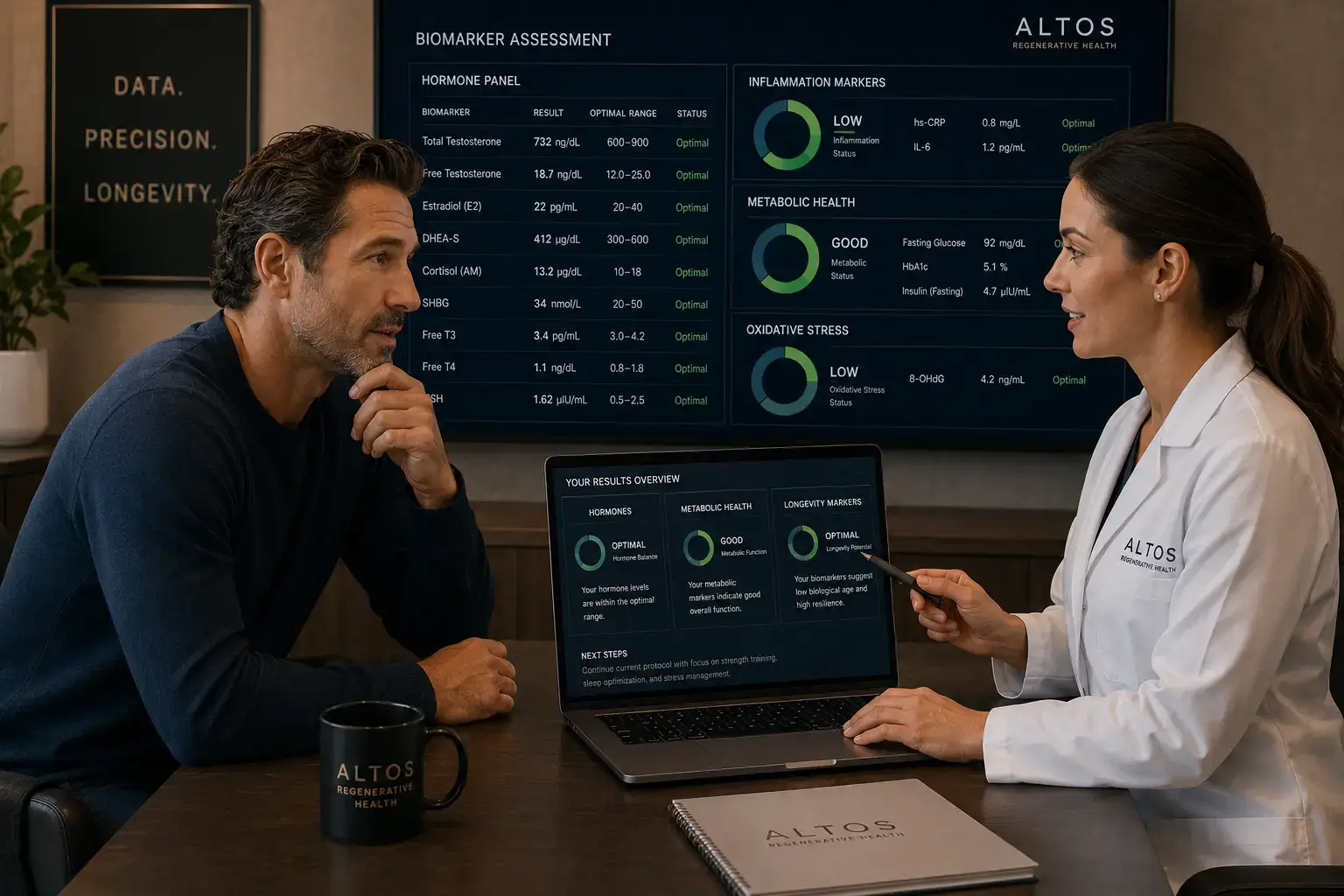
They Are Data-Driven
The peakspan patient is not making health decisions based on how they feel. They want to see numbers. They want biomarker panels, lab results, before-and-after measurements, and evidence that the protocols they are following are producing measurable changes in their biology. Clinics that offer expanded biomarker panels — tracking hormonal levels, inflammatory markers, mitochondrial function, and metabolic health — have a fundamental advantage with this patient over clinics that rely on symptom reporting and subjective experience.
The peakspan patient is used to operating from data in their professional life. They expect the same standard in their healthcare.
They Have Already Done Their Research
By the time a peakspan patient contacts a Regenerative Health Clinic, they typically know what NAD+ therapy is. They have read about peptides. They may have heard about GLP-1 programs. They are not coming to be educated about what exists — they are coming to assess whether your clinic has the expertise, the rigor, and the credibility to actually deliver results.
This means the consultation with a peakspan patient is not a sales presentation. It is a credibility assessment. The clinic that speaks their language — healthspan, biological resilience, precision longevity, peakspan — passes the initial credibility filter. The clinic that opens with anti-aging promises and generic wellness language does not.
They Think in Memberships, Not Appointments
The peakspan patient is not looking for a one-time treatment. They are looking for a clinical relationship. Their goal is ongoing optimization — which requires ongoing measurement, protocol adjustment, and clinical support. A clinic that offers only transactional services is structurally misaligned with this patient's needs. A clinic that offers a membership program built around quarterly biomarker panels, monthly IV sessions, and ongoing protocol management is exactly what this patient is looking for.
The revenue consequence of this alignment is significant. A peakspan patient in a well-designed membership program generates predictable monthly revenue for years. They refer peers who share their orientation toward proactive health. They are the patient that makes the Regenerative Health Clinic business model financially durable — not just in a single transaction but across the lifetime of the clinical relationship.
How to Speak the Peakspan Patient's Language
The following vocabulary adjustments are practical and immediate. Each one shifts the patient's experience of your clinic from reactive healthcare to proactive optimization:
•Replace anti-aging with healthspan extension. The peakspan patient is not trying to reverse aging. They are trying to extend the period during which they perform at their best.
•Replace feel better with optimize performance. Performance is a goal. Feeling better is a symptom fix. This patient is goal-oriented.
•Replace treatment with protocol. A treatment implies a problem. A protocol implies a system. The peakspan patient wants a system.
•Replace one-time service with ongoing optimization. Every service should be framed within a larger optimization goal — not presented as a standalone experience.
•Replace wellness with precision longevity. Wellness is a broad, poorly differentiated category. Precision longevity is specific, clinical, and data-driven. This patient knows the difference.
ACG's consulting engagement covers consultation language frameworks, patient communication architecture, and the positioning systems that ensure a new clinic attracts and retains peakspan patients from the first week of operation. To learn more about what that looks like, visit altosconsultinggroup.com/new-clinic-launch, or schedule a strategy call at altosconsultinggroup.com/survey.

Frequently Asked Questions
What age demographic is the peakspan patient?
The core peakspan patient demographic is 42 to 62 years old, though the range is expanding in both directions. Income and health engagement are stronger predictors of peakspan patient orientation than age alone. Younger patients in their late 30s are increasingly engaging with optimization medicine as preventive health, while active patients in their mid-60s remain highly motivated peakspan patients.
How is the peakspan patient different from a biohacker?
The biohacking patient tends to be younger, more experimental, and interested in tracking marginal gains across many variables. The peakspan patient is typically older, more professionally established, and focused on sustaining and protecting established performance rather than pushing boundaries. The peakspan patient wants clinical rigor and data — not self-experimentation. This distinction matters for how a clinic positions its services and who it targets in marketing.
What consultation structure works best for peakspan patients?
A consultation that opens with the patient's optimization goals — where they want to be, not what is wrong with them — and then uses biomarker data to show them where they currently are relative to those goals. This structure produces a clinical conversation rather than a sales conversation, and closes at significantly higher rates because the patient is being offered a data-driven path to a goal they have already identified as important.
Written by Nova, Senior Content Strategist at Altos Consulting Group.