The Telehealth Clinic Business Model: How Entrepreneurs Are Building Virtual Regenerative Health Practices Without Brick-and-Mortar Overhead
The Telehealth Opportunity in Regenerative Health: Lower Overhead, Broader Geographic Reach
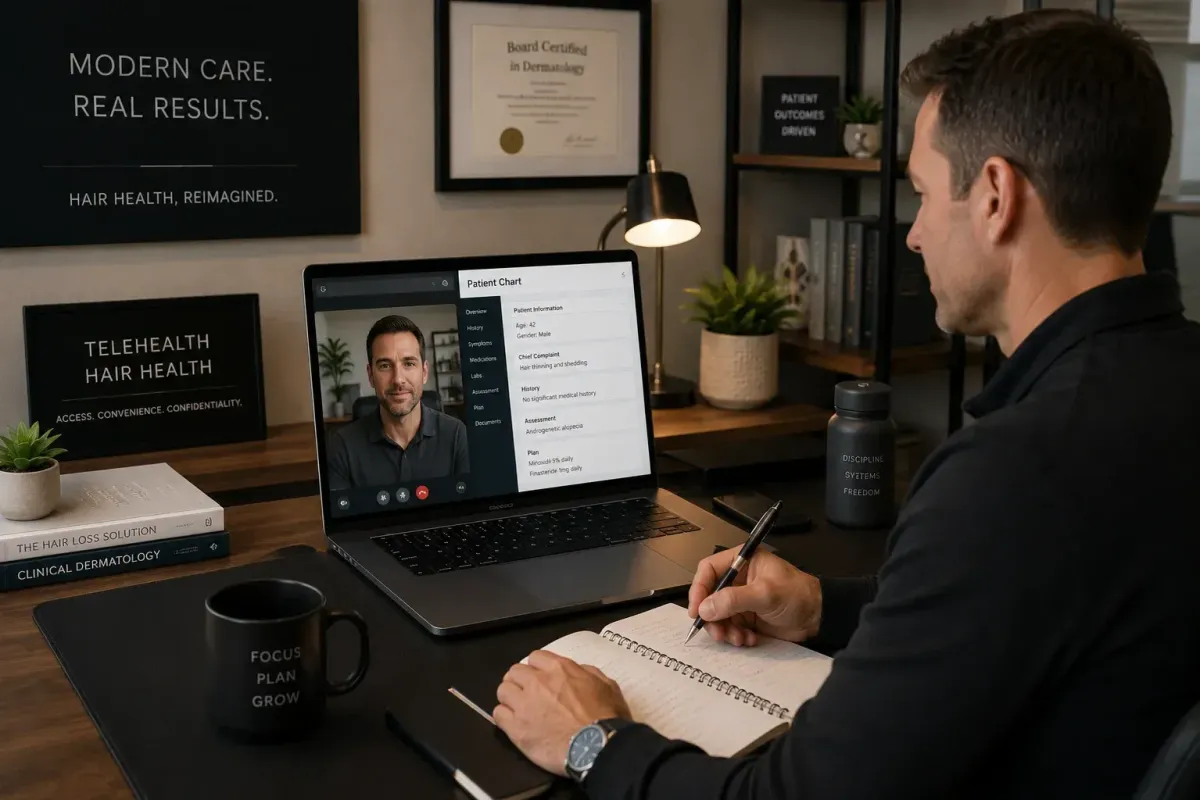
The telehealth model for regenerative health and longevity medicine is not a compromise version of the in-person clinic model. It is a distinct business structure with specific advantages — primarily lower startup costs due to reduced physical infrastructure requirements, the ability to serve patients across multiple states from a single operational base, and a patient acquisition demographic that is increasingly comfortable with and actively seeking virtual healthcare relationships.
The services that work well in a telehealth regenerative health model — hormone optimization, GLP-1 metabolic programs, peptide therapy prescriptions, biomarker panel ordering and result interpretation, and health coaching and protocol management — are delivered through a combination of video consultations, lab draw orders at local patient service centers, and pharmacy fulfillment directly to the patient. The clinical relationship is entirely real; the physical infrastructure requirement is significantly reduced.
The telehealth model is not appropriate for every regenerative health service — IV therapy, PRP, shockwave therapy, HBOT, and other procedure-based modalities require in-person clinical delivery. A telehealth clinic builds its service menu around the categories that translate effectively to remote delivery. For entrepreneurs who are interested in the regenerative health space but not ready for the full brick-and-mortar clinic investment, or who want to serve a geographically distributed patient base, the telehealth model offers a structurally viable path.
To see the details of ACG's telehealth consulting engagement, visit altosconsultinggroup.com/telehealth-consulting.
What the Telehealth Regenerative Health Business Model Looks Like
Hormone Optimization via Telehealth
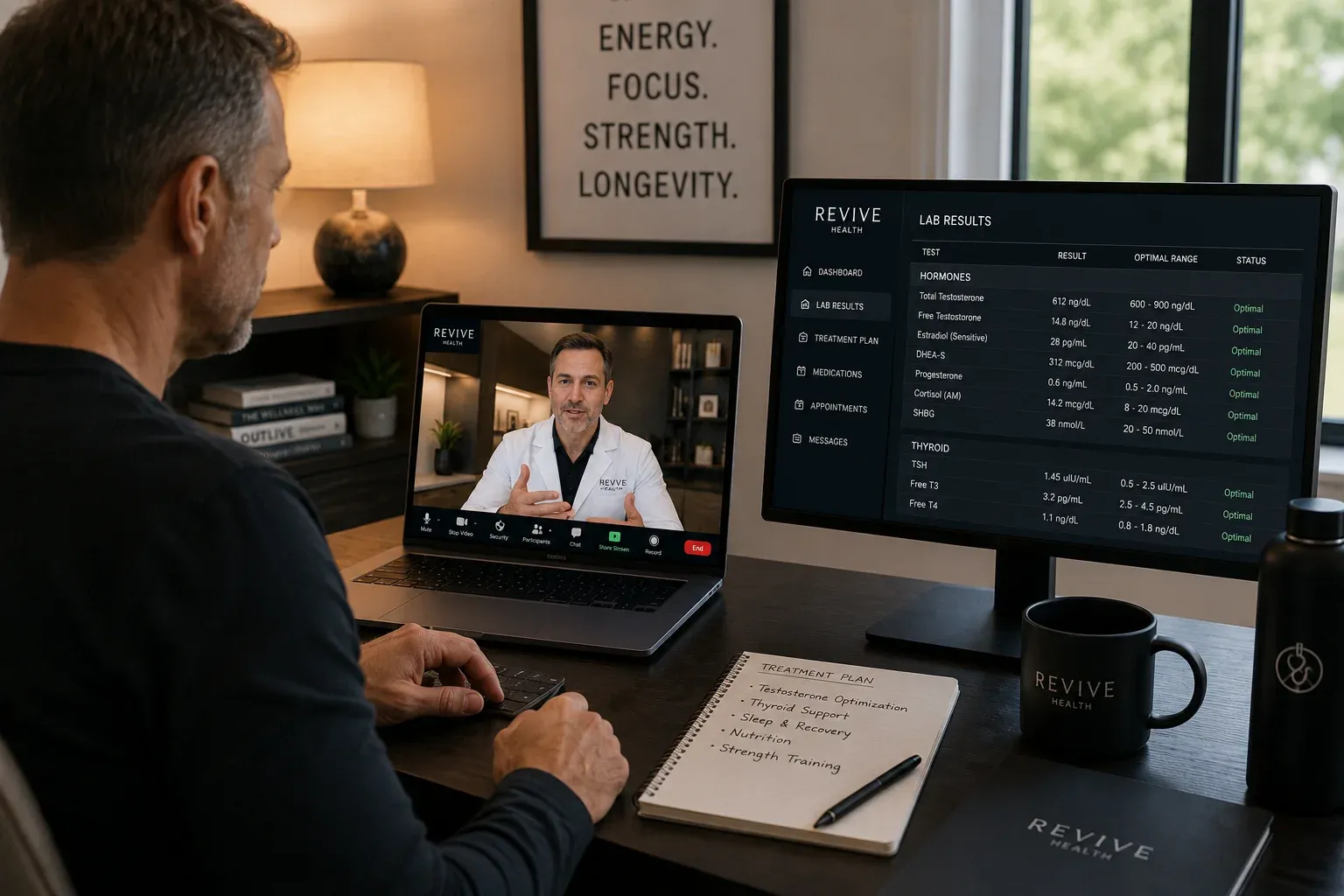
TRT and BHRT via telehealth is the most established and highest-volume regenerative health telehealth category. Companies like Hone Health, Maximus, and Nue Life have built significant patient bases delivering hormone optimization services entirely or primarily through virtual consultations and home lab kits. The market has validated consumer demand for this delivery model at scale. An independent telehealth hormone practice can compete on personalization, clinical depth, and the patient experience that a direct-to-consumer platform optimized for volume cannot provide.
GLP-1 Metabolic Programs via Telehealth
GLP-1 prescription and monitoring via telehealth is a significant and growing category — driven by the national demand for semaglutide and tirzepatide programs and the reality that most primary care providers are not equipped to manage the monitoring and protocol support that produces optimal outcomes from GLP-1 therapy. A telehealth metabolic practice that combines GLP-1 management with comprehensive metabolic monitoring serves a patient population that telehealth prescription mills do not — the patient who wants clinical depth, not just a prescription.
Peptide Therapy via Telehealth
Injectable peptide protocols — Sermorelin, Ipamorelin, BPC-157, Thymosin Alpha-1 — can be prescribed via telehealth consultation and fulfilled through licensed compounding pharmacies with home delivery to the patient. The patient self-administers injectable protocols at home following clinical training provided during the virtual consultation. This model works well for the health-literate, motivated patient demographic that regenerative health practices typically serve.
Biomarker Assessment and Longevity Consulting
Comprehensive biomarker panel ordering, result interpretation, and protocol recommendation via telehealth — without any prescription component — does not require a medical director in most states and represents a starting point for entrepreneurs who want to build a health optimization practice without the full clinical infrastructure of a prescribing practice. This model generates revenue through panel ordering, consultation fees, and supplement or health coaching program enrollment rather than prescription management.
The Compliance Picture for Telehealth Practices
Telehealth regenerative health practices have a specific and complex compliance environment that differs from in-person clinic compliance in several important ways. Interstate prescribing — the ability of a telehealth physician to prescribe to patients in states where the physician is not licensed — requires either state-by-state medical licensing for each state served or participation in the Interstate Medical Licensure Compact, which has specific requirements and limited participating states. Prescribing testosterone via telehealth to patients in states with specific controlled substance telehealth restrictions requires state-specific compliance review.
The Ryan Haight Act — which governs the prescribing of controlled substances via telemedicine — requires either an in-person evaluation before a controlled substance prescription is issued or an applicable exception. Testosterone prescriptions via telehealth fall under this framework. Compounded peptide prescriptions generally do not. The compliance framework for a telehealth regenerative health practice must be built with these distinctions clearly addressed.
ACG's telehealth consulting engagement covers the state-by-state compliance analysis for the specific services the practice intends to offer, the medical director structure appropriate to telehealth prescribing in the target states, and the operational framework that keeps the practice within its legal boundaries as it scales patient volume.
What ACG Provides
ACG's telehealth consulting engagement covers state-by-state compliance analysis, medical director structure for telehealth prescribing, EMR and telehealth platform configuration, lab partner network access, compounding pharmacy supplier access for home delivery fulfillment, brand and website development, marketing strategy for a geographically distributed patient acquisition model, and post-launch advisory support.
To start the conversation about the telehealth clinic opportunity, visit altosconsultinggroup.com/survey.
The Patient Demographic That Made Telehealth Regenerative Health Viable
The telehealth regenerative health market did not grow because technology improved. It grew because a specific patient demographic reached a specific frustration threshold with the conventional healthcare system at exactly the moment telehealth infrastructure became accessible enough to serve them.
The patient who drives telehealth regenerative health adoption is between 38 and 58, professionally successful, health-literate, and comfortable with technology as a healthcare delivery mechanism. They have typically spent years navigating a conventional medical system that told them their testosterone was low-normal rather than optimal, their thyroid was within range rather than thriving, and their fatigue and cognitive decline were stress-related rather than hormonally driven. They have done their own research. They know what they want. And they are willing to pay for a clinical relationship that treats them as an informed adult rather than a patient to be managed within reimbursement constraints.
This patient profile is not uniformly distributed across the United States. It is concentrated in specific demographics — technology workers, entrepreneurs, executives, and health-forward professionals who have adopted optimization medicine as a lifestyle category rather than a healthcare category. These demographics are disproportionately located in major metros but they exist in every market. The telehealth model serves them regardless of geography because the clinical relationship — the consultation, the protocol management, the monitoring review — is delivered virtually. The lab draw happens at a local patient service center. The pharmacy fulfills directly to the patient's home. The clinical team is anywhere.
This geographic flexibility is the defining commercial advantage of the telehealth model and the reason it attracts entrepreneurs who either cannot access the capital required for a physical clinic or who see the opportunity to serve a nationally distributed patient demographic from a single operational base.
The Hybrid Model — Why the Most Successful Telehealth Clinics Are Adding Physical Touchpoints
The pure telehealth regenerative health model has a ceiling that the most commercially successful telehealth operators are already bumping against — and the way they are addressing it is instructive for any entrepreneur evaluating the telehealth entry point in 2026.
The ceiling is patient lifetime value. A telehealth-only practice can prescribe, monitor, and manage protocol-based services. It cannot administer IV therapy. It cannot perform PRP. It cannot operate shockwave therapy equipment. It cannot provide the in-person clinical relationship that produces the deepest patient loyalty and the highest referral rates. The telehealth operator who builds a meaningful patient base discovers that a meaningful percentage of that patient base would engage with additional services if those services were accessible — and that the absence of in-person capability is the limitation preventing that revenue.
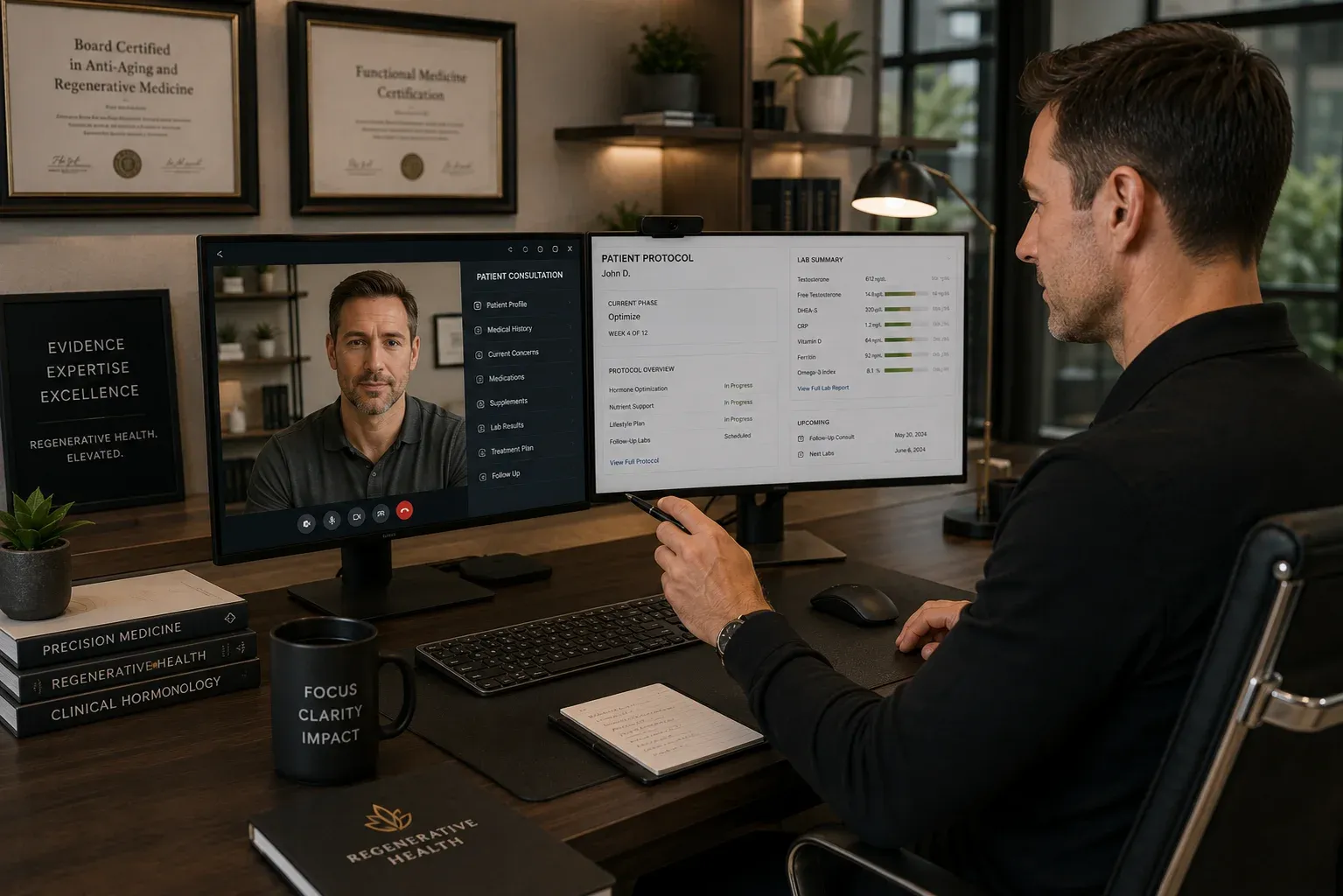
The hybrid response is not building a full brick-and-mortar clinic. It is establishing a minimal in-person presence — a treatment suite, a shared clinical space, or a partnership with an existing facility — that enables IV therapy, injection protocols, and periodic in-person monitoring appointments while preserving the telehealth model's low-overhead economics for the protocol management and consultation work that drives the majority of patient interactions.
The entrepreneurs who start with telehealth and add a physical component at the point where patient demand justifies it are making a sequenced, evidence-based expansion decision. The telehealth operation validates the market, builds the patient base, and generates the revenue that funds the physical expansion. The physical component then unlocks the higher-value services and deeper patient relationships that the telehealth model alone cannot reach.
This is the trajectory ACG observes most consistently among telehealth clients who achieve durable commercial success. Not telehealth forever and not brick-and-mortar from day one — but telehealth as the entry point and the physical component as the natural next floor when the business has earned it.
To start the conversation about whether the telehealth model is the right entry point for your specific situation visit altosconsultinggroup.com/survey.
Why the Compliance Investment Pays Back Faster in Telehealth Than In-Person
The compliance infrastructure required to operate a telehealth regenerative health practice — state-by-state prescribing authority analysis, Ryan Haight Act compliance for controlled substance protocols, interstate medical licensure considerations, and the specific platform requirements for HIPAA-compliant video consultation — is more complex in some respects than the compliance required for a single-state in-person clinic. This complexity causes some entrepreneurs to hesitate at the telehealth model, assuming the regulatory burden offsets the overhead advantage.
The calculation reverses when you account for what the compliance investment actually unlocks. An in-person clinic's compliance infrastructure serves one market — the geographic area within a reasonable drive of the physical location. A telehealth clinic's compliance infrastructure, built correctly across multiple states, serves every patient in every state where the practice is licensed to operate. The same medical director. The same clinical team. The same technology infrastructure. The same monthly overhead. But a patient acquisition universe that is not bounded by geography.
The telehealth clinic that invests in prescribing compliance across five high-population states in year one has access to a combined patient demographic that no single-location in-person clinic can match. When the marketing works — when a piece of content ranks for a high-intent keyword or a paid campaign finds the right audience — the lead can come from anywhere in those five states. The in-person clinic's equivalent marketing investment produces leads within a 15-mile radius.
This is the leverage point of the telehealth model that most financial comparisons between telehealth and in-person miss. The compliance cost is a fixed investment. The market it unlocks scales with the number of states covered. The entrepreneur who thinks of multi-state telehealth compliance as a burden is thinking about it backward. It is the asset that makes the model commercially superior to in-person at scale.
Frequently Asked Questions
What is the biggest advantage of a telehealth regenerative health clinic vs. in-person?
Lower startup cost due to reduced physical infrastructure requirements, broader geographic patient reach across multiple states from a single operational base, and the accessibility advantage of meeting patients where they are rather than requiring them to come to a physical location. The trade-off is the limitation to protocol-manageable services — procedure-based modalities cannot be delivered via telehealth.
Can a telehealth clinic prescribe testosterone?
Yes, subject to specific compliance requirements including physician licensure in the patient's state, Ryan Haight Act compliance requirements, and state-specific controlled substance telehealth regulations. The compliance framework for telehealth testosterone prescribing varies significantly by state and must be built with healthcare counsel familiar with the specific requirements of each target state.
Is a telehealth regenerative health clinic as profitable as an in-person clinic?
The revenue per patient of a telehealth practice may be lower than an in-person clinic due to the absence of procedure-based services. The margin per patient may be higher due to lower overhead. The primary economic advantage of the telehealth model is the ability to scale patient volume across a broader geographic market without proportional increases in fixed operating costs.