
The Sexual Wellness Clinic Business Opportunity: Why One of the Most Underserved Patient Populations in Cash-Pay Health Is Also One of the Most Loyal
A 2026 Market Analysis and Business Guide for Entrepreneurs Evaluating the Sexual Wellness Clinic Space
The Market Nobody Talks About — But Everyone Searches For
Erectile dysfunction affects an estimated 30 million men in the United States. Low libido is the most common sexual health complaint among both men and women. Female sexual dysfunction — including hypoactive sexual desire disorder, arousal disorders, and the genitourinary effects of hormonal changes — affects 40 to 45 percent of women at some point in their lives. These conditions are searched for constantly, discussed in physician offices rarely, and treated compliantly and effectively by very few dedicated cash-pay clinics.
The sexual wellness clinic exists in this gap. It is a dedicated clinical environment that treats sexual health concerns with the same clinical seriousness and the same premium patient experience as any other specialized health practice — without the gatekeeping, the embarrassment, and the inadequate conventional treatment options that keep most patients managing these conditions in silence.
This patient demographic — adults between 35 and 65 dealing with sexual health conditions that affect their relationships and their quality of life — is among the most motivated, most discreet, and most loyal in cash-pay health. When they find a clinic that treats their condition with clinical seriousness and produces results, they do not leave. They do not refer loudly. But they refer consistently to people they trust with private health information — which is exactly how sexual wellness clinic patient bases grow.
Altos Consulting Group has helped launch sexual wellness clinics across the United States. To see the clinics ACG has supported, visit altosconsultinggroup.com/clinics-supported/sexual-wellness (altosconsultinggroup.com/clinics-supported/sexual-wellness).
The Business Model: High Retention, High Discretion, High Value
The sexual wellness clinic patient retention dynamic is among the strongest in cash-pay health. The conditions being treated — ED, low libido, sexual dysfunction — do not resolve permanently with a single treatment episode. Shockwave therapy for ED produces results that improve over a treatment series and maintain through periodic maintenance sessions. Hormone optimization for sexual wellness requires ongoing prescription management and monitoring. Peptide protocols addressing libido and sexual function run in cycles that patients renew when results decline.
This treatment structure creates a recurring revenue model built into the clinical necessity of the care rather than artificial membership constructs. A sexual wellness patient enrolled in a shockwave protocol series generating $2,400 to $4,800 over the initial treatment course, followed by quarterly maintenance sessions at $300 to $600 each, represents a patient relationship that generates between $3,600 and $7,200 in the first year of care.
These figures are illustrative planning benchmarks — actual results depend on market conditions, patient volume, pricing structure, and operational execution.
The Service Stack: What a Sexual Wellness Clinic Offers
Shockwave Therapy for ED
Acoustic shockwave therapy — low-intensity extracorporeal shockwave therapy for erectile function improvement — is the anchor modality for men's sexual wellness clinics. It is equipment-based, non-pharmaceutical, non-invasive, and produces documented improvements in erectile function through neovascularization and tissue regeneration mechanisms that address the underlying vascular causes of ED rather than providing temporary symptom management. Treatment protocols typically run six to twelve sessions over four to six weeks, followed by maintenance sessions every three to six months.
PRP for Sexual Wellness
Platelet-rich plasma treatments for sexual wellness — the P-Shot for men and the O-Shot for women — use concentrated growth factors from the patient's own blood to improve erectile function, sensitivity, and tissue quality in the genital region. These procedures command premium pricing, complement shockwave therapy protocols, and attract a patient demographic willing to invest significantly in sexual health outcomes.
PT-141 Peptide Protocols
PT-141 — bremelanotide, available under the brand name Vyleesi for women — is a melanocortin receptor agonist that addresses hypoactive sexual desire disorder in women through a distinct mechanism from hormonal treatments. For men, PT-141 has been studied as an adjunct for ED and has shown efficacy in patients who do not respond to PDE5 inhibitors. Compounded injectable PT-141, prescribed under medical director oversight through a licensed compounding pharmacy, is one of the most commercially differentiated services a sexual wellness clinic can offer.
Hormone Optimization for Sexual Wellness
Low testosterone in men and estrogen, testosterone, and DHEA deficiencies in women are among the most common biological contributors to sexual dysfunction across both genders. A sexual wellness clinic that includes hormonal assessment and optimization as part of its clinical evaluation — rather than treating sexual symptoms in isolation from the hormonal environment that governs them — delivers better clinical outcomes and creates a natural pathway to ongoing hormone optimization enrollment.
Women's Sexual Wellness
Genitourinary syndrome of menopause, hypoactive sexual desire disorder, arousal disorders, and the range of sexual health concerns specific to women represent a significantly underserved market within an already underserved category. Women's sexual wellness services — O-Shot, PT-141, topical hormone therapy, and pelvic floor support — can be offered as a standalone women's sexual wellness practice or integrated into a combined practice serving both genders.
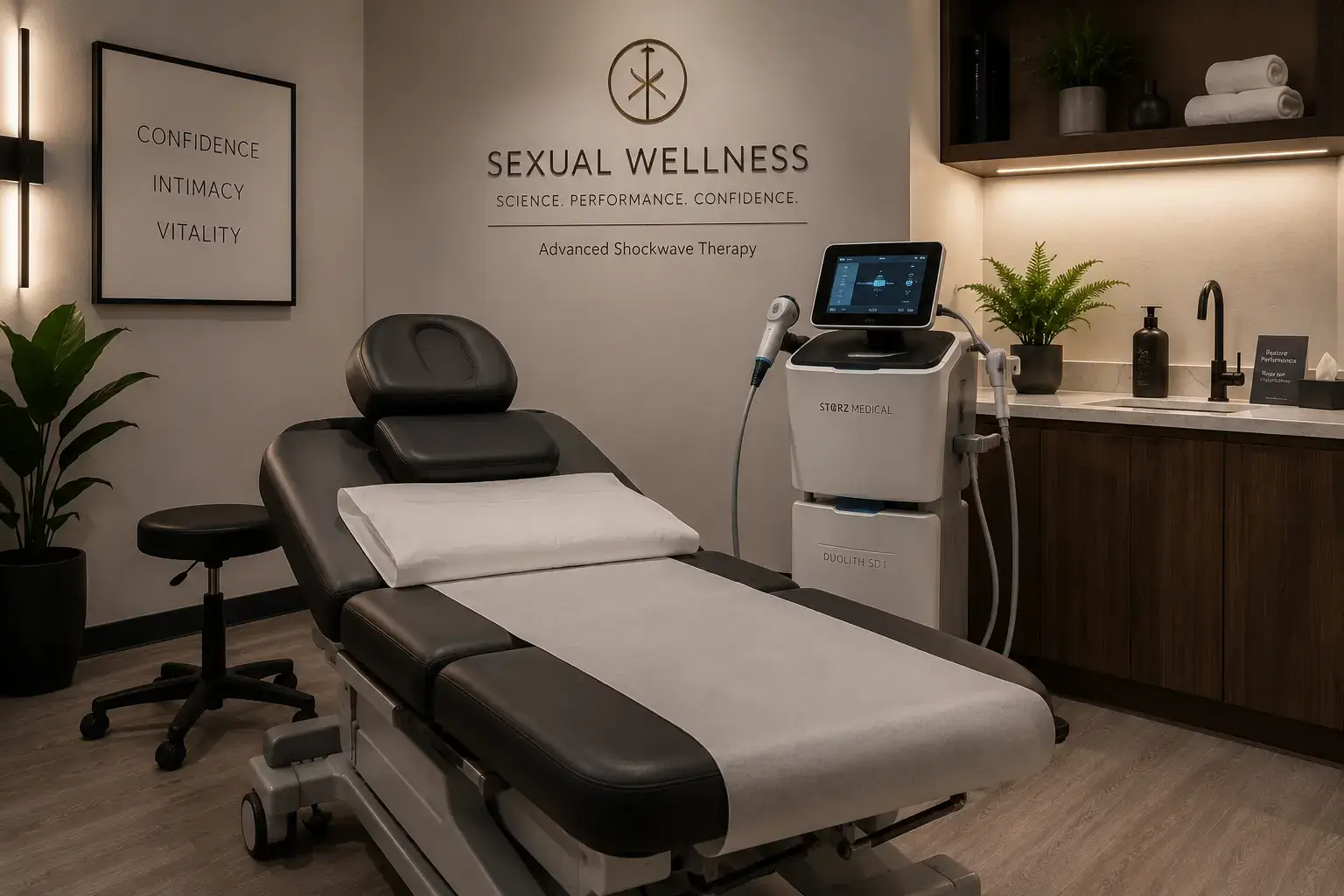
Marketing a Sexual Wellness Clinic: The Unique Compliance and Trust Challenge
Sexual wellness clinic marketing operates in one of the most compliance-restricted advertising environments in healthcare. Meta explicitly prohibits ads for sexual health conditions that use explicit imagery or clinical terminology in ways that violate their community standards. Google's healthcare advertising restrictions apply to specific ED treatment terms. The marketing approach that works for sexual wellness clinics is outcome-focused, discreet, and targeted to the specific search intent of the patient rather than broadcast advertising.
The highest-converting patient acquisition channels for sexual wellness clinics are: local SEO targeting the specific ED, low libido, and sexual wellness keywords the target patient searches; Google Search advertising targeting high-intent treatment searches; and physician referral relationships with primary care providers and urologists who encounter sexual wellness patients regularly but do not offer the treatments themselves.
The patient who arrives at a sexual wellness clinic through a physician referral is the highest-converting and highest-retaining patient type. Building those referral relationships early — through clinical credibility, protocol transparency, and consistent outcome reporting back to the referring physician — is the highest-leverage marketing investment a sexual wellness clinic can make.
What ACG Provides
ACG's launch engagement for a sexual wellness clinic covers market validation, entity structure, medical director introduction with sexual wellness protocol experience, equipment access at preferred pricing for shockwave therapy and PRP systems, compounding pharmacy supplier access for PT-141 and hormone compounds, clinical protocol setup, brand and website development, compliance-structured marketing campaigns for sexual wellness, and 60 days of post-launch advisory support.
To start the conversation about the sexual wellness clinic opportunity in your specific market, visit altosconsultinggroup.com/survey.
Why the Sexual Wellness Clinic Is the Most Recession-Resilient Model in Cash-Pay Health
The cash-pay health clinic that depends on a broad, price-sensitive patient demographic is vulnerable to economic pressure in ways that most clinic owners do not fully appreciate until a downturn arrives. When household budgets tighten, the first spending category most consumers reduce is discretionary health and wellness — the gym membership, the aesthetic treatments, the supplement subscriptions. The sexual wellness clinic patient does not behave this way and understanding why is one of the most commercially important insights available to an entrepreneur evaluating this category.
Sexual health is not a discretionary category for the patient experiencing erectile dysfunction, low libido, or the sexual health consequences of hormonal decline. It is a quality of life issue with direct implications for their most important personal relationships. The patient who has been enrolled in a shockwave therapy program for four months and is experiencing meaningful functional improvement is not evaluating whether to continue based on whether they can afford it in the same way they evaluate whether to renew a gym membership. The clinical relationship, the results, and the personal stakes of discontinuing are all significantly higher than any other wellness category. This is the recession resilience mechanism — not that sexual wellness patients are wealthier than other patient demographics, but that the motivation driving their enrollment is more durable than the motivation driving enrollment in most other cash-pay health categories.
The data from the 2008 financial crisis and the 2020 economic disruption both support this pattern. Elective aesthetic procedures dropped significantly during both downturns. Sexual health treatment seeking held significantly more stable — partly because the underlying conditions driving demand do not respond to economic conditions, and partly because the patient population seeking clinical treatment for sexual health concerns has already cleared the highest psychological barrier in cash-pay health, which is deciding to seek help for a condition they may have been managing privately for years. A patient who has crossed that barrier and found a clinic that is helping them does not abandon the relationship over a budget pressure that would easily cancel a spa appointment.
The Male and Female Patient: Building a Practice That Serves Both
The sexual wellness clinic that serves only one gender is capturing half the available market in most demographics. The conditions driving sexual wellness clinic demand exist across both male and female patient populations, and in many cases the highest-value referral source available to a sexual wellness clinic is the existing patient whose partner is experiencing the same category of concern.
The male patient population — driven primarily by erectile dysfunction, declining sexual performance, and libido concerns — is the historically dominant segment of sexual wellness clinic patients and the one most commonly targeted by clinic marketing. But the female sexual wellness patient represents a significantly underserved and rapidly growing segment that most sexual wellness clinics are not positioned to serve adequately. Genitourinary syndrome of menopause, hypoactive sexual desire disorder, arousal difficulties, and the sexual health consequences of hormonal changes affect between 40 and 45 percent of women at some point and are addressed by virtually no provider in conventional medicine with the clinical seriousness and treatment depth that a dedicated sexual wellness practice can provide.
The clinical infrastructure for serving female sexual wellness patients — PT-141 protocols, the O-Shot, topical hormone therapy, pelvic floor support referral relationships — overlaps significantly with the infrastructure already in place for male patients. The medical director oversight framework is identical. The compounding pharmacy relationships cover the same compounds. The consultation framework requires different training but not different infrastructure. Adding a formal female sexual wellness service line to a clinic that has been operating primarily for male patients is one of the highest-return service expansions available precisely because the incremental operational cost is low relative to the incremental revenue and market reach it produces.
The combined practice — one that serves both male and female sexual wellness patients under a brand positioned around clinical seriousness and patient privacy rather than gender specificity — also produces the most durable referral dynamics in the category. A male patient who experiences meaningful results refers his partner. A female patient who finds a clinic that takes her sexual health seriously refers her partner, her friends, and the women in her social circle who are having the same conversations she was having before she found the clinic. The referral network of a well-run combined sexual wellness practice compounds faster than any single-gender practice because it operates across the full social network rather than within one half of it.
Frequently Asked Questions
Is a sexual wellness clinic a good business?
Yes. The combination of a significantly underserved patient demographic, high average treatment package value, strong patient retention from protocol-based care, and a discreet referral network that compounds over time makes sexual wellness one of the most commercially durable cash-pay health clinic models available. The barrier is the compliance and marketing complexity — which ACG's engagement addresses as a standard component of the launch.
What is the primary patient demographic for a sexual wellness clinic?
Men between 40 and 65 dealing with erectile dysfunction or declining sexual performance, and women between 35 and 65 dealing with low libido, arousal disorders, or the sexual health effects of hormonal changes. Both demographics are highly motivated, willing to invest in effective solutions, and significantly underserved by conventional medicine in the context of sexual health optimization.
How do sexual wellness clinics get patients without explicit advertising?
Local SEO targeting the specific search terms patients use when privately researching sexual wellness solutions. Google Search ads targeting high-intent keywords with compliant creative. Physician referral relationships with primary care and urology practices. Word-of-mouth referrals from successfully treated patients to trusted friends and partners. These channels build consistently over time and are more durable than any paid advertising approach.
Written by Nova, Senior Content Strategist at Altos Consulting Group.