Staffing and Training a Regenerative Health Clinic: The Team That Determines Whether Your Clinic Succeeds in the First 90 Days
A 2026 Hiring and Training Guide for Entrepreneurs Opening and Operators Growing a Regenerative Health or Longevity Clinic
The Team Is the Clinic
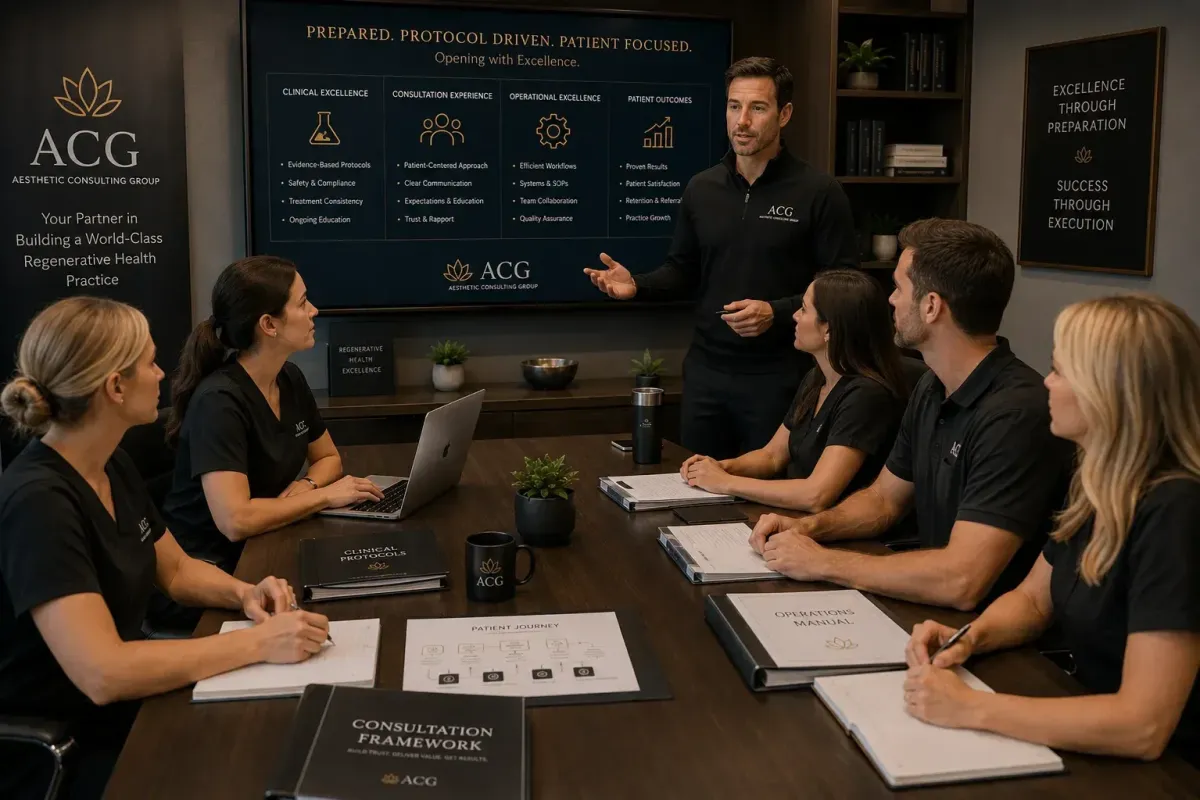
The physical space, the equipment, the brand, the marketing — all of it creates the conditions for a Regenerative Health Clinic to succeed. The team determines whether it does. The patient experience that drives retention and referrals is a human experience, delivered by the clinical team that greets patients, administers protocols, communicates monitoring results, and handles the consultation conversations that convert inquiries into enrolled members.
The clinic that opens with a well-hired, well-trained team — one that has practiced the consultation framework, mastered the clinical protocols, and internalized the patient experience standard the clinic is committed to — builds momentum from its first week. The clinic that opens with an undertrained team, or with roles not yet filled, spends its first three months correcting the first impression it made on patients who may not return.
This post covers every role in a Regenerative Health Clinic team, what each role requires, what to look for in candidates, and how the training before opening determines the patient experience after it.
ACG provides staffing guidance and staff training as part of the standard launch engagement. To see the details, visit altosconsultinggroup.com/staffing-training.
The Core Team: Who a Regenerative Health Clinic Needs
Medical Director
The medical director is the licensed physician or nurse practitioner who provides clinical oversight, prescribing authority, and protocol sign-off for the clinic's service menu. The medical director does not need to be present in the clinic every hour it operates — in most clinic structures, the medical director is a part-time or contracted relationship. But they must be genuinely engaged — reviewing patient labs, signing off on protocol adjustments, and accessible when the clinical team needs physician-level judgment. A medical director who signed a contract and checks in monthly is not a functioning clinical backbone. ACG facilitates introductions to vetted medical directors across 46 states — practitioners with specific experience in the clinic type being built.
Nurse Practitioner or Registered Nurse
The licensed nurse who administers protocols — IV infusions, injectable peptides and hormones, PRP procedures — is the most clinically critical hire in the team. This person must be licensed appropriately for the state and the services being offered, trained specifically on the clinic's protocols before the first patient appointment, and comfortable with the clinical documentation standards the medical director requires. For a clinic offering IV therapy, this must be an RN or NP with IV therapy certification. For a clinic offering hormone injections and peptide protocols, the scope of practice requirements vary by state and must be confirmed before hiring.
Patient Care Coordinator or Medical Assistant
The patient care coordinator manages the administrative patient flow — appointment scheduling, intake paperwork, lab result delivery, membership renewal coordination, and the daily operational logistics that keep the clinical team focused on patient care rather than administrative management. In many clinics, this role also handles the initial patient inquiry response — the first impression a prospective patient receives from the clinic before their consultation. Getting this hire right matters more than most clinic owners expect when they are focused on the clinical team.
Consultation and Membership Sales Coordinator
The consultation coordinator manages the clinical consultation conversations that convert prospective patients into enrolled members. This is not a traditional sales role — the Regenerative Health consultation that converts consistently is built on genuine clinical engagement, not pressure. But it is a role that requires specific skills: the ability to ask the right opening questions, present protocol options in clinical context, present pricing confidently without apology, and follow up with prospective patients who did not enroll at the initial consultation without being pushy.
This role has the highest leverage on the clinic's revenue in the first 90 days of operation. A consultation coordinator who converts 40 percent of consultations into enrollments versus one who converts 20 percent doubles the clinic's new membership revenue from the same marketing spend. Training this person — specifically, with the actual consultation framework ACG uses — is one of the most commercially important training investments a clinic owner makes.
Training Before Opening: Why It Cannot Be Done on Real Patients
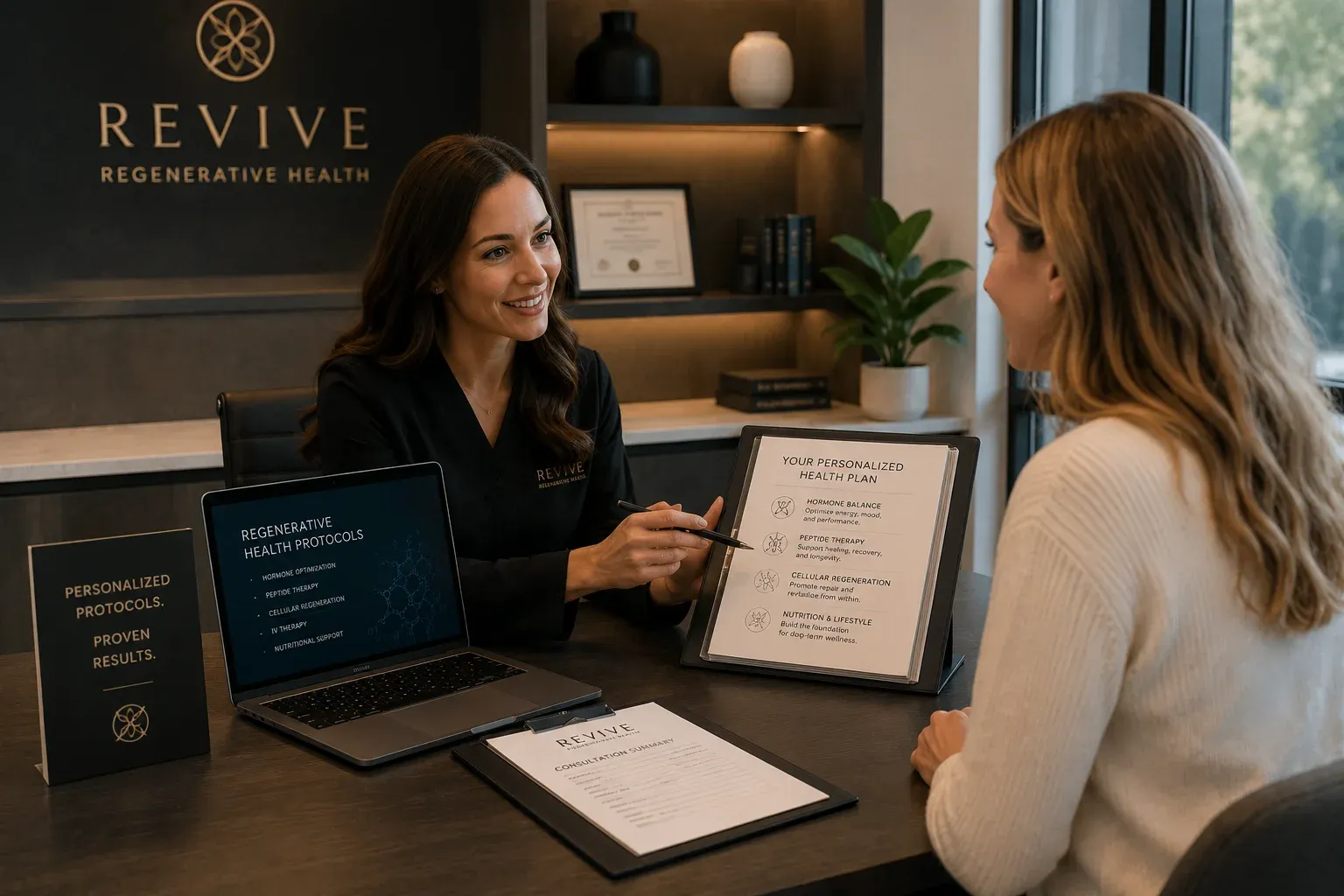
Every member of the clinical team must be trained on the clinic's specific protocols before the first patient appointment. Not the general category of protocols the clinic offers — the specific compounds, dosing frameworks, administration methods, monitoring schedules, documentation requirements, and adverse event recognition and reporting procedures for each service the clinic will offer on opening day.
This training cannot be done on the first week's patients. The clinical standard a clinic establishes in its first week is the one it will spend months reinforcing or repairing. A patient who receives an IV infusion from a nurse who has never administered the specific formulation before, or whose clinical questions are handled uncertainly, does not come back for the membership conversation. A patient who receives care from a prepared, confident clinical team that clearly knows what they are doing has their clinical relationship with the clinic anchored from the first visit.
ACG delivers all clinical training — protocol-specific, conducted before opening day, with the medical director's sign-off on the training content — as part of the standard launch engagement. Operations training covering patient flow, documentation, and daily operational systems for all staff. Sales and consultation training specific to the Regenerative Health patient acquisition model for the consultation team.
Hiring: What to Look For in Each Role
•Medical director — Clinical experience in the specific services offered. State license in good standing. Genuine interest in the clinical approach, not just a compliance contract. Available for the level of engagement the service mix requires.
•Nurse or NP — State license appropriate for the procedures the clinic will perform. Clinical competence with IV therapy and/or injectable protocols. Professional communication skills that build patient trust. Openness to ongoing protocol training as the service menu evolves.
•Patient care coordinator — Organizational precision, warmth with patients over the phone and in person, and the operational reliability that makes the administrative side of the clinic invisible to patients. Healthcare administrative experience is helpful but not required.
•Consultation coordinator — Strong interpersonal skills and the genuine curiosity about patients that makes the consultation conversation feel like a conversation rather than a pitch. Clinical literacy sufficient to speak intelligently about the protocols without needing to be a clinician. Comfort discussing pricing confidently.
What ACG Provides
ACG's staffing and training engagement covers hiring guidance and network access for all clinic roles — Medical Assistants, Nurse Practitioners, and Sales Associates. Protocol-specific clinical training for the nursing team. Consultation framework training for the patient-facing team. Operations training for the full staff. All conducted before the clinic opens, all in coordination with the medical director's sign-off on clinical content.
To learn more about the staffing and training support ACG provides, visit altosconsultinggroup.com/staffing-training or visit altosconsultinggroup.com/survey to start the conversation.
The Hiring Mistake That Costs More Than Any Other in the First 90 Days
The most expensive staffing mistake a new Regenerative Health Clinic owner makes is not hiring the wrong person for the wrong role. It is hiring the right person for the wrong role — specifically, promoting the most clinically capable person on the team into the consultation coordinator position because they are trusted and knowledgeable, without evaluating whether they have the interpersonal skills and commercial orientation the role actually requires.
The consultation coordinator role is the highest-leverage position in the clinic's revenue system. A clinically excellent nurse who is uncomfortable discussing pricing, hesitates to ask for a commitment at the end of a consultation, or defaults to answering clinical questions rather than guiding the patient toward a decision will produce a consultation-to-enrollment conversion rate that underperforms the clinic's patient acquisition investment regardless of how well the clinical team performs everything else.
The skills that make a great consultation coordinator are not clinical skills. They are relational and commercial skills — the ability to ask the right opening questions and actually listen to the answers, the confidence to present pricing without apologizing for it, the judgment to know when to be quiet and let the patient think, and the persistence to follow up with a patient who did not enroll at the first consultation without being pushy. These skills are identifiable in the hiring process and developable through the right training. They are not automatically present in a clinical hire.
When evaluating candidates for the consultation coordinator role look for people with backgrounds in high-value consultative sales, premium service industries, or healthcare patient advocacy — not necessarily clinical backgrounds. The clinical knowledge required for the role is learnable in two to four weeks of protocol orientation. The relational and commercial instincts required are either present or they are not, and trying to develop them in someone who fundamentally does not enjoy the enrollment conversation is one of the most time-consuming and expensive team management challenges a new clinic owner can take on.

The Training Calendar That Determines Opening Day Readiness
One of the most consistent operational gaps ACG identifies in new clinic launches that were not supported by structured consulting is the absence of a formal pre-opening training calendar. The clinic owner who hires their team four weeks before opening and assumes training will happen organically — through shadowing, through ad hoc conversations, through learning on the job — discovers in the first week of real patient operations that organic training produces inconsistent execution at exactly the moment consistency matters most.
A formal pre-opening training calendar assigns specific training topics to specific days, involves the medical director in the clinical training sessions, and includes practice runs of every patient-facing process before any real patient experiences it. The goal is not to produce a perfect team on opening day. It is to produce a team that has encountered the most common scenarios, practiced the responses, and identified the gaps before a real patient is affected by them.
The training calendar for a Regenerative Health Clinic covers four distinct domains that must all be addressed before opening. Clinical protocol training covers the specific compounds, administration methods, monitoring schedules, documentation standards, and adverse event recognition procedures for every service the clinic will offer on day one. This training is delivered by or in coordination with the medical director and must conclude with the medical director's sign-off on each staff member's protocol competency.
Consultation and enrollment training covers the specific conversation framework the consultation coordinator uses from the opening question through the protocol presentation through the pricing discussion through the enrollment commitment or the follow-up sequence for patients who do not enroll at the first meeting. This training is delivered through role play — actual practice consultations with a team member playing the patient — not through passive review of a written script. The consultation coordinator who has run twenty practice consultations before the first real one performs measurably better than one who has read the framework and is applying it live for the first time.
Operations training covers patient intake, scheduling protocols, clinical supply management, EMR documentation standards, and the daily operational rhythm of the clinic — who does what, in what order, when the clinic opens, how handoffs between roles work, and what the escalation path is when something unexpected happens. This is the training most often shortchanged in new clinic launches because it feels administrative rather than clinical. The patient who experiences a smooth, organized clinical operation from arrival to departure has their trust in the clinic anchored before the clinical team has delivered a single protocol.
Patient communication training covers the specific language the entire team uses when talking to patients — about protocols, about results timelines, about pricing, about the monitoring process, and about what to expect during the ramp-up period before protocols produce their full clinical effect. Inconsistent patient communication is one of the most common causes of early-stage churn in new Regenerative Health Clinics. A patient who received a confident, specific description of what to expect at the consultation and then receives a vague or inconsistent answer to the same question from a different team member two weeks later loses confidence in the clinical program regardless of whether the protocol is working correctly.
ACG delivers all four domains of pre-opening training as part of the standard launch engagement — in coordination with the medical director, completed before the clinic opens, and structured so that the team has practiced rather than just reviewed every process they will be asked to execute on day one.
Frequently Asked Questions
What is the minimum team size for a new Regenerative Health Clinic?
A functional minimum for a clinic opening with a focused service menu — hormone optimization or peptide protocols without IV therapy — is three people: a medical director, a licensed nurse or NP for protocol administration, and a patient care and consultation coordinator. Adding IV therapy requires a dedicated IV-certified nurse. Adding a high-volume appointment schedule requires separating the patient care coordination and consultation roles.
How do I find a medical director for my clinic?
ACG facilitates medical director introductions across 46 states as a standard component of the launch engagement. The introductions are to vetted practitioners with specific experience in the clinic type being built — not simply any physician willing to sign a supervision agreement. The medical director relationship is one of the most consequential clinical and legal structures in the clinic, and it deserves the same diligence as any other foundational decision.
How much does a Nurse Practitioner cost for a Regenerative Health Clinic?
NP compensation for a part-time or full-time clinical role at a cash-pay Regenerative Health Clinic varies by market, experience level, and the scope of clinical responsibilities. As a general benchmark, a full-time NP role with responsibility for protocol administration and patient monitoring typically commands $90,000 to $130,000 annually depending on market. Part-time or contract arrangements are common for clinics in their early operational months before patient volume justifies full-time clinical staff.
Written by Nova, Senior Content Strategist at Altos Consulting Group.