Longevity Clinic Biomarker Panels: What to Test and Why It Drives Retention
A 2026 Clinical and Business Guide to Building the Testing Menu That Anchors a Longevity Medicine Practice
The Panel Is Not a Line Item. It Is the Business Model.
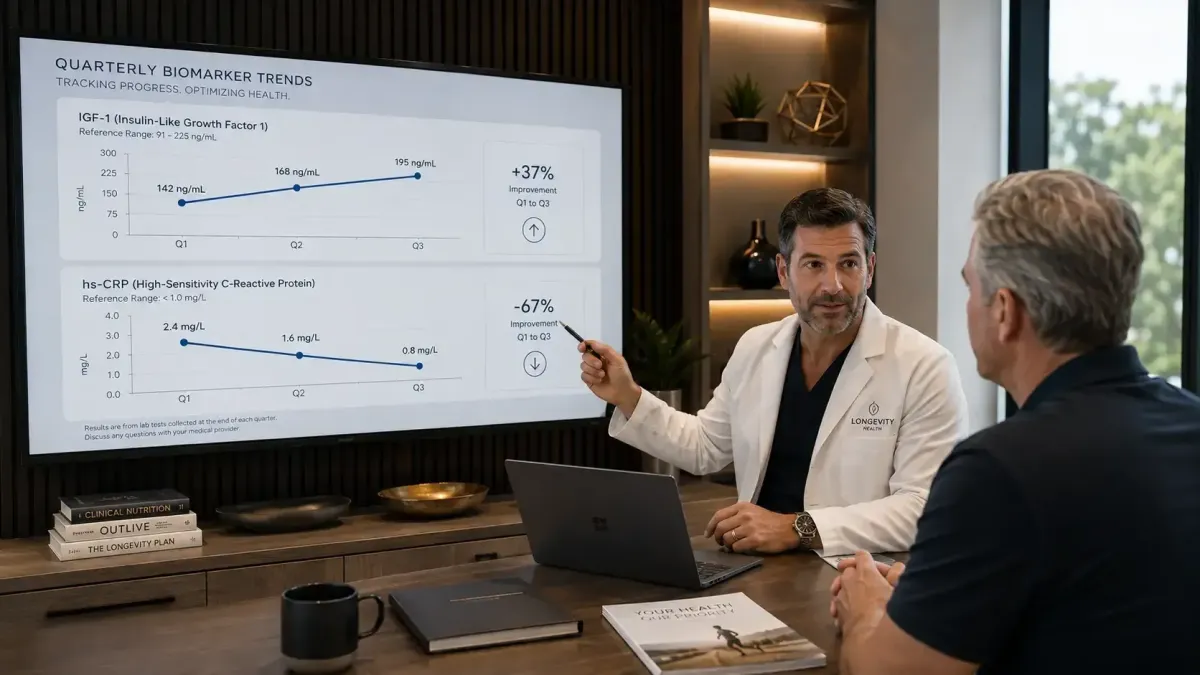
Ask most new longevity clinic owners why they offer biomarker testing and the answer is usually some version of 'because that's what longevity clinics do.' That answer treats testing as a checkbox rather than what it actually is — the single mechanism that converts a transactional wellness visit into a recurring clinical relationship. A patient who receives a protocol without objective data to track its effect has no reason to renew beyond how they feel that week. A patient who sees their inflammatory markers improve, their hormone panel normalize, or their biological age trend downward across three consecutive quarters has evidence. Evidence is what retention is built on.
This matters more in a longevity clinic than in almost any other regenerative health category because the outcomes longevity medicine promises — better energy, slower biological aging, improved metabolic function — are subjective and slow-moving on their own. A patient cannot feel their HbA1c improving. They can see it on a lab report. The testing menu is not a clinical add-on to the longevity clinic business model. It is the infrastructure the business model runs on.
For the complete longevity clinic business case, including the membership revenue model that testing supports, see The Longevity Clinic Business Opportunity.
To see the longevity clinics ACG has helped structure, including testing protocols, visit altosconsultinggroup.com/clinics-supported/longevity.
The Foundation Panel Every Longevity Clinic Should Start With
Before any clinic builds a differentiated or premium testing menu, there is a baseline panel that should run for every enrolling patient regardless of which protocol they ultimately choose. This baseline serves two purposes — it establishes the clinical starting point that makes protocol selection accurate, and it gives the patient their first concrete data point to compare against at the 90-day and quarterly reviews that follow.
The foundation panel covers four categories. A comprehensive hormone panel — total and free testosterone, estradiol, DHEA-S, and a full thyroid panel including TSH, free T3, and free T4 — identifies the hormonal factors most likely to be driving the fatigue, body composition changes, and cognitive symptoms that bring patients to a longevity clinic in the first place. A metabolic panel — fasting glucose, fasting insulin, HbA1c, and a full lipid panel — establishes the metabolic baseline that GLP-1, peptide, and hormone protocols will all move over time. Inflammatory markers — high-sensitivity CRP and homocysteine at minimum — give the clinic an objective read on the systemic inflammation that underlies most of the conditions longevity medicine addresses. A complete blood count rounds out the foundation panel and catches anything unrelated to longevity protocols that still needs clinical attention before treatment begins.
This foundation panel typically costs the clinic between $150 and $300 through a vetted lab partner and is priced to the patient between $250 and $450 as part of the initial consultation or membership enrollment fee. The margin on the panel itself is secondary to its real function — it is the data set that makes every subsequent conversation with that patient a clinical conversation rather than a sales conversation.
The Second-Tier Panel That Deepens the Clinical Relationship
Once a patient is enrolled and their protocol is underway, a second tier of testing becomes relevant depending on which services they are using. A patient on a growth hormone secretagogue protocol — Sermorelin, Ipamorelin, or a combination — needs IGF-1 monitoring to track the protocol's actual effect on growth hormone production, typically at baseline and then every 90 days. IGF-1 is the single most persuasive piece of data a longevity clinic can show a peptide therapy patient, because it is a direct, objective measurement of whether the protocol is working.
Vitamin D, B12, and ferritin round out the second-tier panel for most patients, particularly because deficiencies in all three are common in the exact demographic longevity clinics serve and are inexpensive to test and correct. A cortisol and DHEA-S ratio adds meaningful clinical value for patients whose presenting complaint centers on stress resilience, sleep quality, or energy — three of the most common reasons patients seek out a longevity clinic to begin with.
The second-tier panel is where a clinic's testing menu starts to differentiate from a generic wellness checkup. It is protocol-specific, clinically justified, and gives the medical director genuine data to adjust dosing and timing rather than guessing based on how the patient reports feeling.

Biological Age Testing — The Premium Tier, Not the Starting Point
Biological age testing — most commonly delivered through epigenetic clock technology that measures DNA methylation patterns — has moved from research curiosity to a commercially available offering that a growing number of longevity clinics are adding as a premium service. The clinical validity of epigenetic clocks has been the subject of significant research over the past several years, with newer generation clocks showing improved reliability over earlier versions.
A 2022 review in Frontiers in Cell and Developmental Biology describes epigenetic clocks as one of the most promising biomarkers available for tracking aging trajectories, while also noting the technology continues to mature and that clinical interpretation should be handled carefully rather than presented as a definitive diagnostic.
That combination — genuine promise paired with a technology still maturing — is exactly why biological age testing belongs in the premium tier of a longevity clinic's menu rather than the foundation panel every patient receives. It is a compelling annual or semi-annual offering for patients who have been enrolled long enough to want a comprehensive, big-picture view of their progress. It is not the test that should anchor a new patient's first visit, both because of cost — biological age panels typically run $300 to $500 wholesale — and because a single biological age number means very little to a patient without the foundation and second-tier data that explains what is actually driving it.
The Monitoring Cadence That Turns Testing Into a Retention Engine
The testing menu only produces its retention value if it runs on a defined, communicated schedule that the patient understands as part of what their membership includes. The cadence that works most consistently across longevity clinics is baseline testing at enrollment, a check-in panel at 90 days that specifically targets the markers most relevant to the patient's protocol, and a comprehensive quarterly panel thereafter that repeats the full foundation panel alongside any protocol-specific markers.
This cadence is not arbitrary. Ninety days is long enough for most hormone and peptide protocols to show a measurable initial effect, which makes it the ideal moment for the first data-driven renewal conversation. Quarterly panels thereafter give the clinical team four data points per year per patient — enough to show a genuine trend line without over-testing a patient on markers that do not move quickly. A clinic that tests too infrequently loses the retention value of visible progress. A clinic that tests too frequently drives up cost without adding proportional clinical or commercial value.
Selecting a Lab Partner — What Actually Matters
The lab partner a longevity clinic works with affects far more than pricing. CLIA certification is non-negotiable — it is the baseline federal quality standard for any lab processing patient specimens. Beyond that baseline, the factors that separate a strong lab partnership from a mediocre one are turnaround time, the ability to integrate results directly into the clinic's EMR rather than requiring manual data entry, and phlebotomy support if the clinic does not have an in-house draw station.
A lab partner with a 24 to 48 hour turnaround on standard panels allows a clinic to schedule result-review appointments with confidence rather than pushing them back repeatedly while waiting on results. EMR integration eliminates the administrative burden of manually transcribing lab values into patient charts, which is both a time cost and an error risk. ACG's supplier network includes lab partners vetted on both of these dimensions specifically for the panel structure longevity clinics use most.
To discuss testing menu design and lab partner access for your specific clinic, visit altosconsultinggroup.com/survey.
Frequently Asked Questions
What is the minimum viable biomarker panel for a new longevity clinic?
A comprehensive hormone panel, a metabolic panel including fasting insulin and HbA1c, hs-CRP for inflammation, and a complete blood count. This foundation panel covers the clinical territory that drives most of the symptoms longevity patients present with and gives the clinic the baseline data needed to design an accurate initial protocol. Every additional panel category should be added based on the specific protocol a patient enrolls in, not offered universally on day one.
How much should a longevity clinic charge for biomarker panels?
Foundation panels typically price between $250 and $450 depending on market and lab partner pricing, with a wholesale cost to the clinic of $150 to $300. Many clinics fold the initial panel into the enrollment or first membership month fee rather than billing it as a separate line item, since this reduces the friction of a new patient's first financial decision. Quarterly monitoring panels are frequently included in mid-tier and above membership pricing rather than billed individually, since the monitoring itself is what the membership fee is largely paying for.
Is biological age testing worth offering?
Yes, as a premium add-on for patients who have been enrolled long enough to have foundation and second-tier data already establishing their clinical picture — not as a starting point for new patients. The technology is genuinely promising and increasingly used in longevity medicine, but the research base is still developing, and a biological age number without supporting context from other markers is not clinically actionable on its own. Frame it to patients as one data point among several rather than a standalone verdict on their health.
How often should biomarker panels be repeated?
Baseline at enrollment, a targeted check-in panel at 90 days, and a comprehensive quarterly panel thereafter for the duration of the patient's enrollment. This cadence gives the clinical team enough data points to demonstrate a genuine trend without over-testing markers that do not meaningfully change over shorter intervals. Some markers — hormone panels, inflammatory markers — respond well to quarterly testing. Others, like biological age panels, are typically appropriate on a semi-annual or annual basis given their cost and the slower rate at which they change.