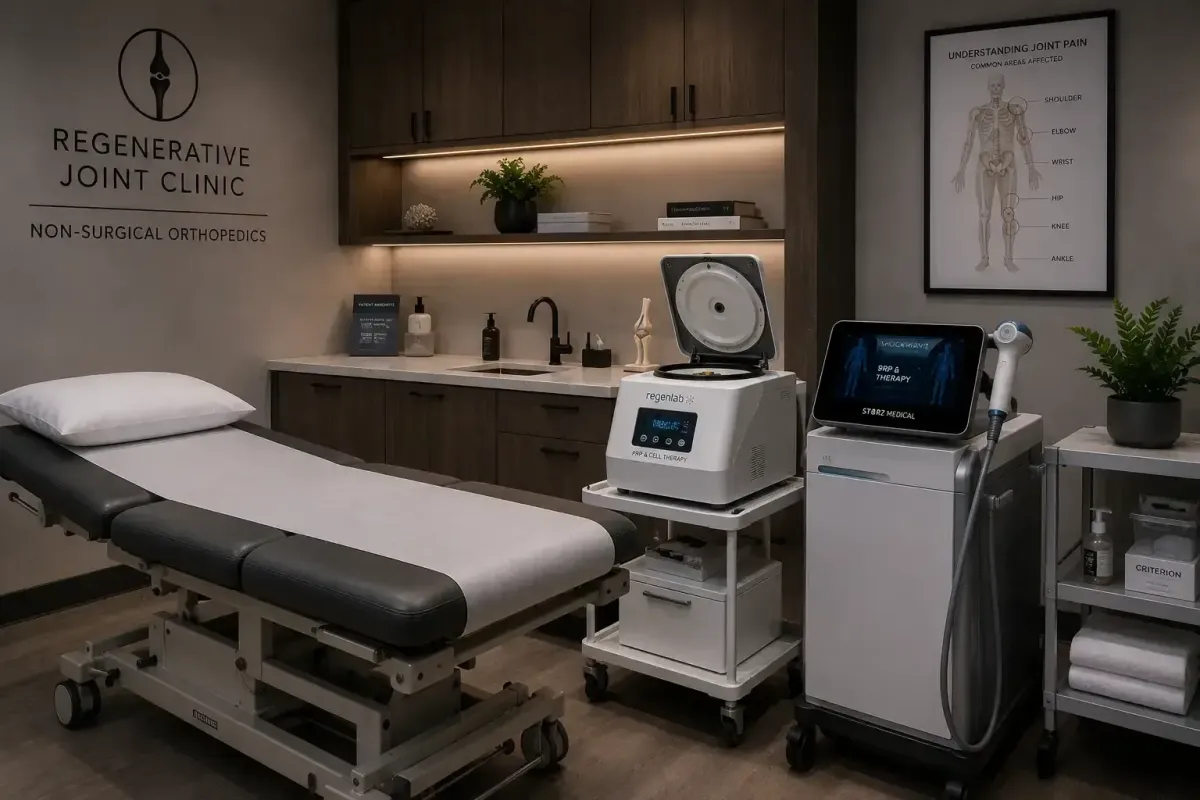
The Joint and Musculoskeletal Clinic Business Opportunity: Two Patient Populations, One Underserved Market, and Why Non-Surgical Regenerative Care Is the Fastest-Growing Alternative to Conventional Orthopedics
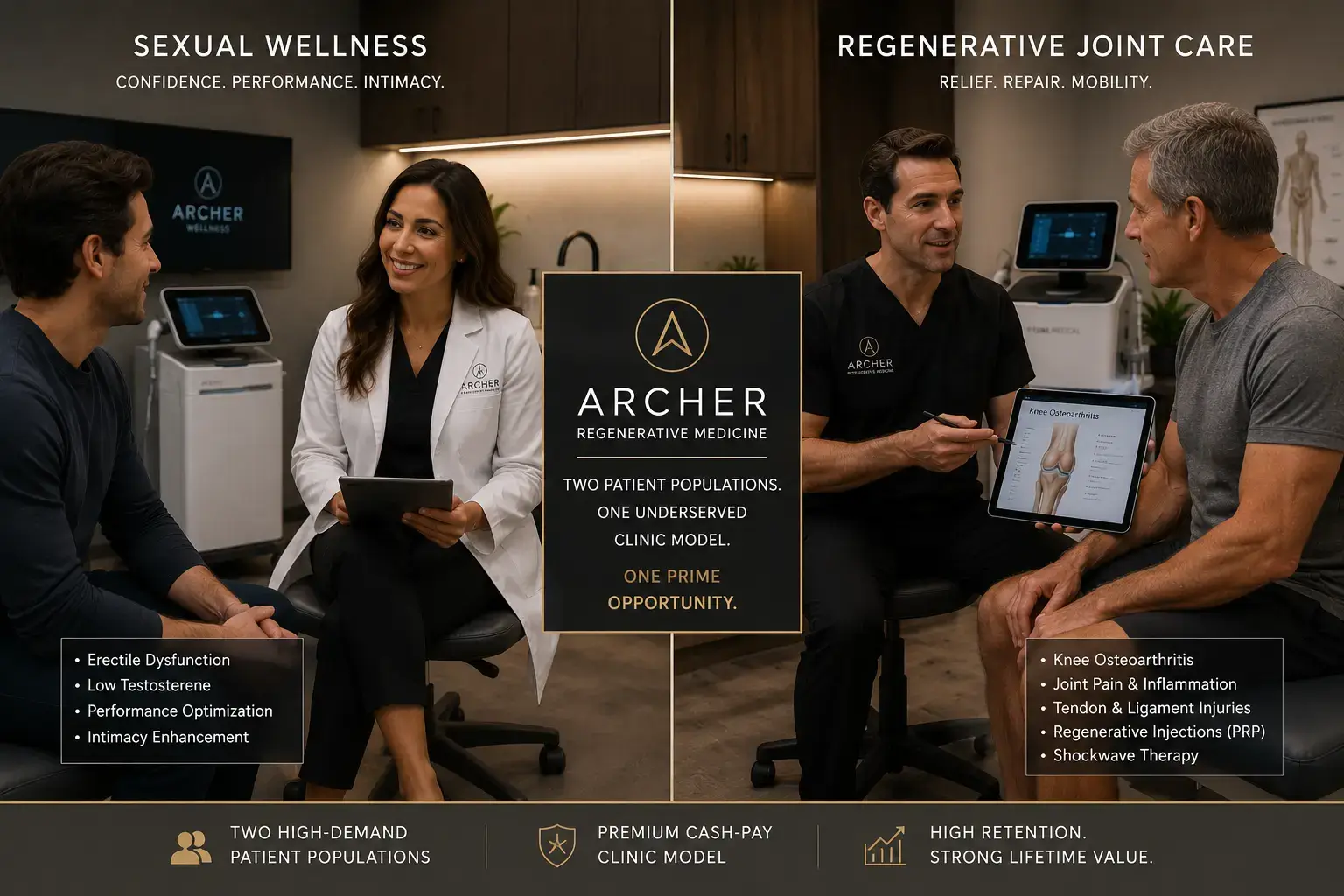
Two Patient Populations. One Underserved Clinic Model.
The first patient is 55 years old. Their knee has been hurting for three years. They have had two cortisone injections. They have been told that surgery is the next step and they are not ready for it. They are actively searching online for a non-surgical alternative — platelet-rich plasma therapy, exosome injections, shockwave therapy — and finding very few local clinics that specialize in these approaches.
The second patient is 38 years old. They train regularly. They have a shoulder injury from six months ago that physical therapy has not fully resolved. They have read about PRP and BPC-157 peptide protocols for tendon repair and they want to get back to training faster than their PT is projecting. They are willing to pay for results.
Both patients are searching in your market right now. And in most mid-size and secondary U.S. markets, no dedicated regenerative joint clinic is answering them. The entrepreneur who opens a professionally positioned joint and musculoskeletal clinic — offering PRP, exosomes, shockwave therapy, and peptide protocol adjuncts under one roof — is not competing with established operators. They are establishing the category in a market that does not yet have one.
Altos Consulting Group has helped launch joint and musculoskeletal clinics across the United States. To see the clinics ACG has supported in this category, visit altosconsultinggroup.com/clinics-supported/joint-musculoskeletal.
The Market Opportunity: Why QC Kinetix Built a Franchise Around This Category
QC Kinetix — the largest regenerative medicine franchise in the United States — built its entire franchise model around joint and musculoskeletal regenerative care. That is not a coincidence. It reflects a deliberate assessment that the market demand for non-surgical joint restoration is large, consistent, and growing faster than the supply of providers.
But the QC Kinetix franchise model extracts significant ongoing value from the clinic owner — franchise fees, royalties, and marketing fund contributions that reduce the clinic's retained earnings every month. The entrepreneur who builds an independently owned joint and musculoskeletal clinic, with the same clinical infrastructure and the same patient demand, retains all of the value the business generates. ACG provides the market validation, the medical director introduction, the supplier access, and the launch support that makes this path accessible without the franchise dependency.
The Service Stack: What a Regenerative Joint Clinic Offers
Platelet-Rich Plasma Therapy — The Category Anchor
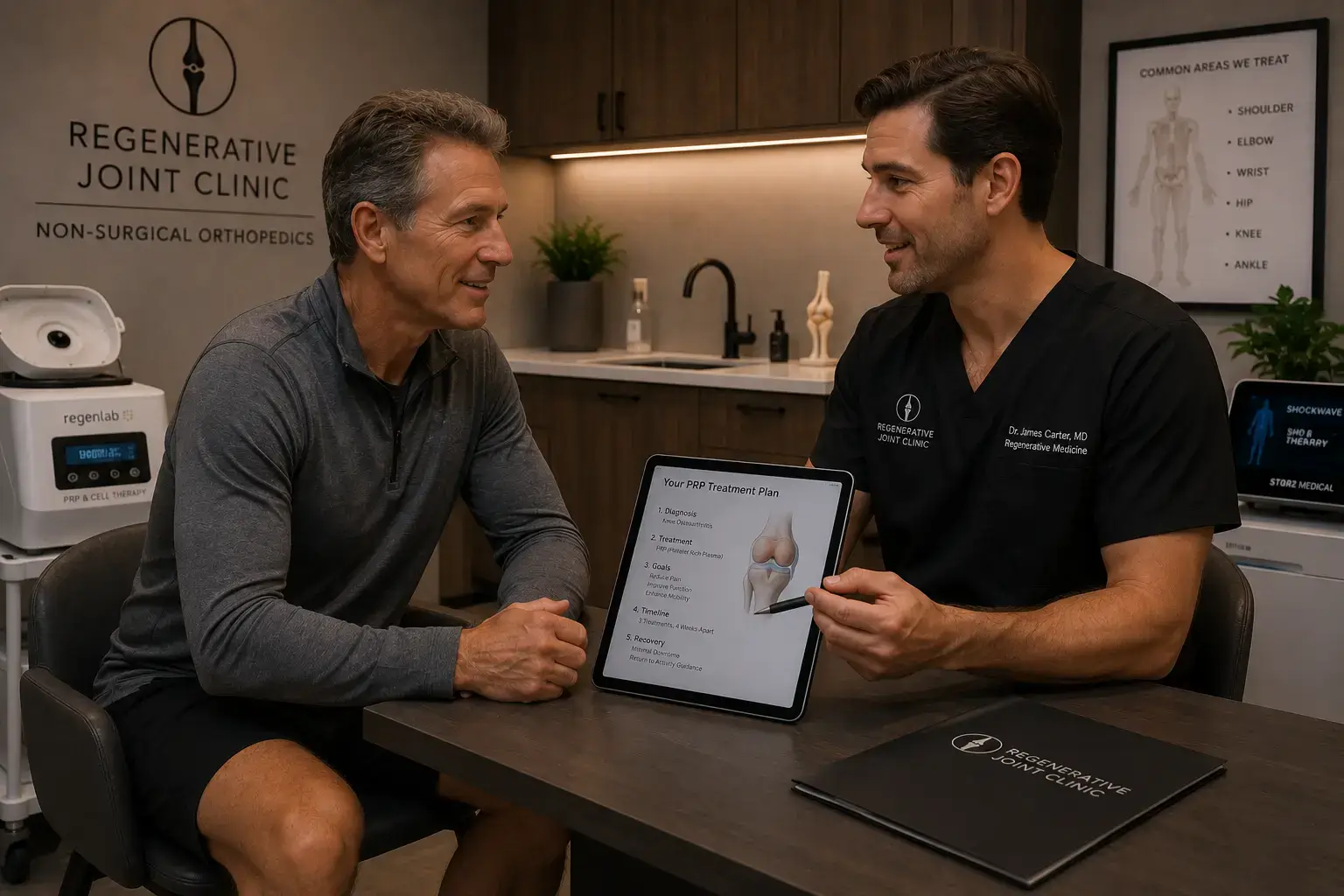
PRP therapy for joint, tendon, and ligament repair is the foundational service for most regenerative musculoskeletal clinics. Concentrated growth factors from the patient's own blood, prepared through centrifugation and injected locally into the joint, tendon, or ligament under ultrasound guidance. PRP generates recurring procedure revenue from patients who complete an initial series and return for maintenance injections. It establishes the clinical credibility of the practice as a serious, data-driven alternative to conventional orthopedic management.
Exosome Injections — Joint, Tendon, and Ligament
Cell-signaling exosomes injected locally into the joint, tendon, or ligament for accelerated tissue repair and inflammation reduction at the site of injury. Distinct from systemic IV exosomes used in longevity and neurological wellness contexts — joint exosome therapy delivers the regenerative signal directly to the injured tissue. Premium pricing, strong clinical outcomes for the right patient population, and significant differentiation from clinics that offer PRP alone.
Shockwave Therapy
Acoustic wave therapy — also called extracorporeal shockwave therapy or ESWT — for tendinopathy, plantar fasciitis, and chronic musculoskeletal conditions. Equipment-based, low consumable cost, strong outcomes for the active recovery patient with soft tissue injuries that have not responded to physical therapy alone. Shockwave therapy generates per-session revenue without the biological material costs of PRP or exosome procedures and is particularly effective for the athletic recovery patient demographic.
Hyperbaric Oxygen Therapy
HBOT for accelerated recovery, inflammation reduction, and tissue healing. A premium add-on service that elevates the clinic's positioning with the sports recovery patient and creates additional recurring session revenue from patients who incorporate periodic HBOT into their recovery protocol. Chamber sourcing, installation requirements, and operational setup are all addressed in ACG's launch engagement for clinics adding this modality.
Red Light Therapy
Photobiomodulation for tissue healing, pain reduction, and post-procedure recovery support. Complements every modality on this list and is accessible as a lower-cost add-on for patients who want to accelerate their recovery between primary procedure appointments. Low consumable cost, minimal clinical training requirement, and strong patient acceptance across demographics.
Peptide Adjuncts — BPC-157 and TB-500
BPC-157 and TB-500 as injectable adjuncts to PRP and exosome protocols — accelerated tissue repair, joint recovery, and injury healing. Strong upsell from PRP with athletic patients who are already comfortable with injectable protocols and want to maximize recovery speed. The announced reclassification of BPC-157 back to Category 1 in 2026 is expected to restore legal compounding access for this compound through Q2 and Q3 2026.
The Compliance Picture
Joint and musculoskeletal regenerative clinics have a more straightforward compliance profile than hormone or peptide-focused clinics in some respects — PRP and shockwave therapy do not require DEA registration, and the primary substances involved are either autologous (the patient's own blood) or equipment-based. Exosome sourcing is subject to specific FDA requirements about the manufacturing and marketing claims made for exosome products. Medical director oversight requirements for joint injection procedures vary by state.
Hyperbaric oxygen therapy has specific facility certification requirements in some states. Equipment installation and operation for HBOT chambers requires compliance with state-specific regulations. ACG has navigated these requirements across 46 states and addresses them as part of the standard launch engagement for joint and musculoskeletal clinics.
What ACG Provides
ACG's launch engagement for a joint and musculoskeletal clinic covers market validation for both the chronic pain and active recovery patient demographics, entity structure, medical director introduction with regenerative orthopedic procedure experience, equipment supplier access at preferred pricing for PRP systems, shockwave devices, and HBOT chambers, exosome and peptide supplier access, clinical protocol setup, brand and website development, and 60 days of post-launch advisory support.
To start the conversation about the joint and musculoskeletal clinic opportunity in your specific market, visit altosconsultinggroup.com/survey.
The Insurance-Based Orthopedic System Is Sending Patients to You — Whether It Intends To or Not
The conventional orthopedic system in the United States is structurally incapable of serving the patient population that regenerative joint clinics are positioned to serve. Insurance reimbursement timelines, prior authorization requirements, and the surgical bias built into orthopedic practice economics mean that a patient with moderate knee osteoarthritis, a partially torn rotator cuff, or chronic plantar fasciitis navigates a system that consistently offers them either conservative management that does not resolve the condition or surgical intervention that carries significant recovery time and risk. The regenerative joint clinic exists in the gap between those two inadequate options — and that gap is populated by tens of millions of patients who are actively searching for it.
The orthopedic surgeon who sees a patient with Kellgren-Lawrence Grade 2 knee osteoarthritis has limited insurance-reimbursable options. Physical therapy, corticosteroid injections, and eventual total knee replacement are the standard pathway. None of these options addresses the underlying biological degradation of the joint tissue. PRP and exosome therapy do — by delivering concentrated growth factors and cell-signaling compounds directly to the joint environment, stimulating the biological repair processes that slow or halt the degenerative progression. The patient who receives this information — that a non-surgical, biologically active treatment option exists that their orthopedic surgeon did not mention — is typically not angry at their surgeon. They are grateful to whoever gave them the information. That whoever should be your clinic.
The referral opportunity this creates is significant and largely untapped in most markets. Primary care physicians who manage chronic musculoskeletal pain patients are frequently frustrated by the limitations of what they can offer within the insurance framework. A regenerative joint clinic that provides clear clinical documentation of its protocols, communicates outcomes back to referring physicians, and positions itself as a complement to conventional orthopedic care rather than a competitor to it builds referring physician relationships that produce consistent patient volume without advertising spend. The primary care physician who refers three patients per month to a regenerative joint clinic that serves those patients well and communicates back professionally is a more valuable patient acquisition asset than any paid advertising campaign running at the same monthly cost.
The Athletic Recovery Patient: A Second Business Within the Same Infrastructure
The chronic pain patient and the athletic recovery patient are both served by the regenerative joint clinic's core modalities — but they are different people, motivated by different outcomes, reached through different channels, and retained through different clinical relationships. Understanding them as two distinct patient streams rather than one undifferentiated population is what allows a joint clinic to build the broadest possible patient base from the same clinical infrastructure.
The chronic pain patient — typically 50 to 70 years old, managing joint degeneration, and motivated primarily by pain reduction and functional preservation — is reached through primary care referrals, local SEO targeting condition-specific searches, and the word-of-mouth networks of aging adults managing the same conditions in the same communities. Their consultation conversion is driven by clinical credibility and the specific contrast between what the regenerative joint clinic offers and what conventional medicine has already failed to provide. Their retention is driven by measurable functional improvement — reduced pain scores, improved range of motion, documented imaging changes where available — that gives them an objective basis for continuing the clinical relationship.
The athletic recovery patient — typically 28 to 55 years old, managing a sports injury or performance limitation, and motivated primarily by return-to-activity speed and performance optimization — is reached through entirely different channels. CrossFit gyms, running clubs, cycling communities, sports performance facilities, and the social media communities where active adults discuss training and recovery are where this patient lives. Their consultation conversion is driven by the specific contrast between the recovery timeline the regenerative clinic can offer and what physical therapy or rest alone is projecting. A competitive runner who has been told their Achilles tendinopathy will require six months of conservative management and who discovers that a PRP protocol combined with shockwave therapy has produced return-to-running timelines of eight to twelve weeks in clinical research is a motivated consultation booking.
These two patient streams require different marketing approaches, different consultation frameworks, and different clinical outcome metrics — but they are served by the same PRP centrifuge, the same shockwave device, the same medical director, and the same nursing team. The capital efficiency of serving both populations from the same clinical infrastructure is one of the strongest financial arguments for the regenerative joint clinic model and one of the most underappreciated advantages available to the entrepreneur entering this space.
Frequently Asked Questions
How is a regenerative joint clinic different from an orthopedic surgeon's practice?
A regenerative joint clinic positions as the non-surgical alternative — the option for patients who want to avoid or delay surgery, and for athletes who want faster recovery than conventional physical therapy provides. The positioning is not competitive with orthopedic surgeons in the traditional sense — it is complementary, serving patients who either do not want surgery or are not yet surgical candidates.
Do regenerative joint clinics compete with QC Kinetix?
In markets where QC Kinetix operates, independently owned regenerative joint clinics can compete on brand differentiation, price flexibility, and the ability to customize the service menu to the specific market's patient demand — advantages that franchise operators do not have. QC Kinetix's presence in a market validates that patient demand exists. It does not mean the market is saturated.
What is the average revenue per patient at a regenerative joint clinic?
A patient completing an initial PRP series — typically three to four sessions — generates $1,500 to $3,500 in procedure revenue. Adding exosome therapy adds $1,000 to $2,500 per treatment episode. Shockwave therapy sessions add $200 to $500 per session. Peptide protocol adjuncts add $300 to $700 per protocol cycle. The average revenue per patient who completes a full initial treatment course with one or two adjunct services ranges from $3,000 to $7,000 before maintenance visit revenue.
Written by Nova, Senior Content Strategist at Altos Consulting Group.