
How to Start a Peptide Clinic in 2026: What You Need in Place Before You Open Your Doors
What Most Peptide Clinic Startups Get Wrong From Day One
The peptide therapy clinic market in 2026 is attracting entrepreneurs who understand the demand data — 281 percent growth in Google searches for peptide therapy year-over-year, the FDA reclassification restoring access to fourteen Category 2 compounds, thirty million Americans now on GLP-1 programs creating a receptive audience for the broader peptide category. They understand the opportunity. What they frequently underestimate is how many foundational decisions need to be made correctly before the first patient walks in.
For the complete peptide therapy clinic business case, see The Peptide Therapy Clinic Business Model. This post covers specifically what must be in place before you open.
Altos Consulting Group has helped launch peptide therapy clinics across the United States. To see the practices ACG has supported, visit altosconsultinggroup.com/clinics-supported/peptide-therapy.
What Must Be in Place Before You Open
1. Legal Entity Structure
The MSO model must be properly formed before any business commitment is made. The management services organization needs to exist as a legal entity before it can sign a lease, open a bank account, or hire staff. The professional entity needs to exist before a compounding pharmacy will accept prescriptions. The Management Services Agreement between the two entities needs to be drafted by healthcare counsel and executed before either entity begins operating.
2. Medical Director Engagement
The medical director must be identified, vetted, contracted, and engaged before the clinic begins marketing for patients. The medical director's prescribing authority is what makes the entire clinical operation legal. Their specific protocol preferences determine the clinic's initial formulary. ACG facilitates introductions to vetted medical directors with peptide therapy experience.
3. Compounding Pharmacy Relationships
Compounding pharmacy relationships must be established and formulary pricing confirmed before a single patient consultation is scheduled. There is no compliant alternative to 503A or 503B licensed compounding pharmacies for sourcing the compounds a peptide therapy clinic offers to patients. The quality, pricing, and availability of the specific compounds must be confirmed before the clinic commits to a service menu it cannot reliably fulfill.
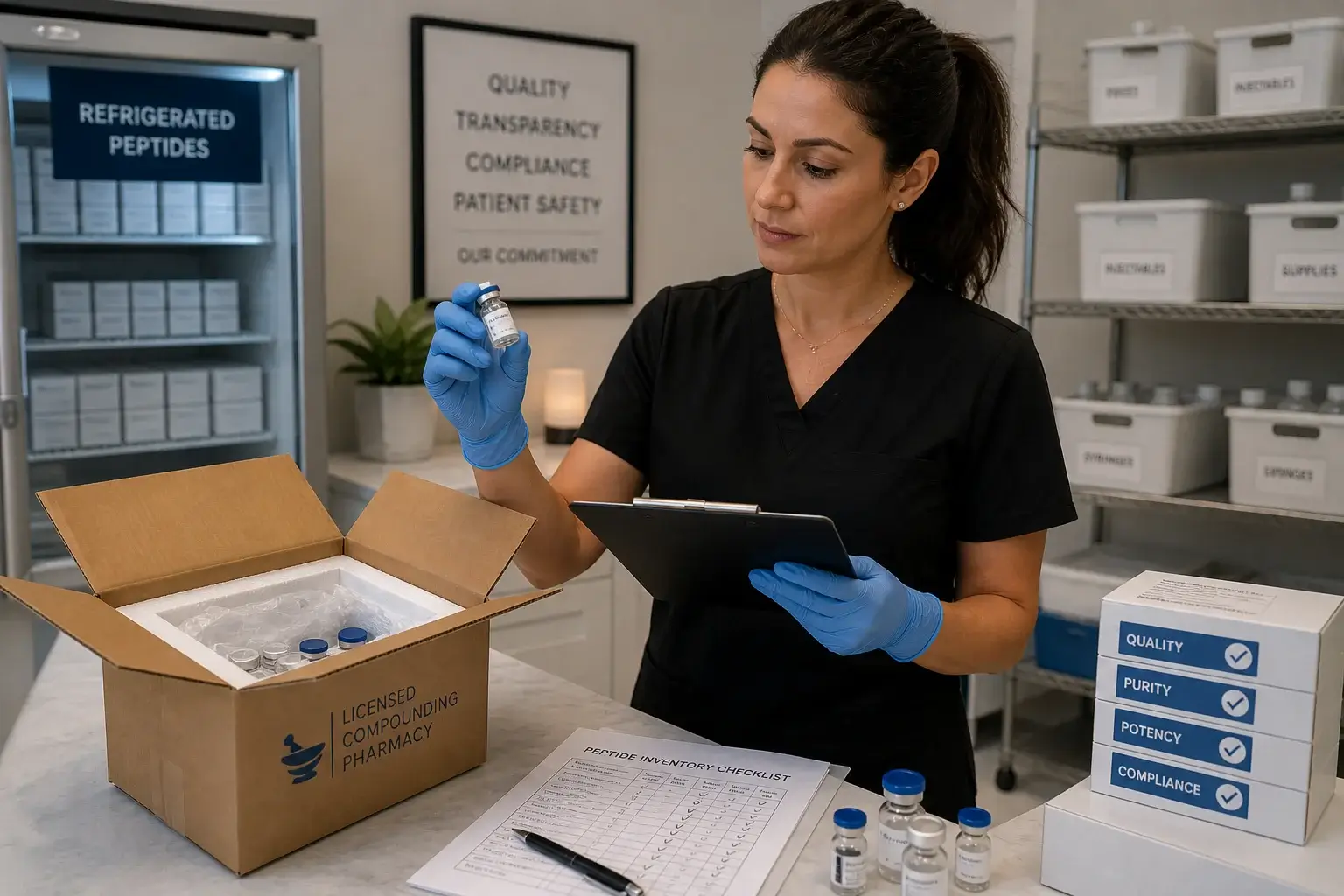
4. Clinical Protocols Approved
Every protocol the clinic will offer must be reviewed and formally approved by the medical director before the first patient is seen. This is both a clinical safety requirement and a compliance requirement. A clinic that starts seeing patients with informal protocols and retroactively documents them is creating liability for both the clinic and the medical director.
5. EMR and Technology Infrastructure
The EMR must be configured for peptide therapy documentation before the first patient appointment. Peptide prescriptions require specific documentation fields that standard EMR templates do not include by default. Scheduling, payment processing, and patient communication systems must be tested and operational before the first week of patient care.
6. Trained Clinical Staff
A licensed nurse or nurse practitioner trained specifically on the clinic's peptide protocols must be in place before opening. Training must cover the administration methods for each compound, monitoring parameters, documentation standards, and patient communication scripts. This training should be completed before the first patient — not on the first patient.
7. Membership and Pricing Structure
The clinic's membership tiers, pricing structure, and protocol package design must be finalized before opening. A clinic that opens without clear membership pricing is forced to construct it on the fly while simultaneously managing real patients — which produces inconsistency that is difficult to correct.
The Marketing Launch Before the Clinical Launch
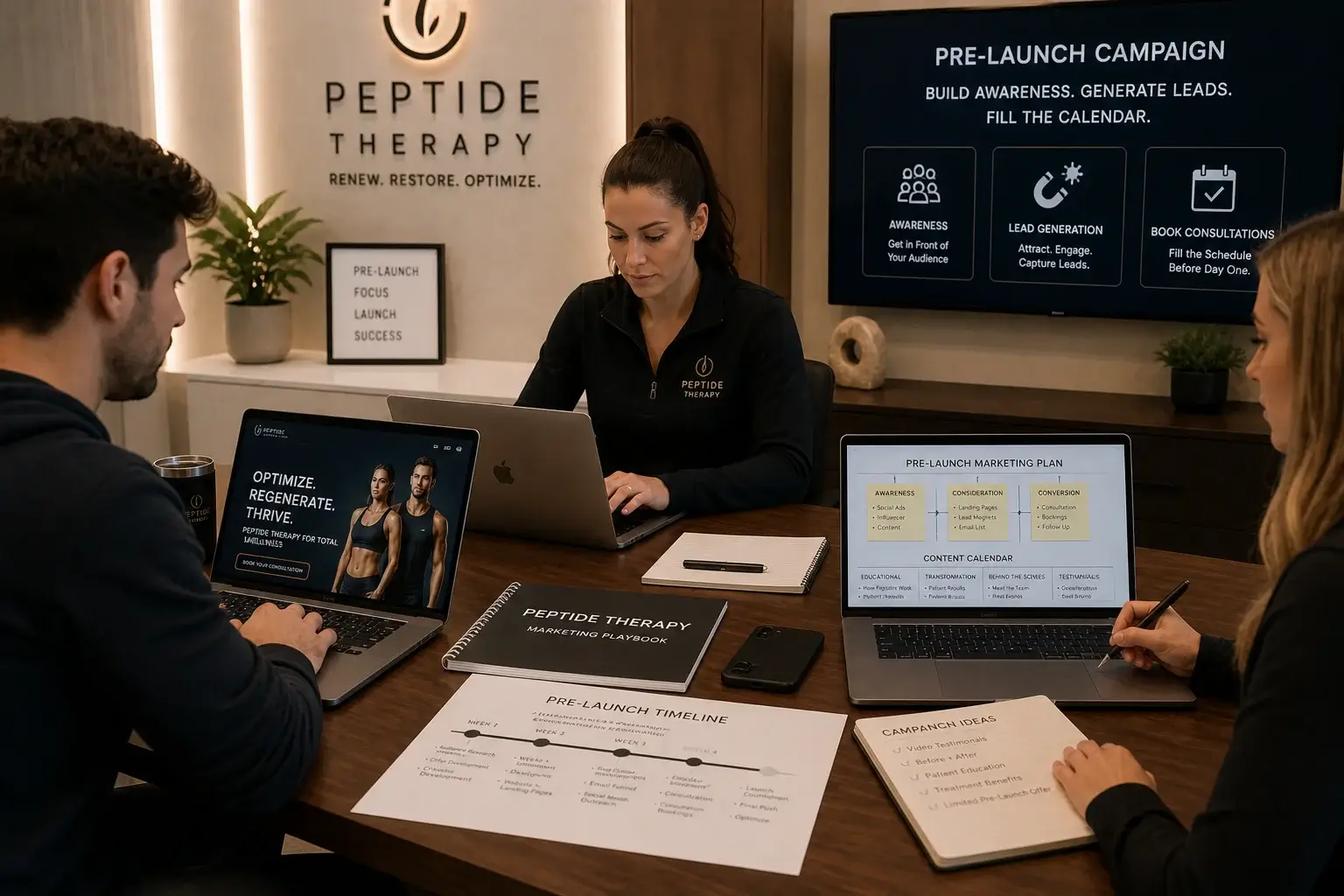
A peptide clinic that opens its doors and then starts its marketing has lost the first-mover advantage of the pre-launch window. The pre-launch marketing period — the two to three weeks before a clinic officially opens — is when the foundation of the local patient base is built. ACG's launch marketing support includes the pre-launch campaign as a standard component — designed to produce patient demand before the doors open rather than after.
To understand how ACG structures the full startup process for a new peptide clinic, visit altosconsultinggroup.com/new-clinic-launch. To start the conversation, visit altosconsultinggroup.com/survey.
What the Regulatory Moment Means for the Entrepreneur Starting a Peptide Clinic Right Now
The announced reclassification of fourteen Category 2 peptides back to Category 1 is the most commercially significant regulatory development in the peptide therapy clinic space since the initial restrictions were implemented in 2023. But the way it is commercially significant is not what most entrepreneurs assume when they first hear about it. The reclassification does not create the peptide therapy clinic opportunity — the consumer demand, the search volume growth, and the market under-supply have been driving that opportunity regardless of the regulatory environment. What the reclassification does is change the competitive dynamics among the entrepreneurs who are entering the market at this moment.
The entrepreneurs who started building compliant peptide therapy clinic infrastructure during the Category 2 restriction period — establishing 503A pharmacy relationships for the compounds that were still available, building their medical director oversight frameworks, refining their patient consultation and monitoring processes — are now positioned to expand their formularies quickly as Category 2 compounds are reinstated. They have the infrastructure in place. They have the pharmacy relationships. They have the clinical team that knows how to manage peptide protocols. Adding BPC-157 or Thymosin Alpha-1 to an existing formulary that already includes Sermorelin and Ipamorelin is operationally straightforward for a clinic that has been running correctly.
The entrepreneurs who are starting their peptide clinic now — in the period when the reclassification has been announced but the Federal Register notice has not yet published — are starting in the best possible window. They are building their compliance infrastructure and their initial patient base on the compounds that are currently available, and they will have the full expanded formulary available by the time their clinical operations have reached the maturity level where offering additional compounds makes operational sense. They are not entering the market at the peak of the restriction and scrambling to pivot their clinical model. They are entering at the restoration and building forward from a position of expanding access.
The entrepreneurs who wait until the reclassification is fully formalized before starting are entering a market where every clinic that started in 2025 and early 2026 has a six-to-twelve-month head start in patient base development, local brand awareness, physician referral relationships, and operational experience. The reclassification announcement is not a starting gun for the peptide clinic opportunity. It is confirmation that the entrepreneurs who started building during the restriction period made the right decision, and that the entrepreneurs who start now are not too late but are entering a market that is slightly more competitive than it was twelve months ago.
The practical implication for the entrepreneur who is starting a peptide clinic in 2026 is this: start now, build the compliance infrastructure correctly for the current regulatory environment, and position the clinical program around the compounds that are currently available through legal compounding channels. When the formal reclassification restores Category 2 access, add those compounds through the pharmacy relationships and clinical protocol framework the clinic has already established. The compliance infrastructure built correctly for today's environment is the same infrastructure that accommodates tomorrow's expanded formulary — and building it once, correctly, is significantly less expensive than building it once poorly and rebuilding it after a compliance event forces the clinic to start over.
Frequently Asked Questions
How long does it take to start a peptide clinic from scratch?
In ACG's structured launch engagement, the target from engagement start to open doors is 60 days — market and regulatory conditions permitting. The most common variables that extend the timeline are legal structure complexity in states with more stringent CPOM enforcement, medical director engagement timing, and commercial real estate availability in the target market.
What is the most important thing to have in place before opening a peptide clinic?
The legal structure. Entity formation under the wrong model or a poorly structured Management Services Agreement creates compliance exposure that compounds as the patient base grows. Every other decision in the startup process builds on the legal foundation. Getting it right first is the most commercially important decision in the entire startup.
Can I start a peptide clinic while working another job?
The startup phase requires active decision-making and follow-through on multiple simultaneous workstreams. It is possible to manage this alongside existing commitments if those commitments allow for meaningful time and attention during the launch period. The first 90 days of clinical operation, however, require an owner who is actively engaged — particularly in managing consultation conversion, clinical team performance, and marketing adjustments.
Written by Nova, Senior Content Strategist at Altos Consulting Group.