How to Start a Longevity Clinic: The 60-Day Launch Framework ACG Uses With Every Client
Most Entrepreneurs Spend Too Long Evaluating and Not Long Enough Sequencing
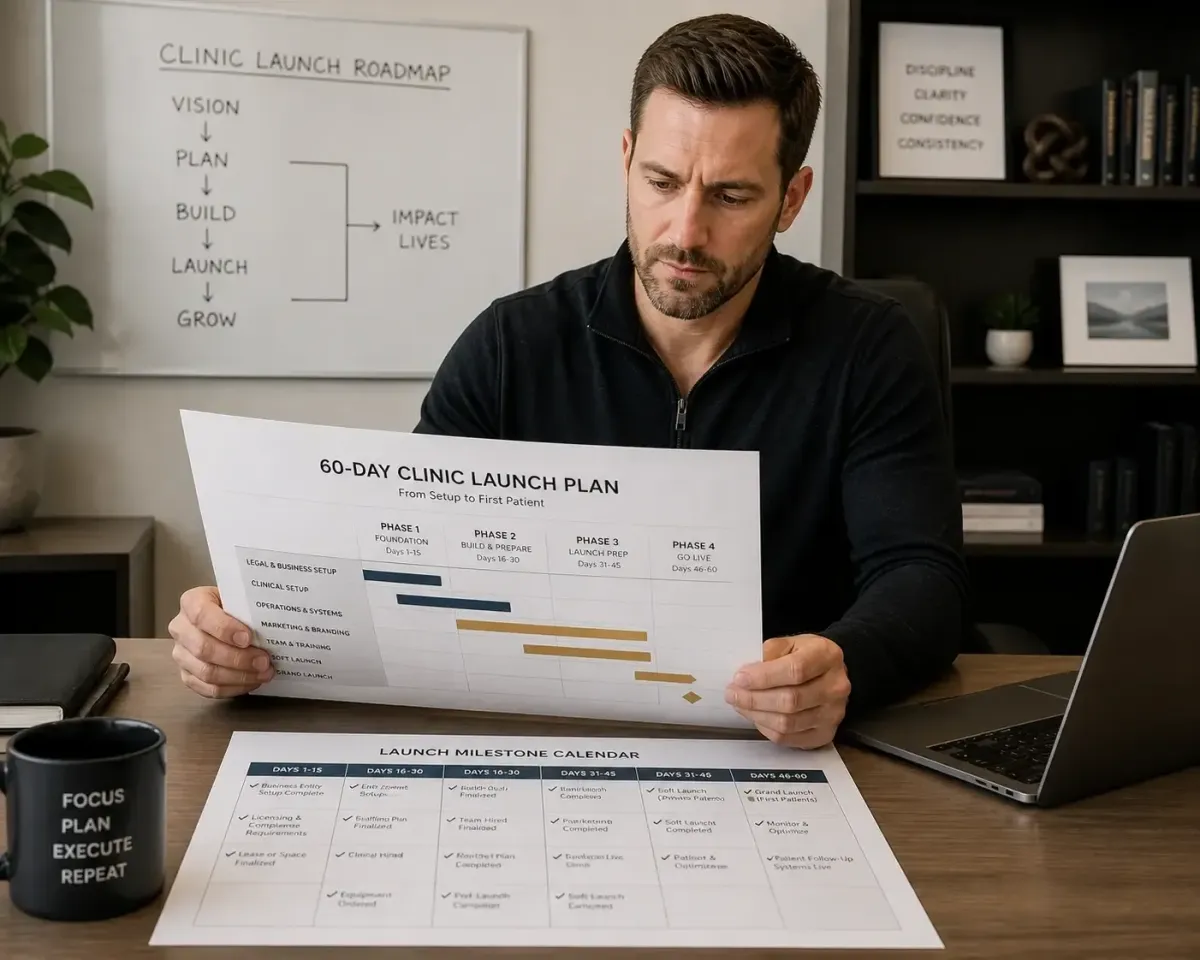
The most common version of the longevity clinic starting problem is not a lack of information. It is a lack of sequencing. Entrepreneurs who have done thorough research on the market opportunity, the services, and the economics often arrive at the starting line with a clear sense of what they want to build and no clear sense of which decisions to make in which order.
This post documents the 60-day launch framework ACG uses with every longevity clinic client. For the full market analysis and business case, see The Longevity Clinic Business Opportunity.
Altos Consulting Group has used this framework across more than 350 clinic launches. To see the longevity clinics ACG has helped start, visit altosconsultinggroup.com/clinics-supported/longevity.
Days 1–10: Validation and Foundation
Market Validation
The first 10 days are not about building anything. They are about confirming that what you are about to build has the market foundation to succeed. This means completing a demographic analysis of your target geography — income distribution, age concentration, existing health engagement patterns — combined with local search volume analysis for longevity medicine keywords and a direct audit of the competitive landscape in your market.
The go/no-go decision from market validation is the single most important decision in the entire launch process. A longevity clinic opened in a market that cannot support the patient volume required by the membership revenue model will struggle regardless of clinical quality.
Legal Structure Initiated
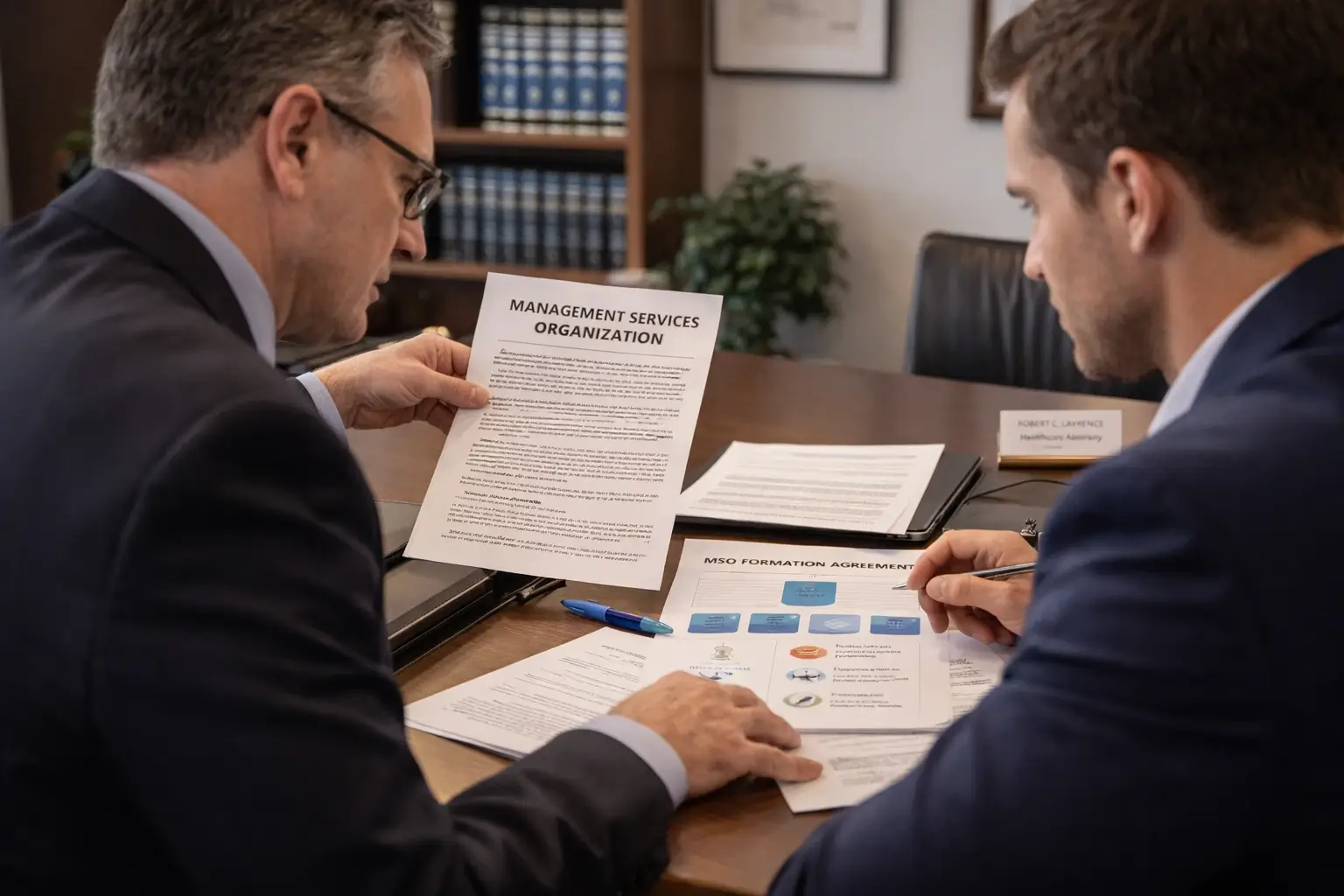
Healthcare counsel is engaged in the first 10 days. Entity formation for the MSO and the professional entity is initiated. The Management Services Agreement is drafted. These legal documents are the foundation on which every other business decision rests.
Days 10–25: Medical Director and Supplier Access
Medical Director Introduction and Engagement
The medical director relationship is established in this phase. ACG introduces the new clinic owner to vetted practitioners with longevity medicine experience. The medical director signs off on the clinic's intended protocol list — which allows supplier relationships to be confirmed, because pharmacy relationships depend on knowing which compounds will be prescribed under whose prescribing authority.
Supplier Relationships Confirmed
Compounding pharmacy relationships are established and initial pricing confirmed. For ACG clients, this means accessing pre-negotiated pricing through ACG's established supplier network rather than approaching pharmacies as a new unknown account. The specific compounds and pricing tiers available to the clinic are documented, and the formulary for the initial service menu is finalized.
Days 20–35: Location, Brand, and Website
Location Selection and Lease
With the legal structure in place, the medical director engaged, and the service mix confirmed, the location can be selected and the lease negotiated with full clarity about what the space needs to support. The size requirements, layout requirements, and infrastructure requirements are now defined by the confirmed service mix rather than assumptions.
Brand Identity and Website
The clinic's brand identity — name, logo, visual language, and positioning — is developed in this phase. ACG's engagement includes complete brand and website development as a core deliverable. The website is structured and optimized for the specific longevity medicine search terms the clinic needs to rank for in its market from day one.
Days 30–50: Build-Out, Technology, and Staffing
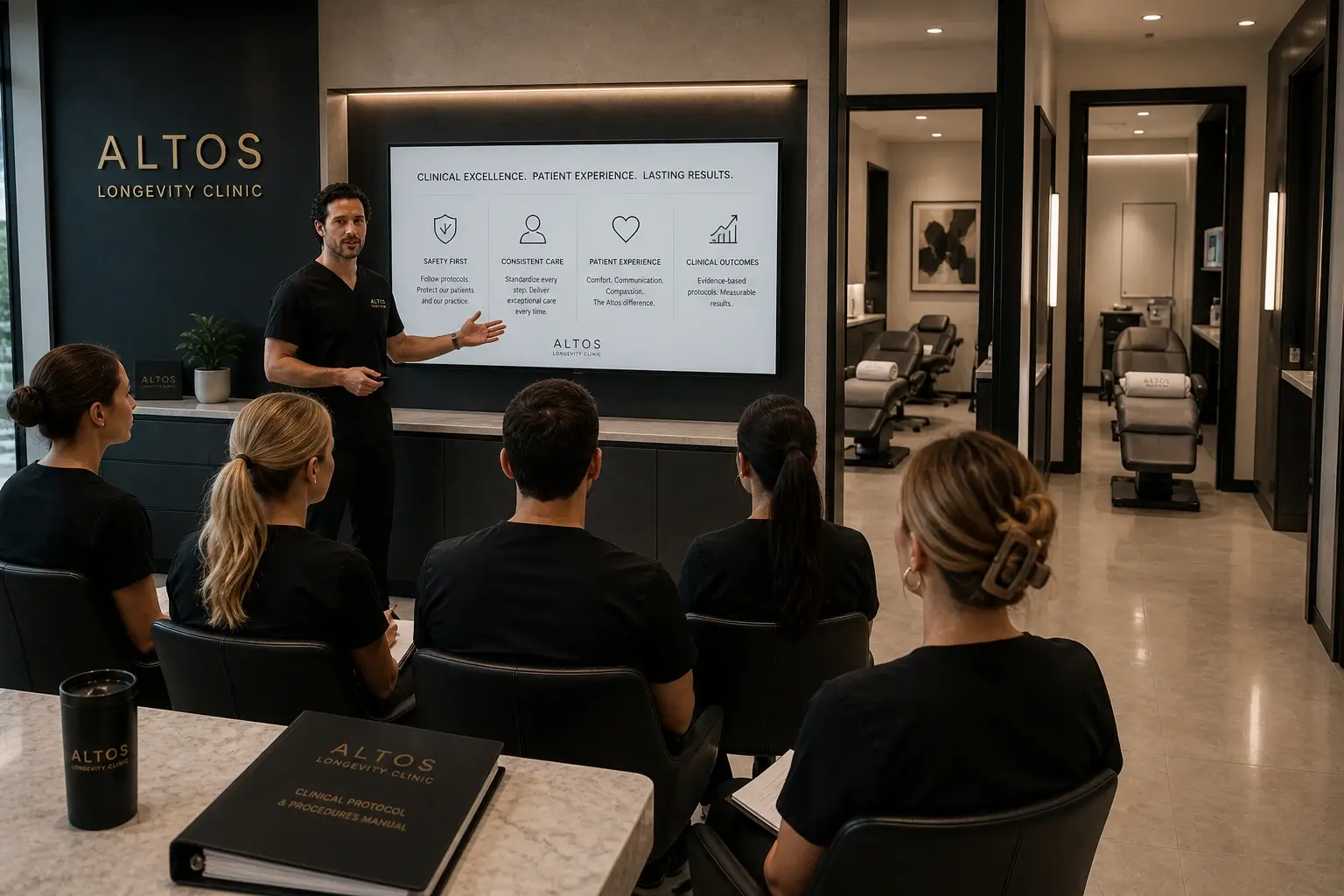
The physical build-out, technology configuration, and staffing all occur in this phase — running in parallel rather than sequentially. Staff are hired and trained before the clinic opens, covering clinical protocols, documentation standards, and consultation frameworks. Technology systems are configured and tested, not just installed, before the first patient appointment.
Days 50–60: Launch Marketing and Opening
Pre-Launch Marketing Campaign
A pre-launch brand awareness campaign runs in the two weeks before opening — social media content, local search visibility activation, and paid advertising to drive consultation bookings for the first week of operation. A clinic that opens to a waitlist of consultation appointments has a materially better first 90 days than one that opens and then starts marketing.
Local SEO Activation
The clinic's Google Business Profile, local directory listings, and map visibility are activated and optimized before opening. Local search visibility for longevity medicine keywords in the clinic's specific market takes time to build — activating it before opening rather than after gives the clinic an earlier start on the organic search traction that reduces paid advertising dependency.
Opening Week and Post-Launch Support
The first week of patient operations is a full launch — with a trained team, confirmed systems, and a consultation schedule already populated from the pre-launch campaign. ACG's post-launch support begins at this point: two months of active advisory engagement covering marketing performance diagnosis, operational bottleneck identification, and data-driven adjustments.
To learn more about the full launch process, visit altosconsultinggroup.com/new-clinic-launch. To start the conversation, visit altosconsultinggroup.com/survey.
The Decision Velocity Problem — Why Most Longevity Clinic Starts Stall Before They Begin
The longevity clinic opportunity attracts entrepreneurs who are thorough by nature. They research extensively, evaluate carefully, and want to be confident in every decision before they make it. These are genuinely valuable characteristics in a business owner — particularly in a business where compliance missteps are expensive and operational errors in the first 90 days create patient experience problems that are hard to repair. But the thoroughness that makes a longevity clinic owner a good operator can also become the mechanism by which the launch stalls before it starts.
The stall pattern looks the same across most cases. The entrepreneur has done the research, validated the market opportunity, identified their target city, and determined that the longevity clinic model is the right business for their goals and capital position. They are ready to start. And then they encounter the compliance questions — what entity structure is right for their state, what the MSO model actually requires in practice, how the medical director relationship is structured, what the DEA registration sequence looks like for a clinic offering testosterone — and the volume and specificity of the questions is enough to create a decision paralysis that lasts months.
During those months, the market does not pause. The entrepreneur's capital continues to be deployed in whatever it is currently doing rather than in the business they have decided to build. Other operators — some with less thorough due diligence and simply more decisiveness — enter the markets the thorough entrepreneur has identified. The first-mover positioning that was available in the target market six months ago is less available when the decision paralysis finally resolves. This is the cost of the stall, and it is a real cost that is rarely quantified because it is measured in lost opportunity rather than in cash outflows.
The solution to the decision velocity problem is not to make decisions faster on incomplete information. It is to get access to complete information faster — which is precisely what the ACG engagement provides. When the compliance sequence for a specific state, the medical director introduction process, the supplier relationship framework, and the 60-day launch timeline are all mapped out before the entrepreneur commits to anything, the decision paralysis dissolves. Not because the decisions become easier, but because they become answerable. An entrepreneur who can see exactly what the next five decisions are, in what order they need to be made, and what information is required to make each one confidently does not stall. They execute.
The 60-day target launch timeline is not just a marketing claim. It is the result of a structured process that converts every potential decision bottleneck into a scheduled workstream. Legal structure is initiated in week one because it must be. Medical director introduction happens in week two because everything downstream — supplier relationships, protocol development, DEA registration — depends on it. Location selection happens in week three because the physical space selection cannot be made until the service mix is confirmed and the service mix cannot be confirmed until the medical director is engaged. The sequence is deliberate, tested across 350+ launches, and significantly faster than what an independent operator achieves by navigating the same decisions without a structured framework.
The entrepreneurs who start their longevity clinic on the ACG timeline and hit the 60-day target consistently are not the ones who made fewer mistakes. They are the ones who made the right mistakes first — the small operational adjustments and course corrections that are inevitable in any new business — rather than the expensive structural mistakes that cost months to repair. The 60-day framework is the difference between starting right and starting over.
Frequently Asked Questions
Can a longevity clinic really be launched in 60 days?
Yes — in markets with straightforward regulatory environments and with a client who can make decisions on the required schedule. The 60-day target is achieved by running multiple workstreams in parallel rather than sequentially. Market complexity, state regulatory timelines, and location availability are the most common variables that extend the timeline.
What is the most common reason longevity clinic launches take longer than expected?
Legal structure delays — specifically the time required to find and engage healthcare counsel admitted in the relevant state, complete entity formation, and execute a Management Services Agreement. Entrepreneurs who underestimate this step or try to use generic legal templates frequently experience delays that cascade through the rest of the timeline.
Is ACG's 60-day timeline a guarantee?
No. It is a target that ACG consistently achieves with engaged clients operating in markets without unusual regulatory complexity. Market and regulatory conditions can extend the timeline. ACG communicates clearly at the outset of every engagement what the specific timeline factors are for the client's state and market.
Written by Nova, Senior Content Strategist at Altos Consulting Group.