How to Open a Longevity Clinic: Market Selection, Legal Structure, and the First 90 Days
Opening a Longevity Clinic Is Not About the Space. It Is About the Sequence.
The entrepreneurs who open longevity clinics successfully in 2026 share one characteristic: they made the right decisions in the right order. Market before location, legal structure before lease, medical director before build-out, protocols before patients.
For a full analysis of the longevity clinic business opportunity — market size, financial model, service stack, and competitive landscape — see The Longevity Clinic Business Opportunity.
Altos Consulting Group has helped more than 350 clinics open across the United States. To see the longevity clinics ACG has supported, visit altosconsultinggroup.com/clinics-supported/longevity.
Market Selection: The Decision That Outweighs Every Other
A longevity clinic opened in the wrong market will underperform regardless of clinical quality, brand quality, or marketing investment. The right market has three characteristics: income demographics that support cash-pay premium services, local search demand for longevity medicine services, and a competitive landscape that is either unoccupied or occupied only by poorly positioned independent operators without the brand or membership infrastructure to retain the performance-oriented longevity patient.

Legal Structure: The Foundation That Precedes Everything Else
The legal structure of a longevity clinic must be established before any other business commitment — before a lease, before a bank account, before any vendor or supplier contract. The MSO model — a management services organization owned by the entrepreneur, operating alongside a clinician-owned professional entity under a Management Services Agreement — must be formed with healthcare counsel admitted in the relevant state.
Medical Director Engagement: The Clinical Anchor
The medical director — the licensed clinician who provides prescribing authority and clinical oversight — is engaged after the legal structure is in place and before any physical or operational commitment is made. The medical director's specific requirements directly determine what the clinic's physical space, technology, and staffing need to support. Medical director compensation typically runs between $1,250 and $2,500 per month. ACG facilitates introductions to vetted medical directors with longevity medicine experience.
Location, Build-Out, and the Physical Opening
Location Selection
With the market validated, legal structure in place, and medical director engaged and providing protocol guidance, the location can be selected. The selection criteria are defined by the confirmed service mix — the size and configuration the space needs, the zoning requirements for medical use, and the demographic and visibility characteristics appropriate to the clinic's positioning.
Build-Out and Equipment
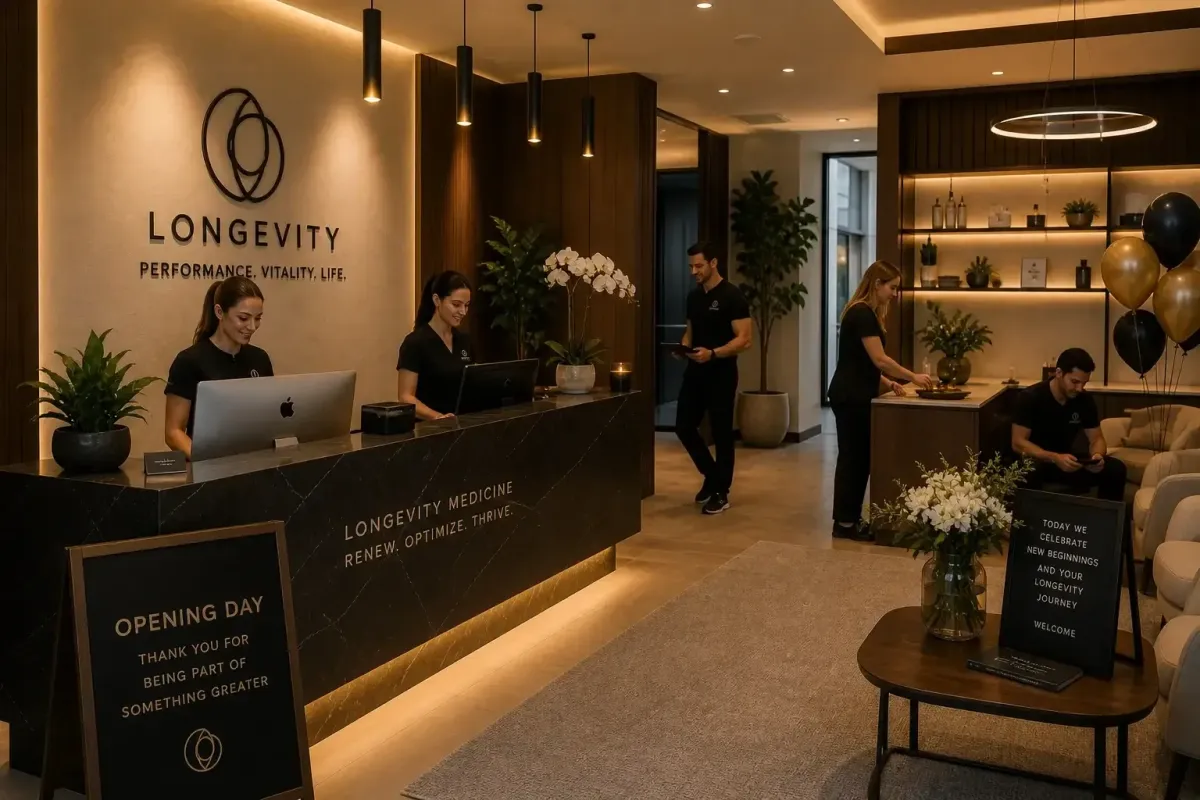
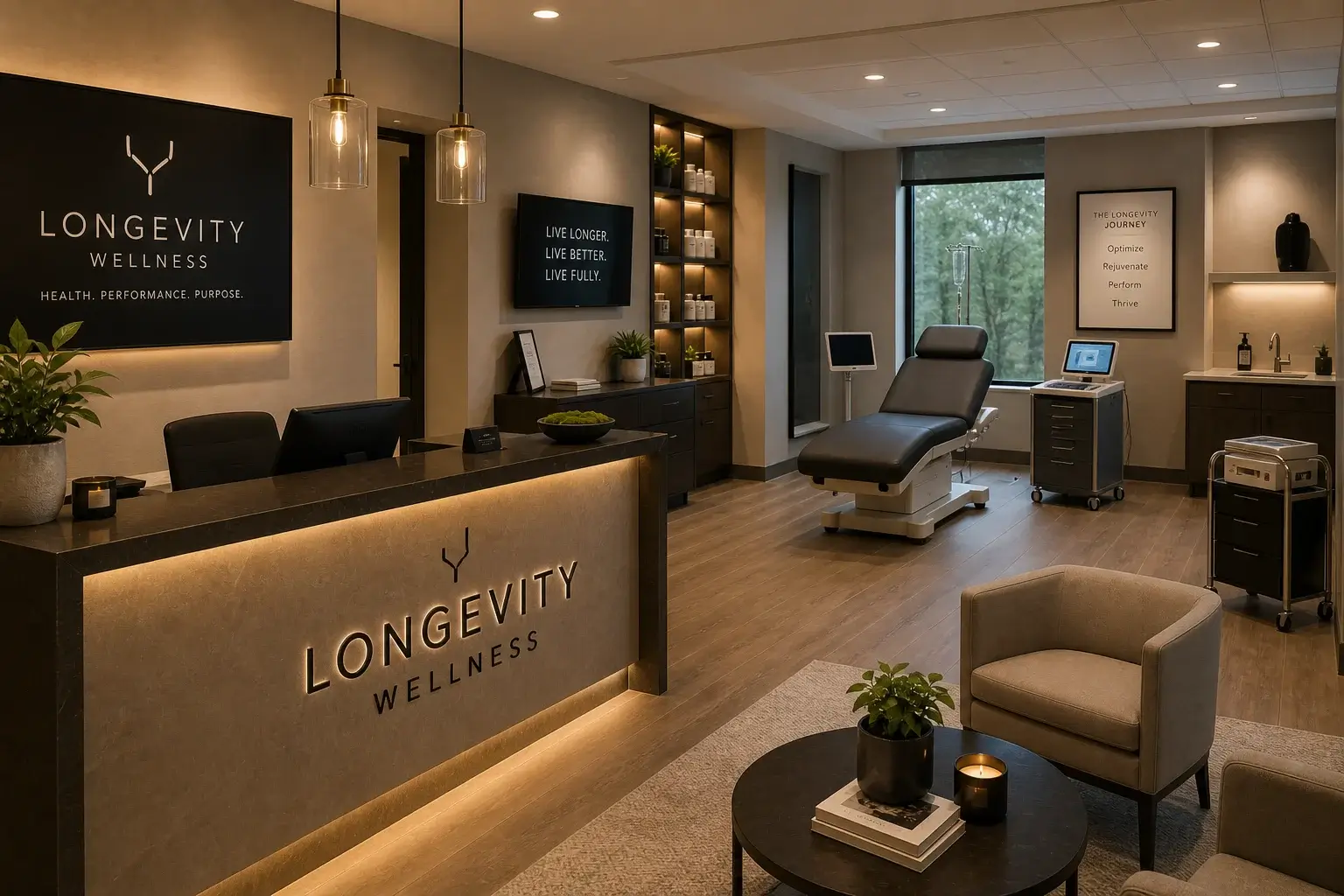
A longevity clinic offering consultation, injectable protocols, and IV therapy needs a reception area, consultation rooms, treatment space with IV infrastructure and comfortable patient seating, clinical supply storage with appropriate refrigeration, and a patient flow design that keeps the experience premium from entry to exit.
Technology and Operational Systems
EMR setup, scheduling, payment processing, and patient communication systems must be configured and tested before the first patient appointment — not installed during the first week of patient care.
The First 90 Days: What Determines Whether the Business Builds or Stalls
The First 30 Days: Consultation Conversion
The primary objective of the first 30 days is converting the consultation schedule — built through the pre-launch marketing campaign — into enrolled membership patients. The consultation framework, pricing presentation, and membership enrollment process must be practiced and consistent from day one. ACG's consultation training covers this specifically, because the conversion of first consultations into enrollments is the single highest-leverage activity in the clinic's first month.
Days 30–60: Clinical Quality and Retention
The patients enrolled in the first 30 days are in their initial protocol cycles during days 30 to 60. The clinical quality of that experience — the responsiveness of the team, the accuracy of the monitoring, the clarity of progress communication — determines whether those patients retain through the first protocol cycle and refer peers with identical demographics and health goals.
Days 60–90: Marketing Optimization
ACG's post-launch advisory support covers this specific window — reviewing marketing campaign data, identifying which patient acquisition channels are producing the highest-quality leads, and making data-driven adjustments to improve cost per consultation, show rate, and conversion rate.
To learn more about how ACG supports the opening and first 90 days, visit altosconsultinggroup.com/new-clinic-launch. To start the conversation, visit altosconsultinggroup.com/survey.
What the First 90 Days of a Longevity Clinic Operation Actually Look Like — and What Determines Whether They Build Momentum or Stall
The first 90 days of a longevity clinic's operation are the most consequential period in the life of the business. The decisions made and the patient experiences delivered during this window determine the clinic's trajectory for the following eighteen months — the word-of-mouth reputation that either compounds or stagnates, the enrolled patient base that either grows organically or requires perpetual advertising spend to sustain, and the operational culture that either serves patients at the premium standard the membership pricing requires or drifts toward the compromises that erode clinical quality and patient satisfaction simultaneously.
Days one through thirty are defined by the consultation-to-enrollment conversion process. The pre-launch marketing campaign has generated a consultation schedule. The clinical team is trained and in position. The physical space is ready. What happens in every consultation during this first month determines the enrolled patient base that the clinic's recurring revenue is built on. A consultation coordinator who converts 40 percent of consultations into same-day enrollments in month one produces a materially different month-two revenue position than one who converts 20 percent and sends the other 80 percent away with a brochure and a follow-up email. The difference is not primarily about who walks in the door — it is about the quality of the consultation process. Month one is when the clinic discovers, through real experience, whether its consultation framework works.
Days thirty through sixty are when the first enrolled patients have their initial monitoring check-ins — and when the clinical team encounters the real patient population for the first time. Some patients are responding to protocols as expected and are enthusiastic. Some are progressing more slowly and need expectation management. Some have compliance challenges with their protocol administration schedule that were not anticipated in the clinical design. Each of these patient situations requires a clinical response that the team must be equipped to give — not a sales response, a clinical one. The clinic that handles these first monitoring appointments with genuine clinical depth builds patient trust that produces long-term retention. The clinic that handles them with a superficial check-in and an automatic renewal request discovers a churn problem in month four when its first cohort decides not to renew.
Days sixty through ninety are when the first organic referrals arrive — or do not. Organic referrals are the most reliable signal available about whether the first 90 days have succeeded. A patient who tells a friend about the clinic, who refers a family member, who mentions the practice in a community health forum is expressing a level of satisfaction that no survey can adequately capture. If organic referrals are appearing by day 90, the clinical program is working and the patient experience is strong enough to motivate advocacy. If the clinic reaches day 90 with a full enrolled patient base and zero organic referrals, something in the clinical or patient experience is producing satisfaction that falls short of advocacy — and identifying what that is becomes the priority before the advertising spend that is filling the consultation schedule is scaled.
The ACG post-launch support covers exactly this window — because the questions that determine whether a longevity clinic builds momentum or stalls are questions that have answers, and those answers are significantly clearer when they are interpreted by someone who has seen the same patterns across 350 previous clinic launches. The consultation conversion rate that looks concerning in isolation looks different when it is compared to benchmarks across similar markets. The referral volume that seems thin looks different when it is contextualized against typical month-three referral rates for a longevity clinic with the specific patient demographic profile the clinic is serving. The first 90 days are rich with data. Using that data to make the right adjustments is what the post-launch support is designed to enable.
Frequently Asked Questions
What is the #1 mistake entrepreneurs make when opening a longevity clinic?
Selecting a location before validating the market. The lease is the longest-term and least flexible commitment in the startup process. Signing it before confirming that the demographic profile, income distribution, search demand, and competitive landscape of the target geography can support the membership revenue model is the mistake that is hardest to recover from.
How much working capital do I need to open a longevity clinic?
A working capital reserve of three to five months of fixed monthly operating costs — typically $10,000 to $15,000 per month — should be in place above and beyond the startup investment. This reserve covers the ramp period while patient volume builds to the breakeven point.
How does ACG's post-launch support work?
ACG provides two months of active advisory support after a clinic opens — including weekly or bi-weekly check-in calls, marketing performance review and adjustment recommendations, operational bottleneck identification, and clinical protocol or staffing guidance as real-world patient care produces data that the pre-launch plan could not anticipate.
Written by Nova, Senior Content Strategist at Altos Consulting Group.