
How to Add Peptide Therapy to an Existing Clinic: A Revenue Expansion Guide for Chiropractors, Med Spas, and Wellness Practices
The Revenue Expansion Opportunity Every Existing Clinic Owner Should Evaluate
For a chiropractor who has built a solid patient base, a med spa that has established itself in aesthetic services, or a wellness practice already offering IV therapy and health coaching, the peptide therapy category represents one of the most natural and commercially significant service expansion opportunities in 2026.
For the full peptide therapy clinic business case — including market data, FDA reclassification update, and financial model — see The Peptide Therapy Clinic Business Model.
Altos Consulting Group works with existing clinic owners through an audit-based engagement. To see the peptide clinics ACG has supported, visit altosconsultinggroup.com/clinics-supported/peptide-therapy.
Which Existing Clinic Types Are Best Positioned
Chiropractic Practices
The chiropractic patient managing musculoskeletal issues, chronic pain, and recovery from injury overlaps significantly with the BPC-157 and recovery-focused peptide patient profile. A chiropractor whose patients are experiencing slower-than-expected recovery from injury, persistent inflammation, or chronic joint degeneration has a patient population clinically well-suited to peptide therapy protocols targeting tissue repair and inflammatory regulation. The clinical conversation is natural, the patient motivation is clear, and the cross-referral dynamic is built into the existing relationship.
Med Spas
The med spa patient demographic investing in appearance and aesthetic longevity is naturally receptive to peptide services framed within a longevity and biological optimization context. A med spa that introduces GHK-Cu peptide therapy for skin health or Sermorelin for body composition extends its existing premium positioning into clinical territory that complements the aesthetic services the patient already receives.
IV Therapy and Wellness Practices
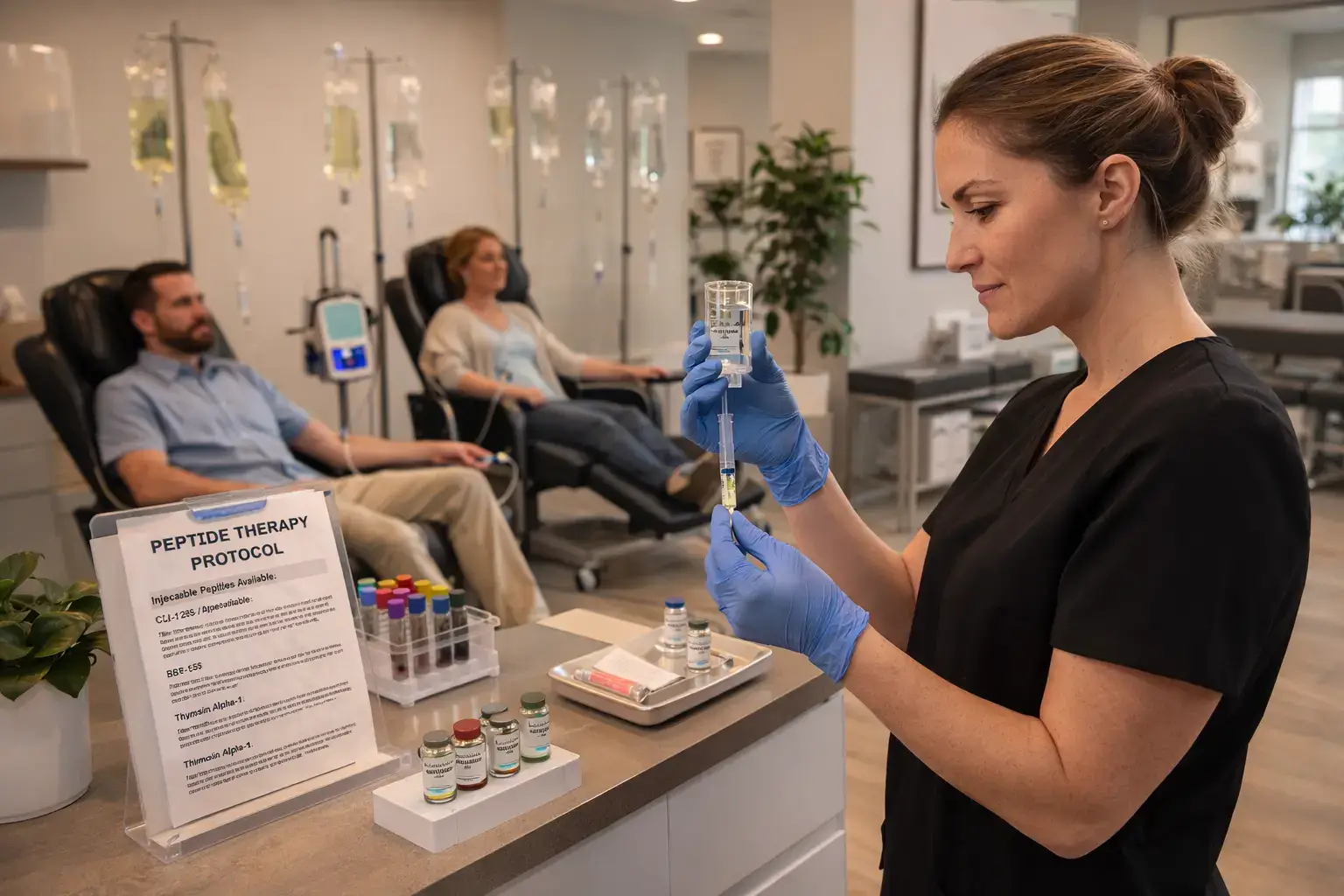
An IV therapy clinic or wellness practice already administering NAD+ infusions or other IV-based nutritional therapies has established the clinical environment, nursing staff infrastructure, and patient trust that makes adding injectable peptide protocols a natural operational extension. The patient comfortable receiving IV therapy from the clinic's staff is highly convertible to a peptide protocol conversation.
The Compliance Requirements for Existing Clinics
Medical Director Requirements
If the existing clinic does not already have a medical director with prescribing authority appropriate to the peptide compounds the practice intends to offer, establishing that relationship is the first compliance step. Chiropractors cannot independently prescribe compounded peptides — they require a collaborating physician or, in states with full practice authority, a nurse practitioner with prescribing scope covering the intended protocols.
Protocol Development and Documentation
Clinical protocols for each peptide compound offered must be developed, reviewed, and approved by the medical director before the first patient is treated. Patient consent forms must address the regulatory status of the compounds and the nature of the clinical relationship. Documentation standards for peptide prescriptions must be established and consistently followed.
Supplier Relationships
Compounding pharmacy relationships must be established before peptide compounds can be offered to patients. The pricing available to an existing clinic through independent direct outreach to compounding pharmacies is typically less favorable than what is accessible through an established consulting partner. ACG's optimization engagement for existing clinics includes supplier introduction as a core deliverable.
The Revenue Impact
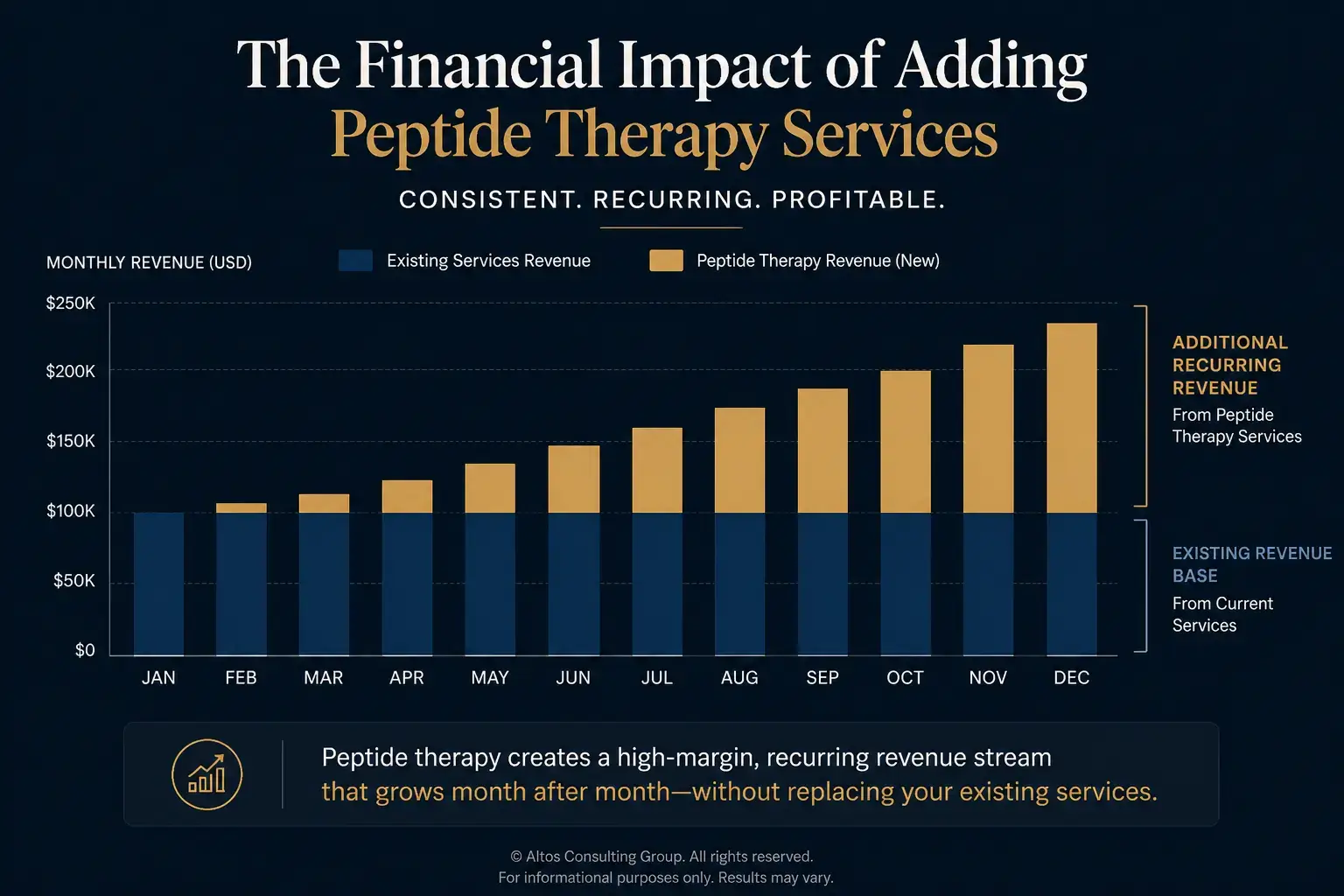
A chiropractic practice with 50 active patients that introduces BPC-157 recovery protocols to 15 of those patients at $400 to $600 per month adds $6,000 to $9,000 in monthly recurring revenue from a patient base it already has. A med spa that introduces Sermorelin and NAD+ programs to 20 of its existing patients at $600 to $800 per month adds $12,000 to $16,000 per month in recurring protocol revenue alongside its existing appointment revenue. These are illustrative planning benchmarks — actual results depend on patient volume, pricing, conversion rates, and execution.
ACG's optimization engagement for existing clinic owners begins with a $999 audit. To start the conversation, visit altosconsultinggroup.com/survey.
The First Six Months After Adding Peptide Services: What to Expect and How to Manage It
The first six months after an existing clinic adds peptide therapy services is the period that determines whether the expansion builds momentum or stalls — and the dynamics of this period are different from what most clinic owners expect based on their experience opening or growing other service lines. Understanding what the first six months actually looks like, and what the operational responses to the most common challenges are, is the practical intelligence that separates a successful peptide expansion from a disappointing one.
Month one and two are almost always slower than projected. The existing patient base takes time to become aware of and curious about the new services. The clinical team is still developing confidence and fluency with the new protocols. The referral channels — including the physician referral relationships that are often the highest-quality patient source for peptide therapy — take time to develop even when active outreach begins immediately. A clinic that projects 15 new peptide patients in month one and achieves four is not failing. It is experiencing the normal ramp pattern of a service expansion, and the appropriate response is maintaining the marketing and outreach strategy with patience rather than pivoting to a different approach before the initial strategy has had time to work.
Months three and four are when the compounding patient is the most commercially important variable. The patients who enrolled in month one are approaching their first protocol renewal point — typically a 90-day check-in with lab monitoring. The outcome of these early renewals is the most important data point available about whether the clinical program is working. A renewal rate above 75 percent at the 90-day mark suggests the protocols are producing results that patients value enough to continue. A renewal rate below 50 percent at the same mark suggests a clinical or patient communication problem that must be diagnosed and addressed before the expansion can build sustainable momentum.
The most common cause of early-stage renewal challenges in peptide therapy expansions is not protocol failure. It is expectation misalignment — patients who were enrolled without a clear articulation of what the first 90 days would look like clinically, what they would feel, and what the monitoring data would measure. A patient who entered on Sermorelin expecting to feel dramatically different in week three and feels mostly the same at week eight has an expectations problem that the clinical team can correct with honest monitoring review — but only if the monitoring appointment happens before the patient has quietly decided not to renew. The 45-day check-in call — not a billing call, a genuine clinical check-in — is the single most important retention tool in the first 90 days of a peptide expansion.
Months five and six are when organic referrals begin arriving if the clinical program is working. The peptide therapy patient who has seen genuine results — improved recovery, better sleep, body composition changes, objective IGF-1 improvement — talks about it in the specific communities where the peptide therapy patient demographic is active. These referrals are qualitatively different from advertising-generated leads: they arrive with specific questions, a clear understanding of what they are seeking, and a baseline of trust established by the person who referred them. A clinic that is receiving organic referrals from its first cohort of peptide patients at month five has built something that compounds — and the appropriate investment at this stage is deepening the clinical program quality and monitoring infrastructure rather than increasing advertising spend.
Frequently Asked Questions
Can a chiropractor offer peptide therapy to patients?
Not independently, as chiropractors do not have prescribing authority for compounded medications in most U.S. states. However, a chiropractic clinic can add peptide therapy services through a collaborative arrangement with a licensed medical professional — a physician or nurse practitioner with appropriate prescribing scope — who provides clinical oversight and prescription authority for the peptide protocols.
How long does it take to add peptide therapy to an existing clinic?
With the right compliance framework, supplier relationships, and protocol documentation in place, an existing clinic can begin offering peptide therapy services within four to eight weeks of beginning the expansion process.
Which peptide services are the easiest to add to an existing clinic?
Growth hormone secretagogue protocols — Sermorelin and the Ipamorelin/CJC-1295 combination — are typically the most accessible entry point for existing clinic expansion because they require only injectable administration infrastructure that most clinics already have, the patient motivation is broadly applicable, and the retention dynamics produce recurring revenue from the first protocol cycle.
Written by Nova, Senior Content Strategist at Altos Consulting Group.