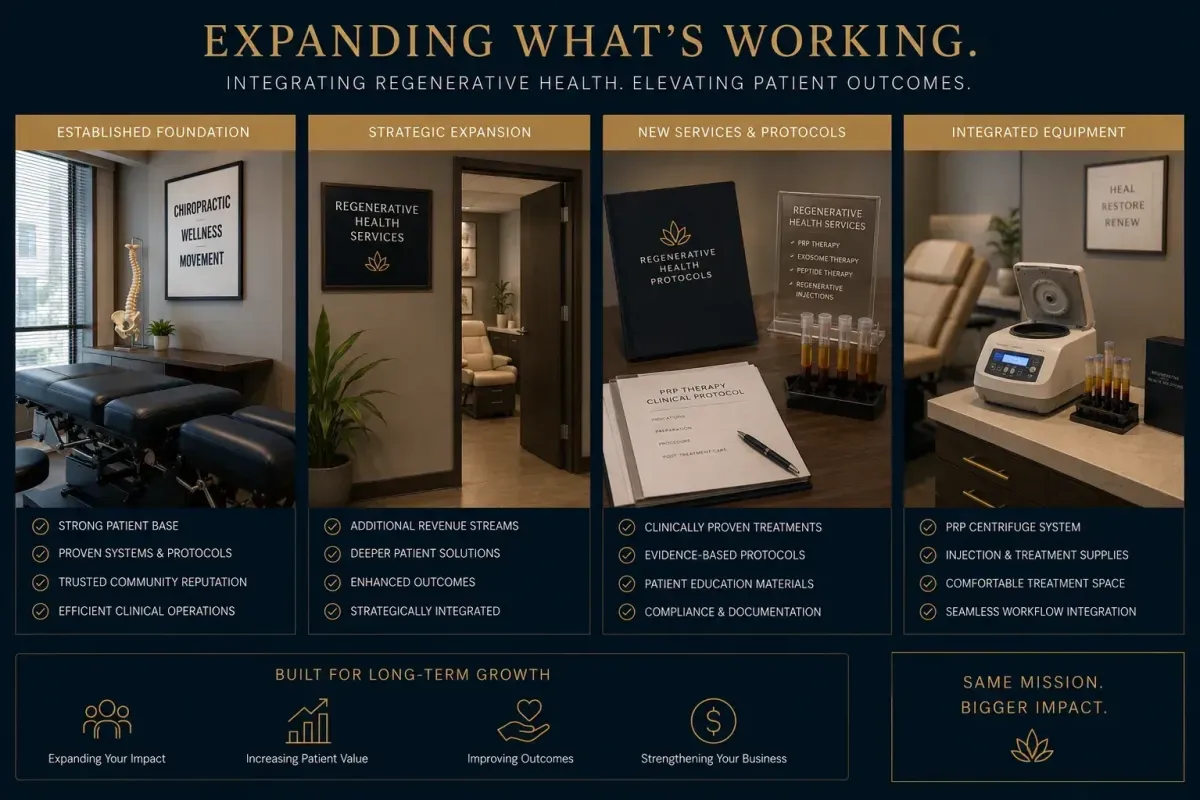
Growing an Existing Clinic with Regenerative Health Services: The ACG Optimization Engagement for Clinics Ready to Build the Next Floor
Your Clinic Already Has the Foundation. ACG Helps You Build the Next Floor.
The most commercially powerful expansion available to an existing med spa, chiropractic practice, weight loss clinic, or wellness center in 2026 is not a new location. It is a new service dimension — one that transforms the existing patient relationship from episodic appointments into ongoing clinical memberships, and the existing revenue model from transactional income to predictable recurring revenue.
Regenerative health services — hormone optimization, NAD+ therapy, peptide protocols, GLP-1 metabolic programs, biomarker panels, PRP — do not replace what the existing clinic does. They deepen it. They give the existing patient a reason to engage with the clinic at a new level of clinical investment, and they give the clinic a recurring revenue structure that the appointment-based model alone cannot produce.
This is the ACG optimization engagement: a structured process for existing clinic owners who want to add regenerative health services correctly — with the right compliance framework, the right supplier access, the right staff training, and the right marketing approach — rather than bolting on new services without the infrastructure to deliver them at the standard that retains patients.
To see the full details of the ACG existing clinic growth engagement, visit altosconsultinggroup.com/existing-clinic-growth.
Which Existing Clinic Types Are Best Positioned for This Expansion
Med Spas
The med spa patient investing in aesthetic services is adjacent to the longevity medicine patient. The transition from cosmetic aesthetics patient to regenerative health member does not require reconceptualizing the patient relationship — it requires a clinical conversation that connects the biological health services being added to the aesthetic outcomes the patient already cares about. A med spa that adds PRP, exosome therapy, NAD+ infusions, Sermorelin, and hormonal assessment alongside its existing aesthetic services builds a clinical depth that no aesthetic-only practice can match.
Chiropractic Practices
The chiropractic patient managing musculoskeletal conditions — joint degeneration, disc problems, inflammatory pain — is a natural candidate for the regenerative health services that address the biological underpinnings of their condition. PRP for joint restoration. BPC-157 for tissue repair and inflammation. Hormone optimization for the hormonal factors affecting tissue healing. A chiropractic practice that introduces these services as a deeper engagement with the biology of the problems it is already treating adds recurring membership revenue from patients who already trust the clinic.
Weight Loss Clinics
The weight loss clinic patient is already invested in the biological outcomes — body composition, insulin sensitivity, energy, hormonal balance — that regenerative health medicine addresses directly. Adding GLP-1 metabolic programs combined with hormone optimization and biomarker monitoring converts a weight-focused clinical relationship into a comprehensive metabolic health membership. Monthly revenue per patient increases 75 to 150 percent through this conversion without requiring new patient acquisition.
Wellness Centers and IV Therapy Practices
A wellness center or IV therapy practice that is already administering NAD+ infusions has established the clinical environment and patient trust that makes adding injectable peptide protocols, hormone optimization, and biomarker monitoring a natural operational extension. The patient comfortable receiving IV therapy from the clinic's nursing staff is highly convertible to a comprehensive longevity protocol conversation.
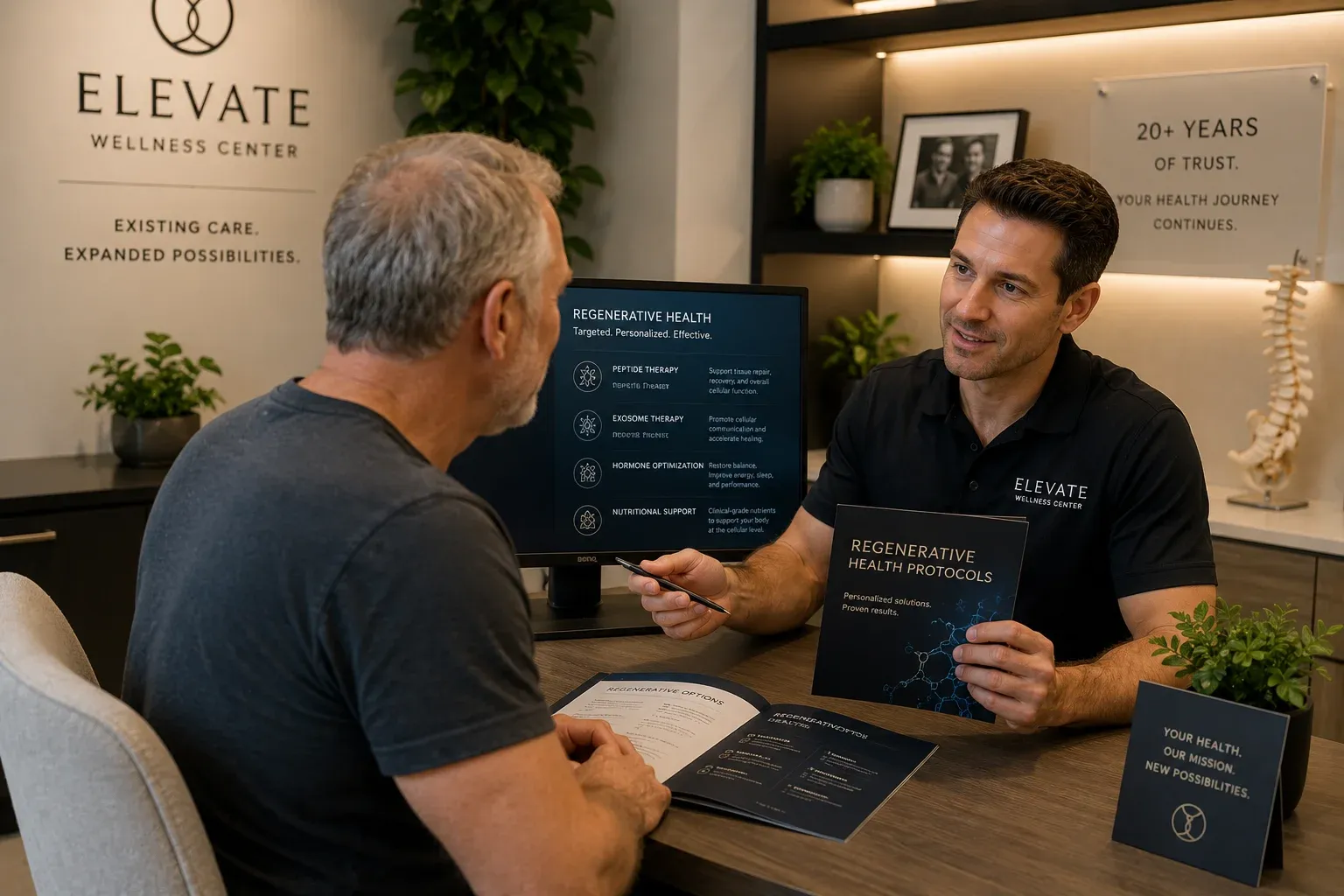
The ACG Optimization Engagement: What It Includes
The Audit — Starting at $999
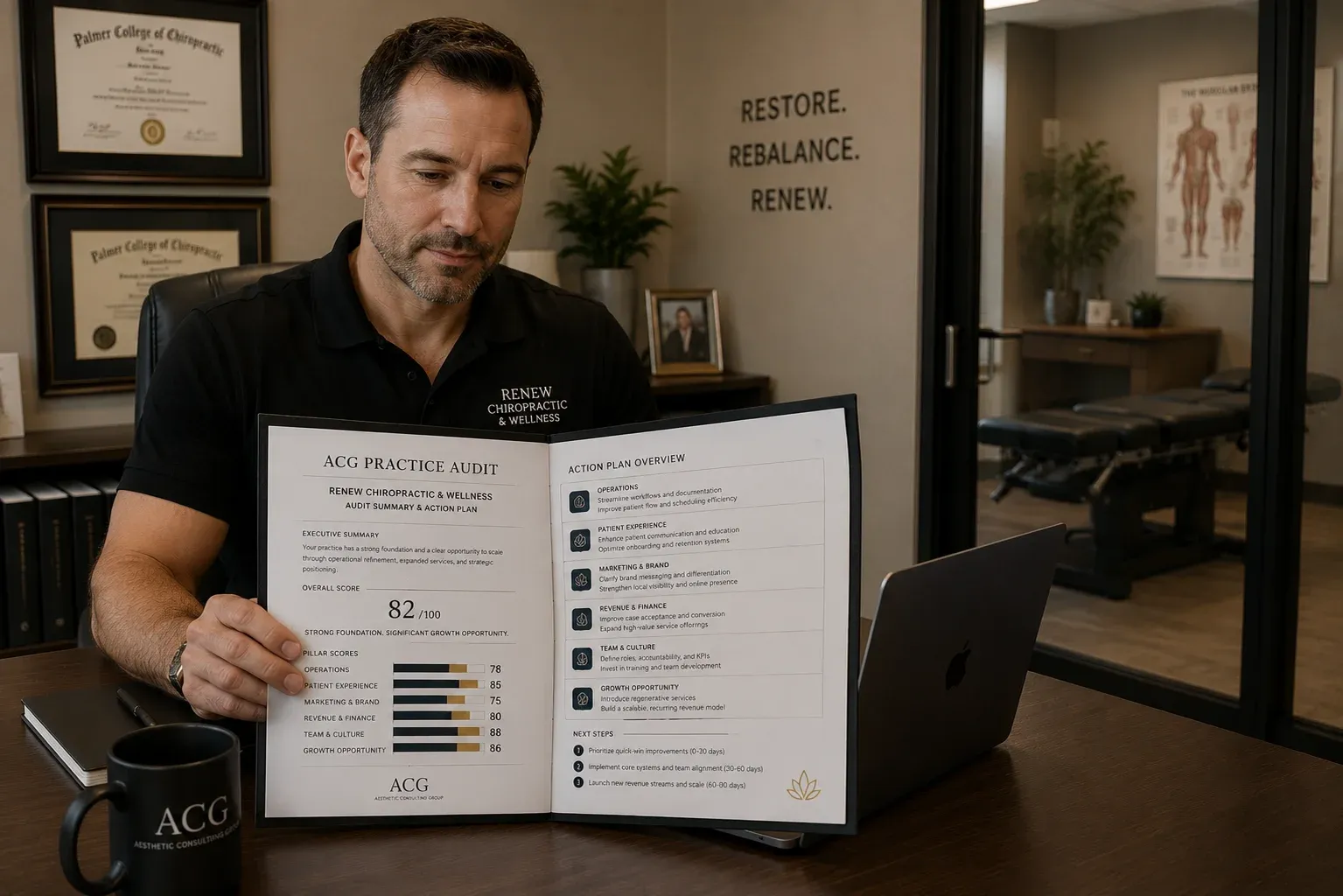
Every ACG optimization engagement for an existing clinic begins with a structured audit. ACG reviews the existing practice's current revenue mix, patient demographics, service menu, vendor relationships, staff capabilities, and marketing performance — and identifies the specific regenerative health expansion opportunity that fits the practice's existing infrastructure and patient base. The audit produces a clear, prioritized action plan: which services to add first, what the compliance requirements are, what the supplier relationships need to look like, and what the revenue impact of the expansion looks like at realistic conversion rates.
Compliance Framework for the New Services
Every new regenerative health service added to an existing clinic requires a compliance review. Does the existing medical director have prescribing authority for the new compounds? Are the existing compounding pharmacy relationships appropriate for the new service mix? Do the existing informed consent and documentation frameworks cover the new protocols? ACG addresses each of these questions and fills the gaps — connecting the clinic with additional healthcare counsel, medical director capacity, or pharmacy relationships as needed.
Supplier Access at Pre-Negotiated Pricing
Existing clinics that have been sourcing regenerative compounds — peptides, hormones, IV formulations — through their own independent pharmacy relationships are typically paying retail or near-retail pricing. ACG's pre-negotiated supplier access, built on the combined volume of the ACG client base, typically produces meaningful per-unit cost reductions that improve gross margins on the new services from day one.
Staff Training for the New Service Mix
Existing clinical staff need training on the new protocols, documentation requirements, and patient consultation frameworks appropriate to the services being added. ACG delivers this training as a core deliverable of the optimization engagement — ensuring the team is prepared to deliver the new services at the clinical standard that produces the retention outcomes the revenue model depends on.
The Revenue Impact
Across ACG's optimization engagements with existing clinic owners, the most consistent finding is this: the average monthly revenue per existing patient increases materially when regenerative health services are added correctly — not because patients spend more on the same volume of care, but because the nature of the clinical relationship changes from episodic appointments to ongoing protocol memberships.
A practice that converts 20 percent of its active patient base to regenerative health memberships at an average of $700 per month adds $14,000 in new monthly recurring revenue from a practice with 100 active patients — without acquiring a single new patient. The optimization engagement typically produces a revenue impact in this range within the first three to six months of the expansion.
To start the conversation about what the optimization engagement looks like for your specific practice, visit altosconsultinggroup.com/survey.
The Audit That Changes How You See Your Own Practice
Most existing clinic owners who contact ACG about the optimization engagement believe they already know what they need. They want to add GLP-1 programs. They want to integrate hormone optimization. They want to add peptides to the service menu. They arrive with a specific service addition in mind and a general sense that the revenue opportunity justifies the investment.
What the $999 audit consistently reveals is that the service addition they came in wanting is often not the highest-leverage opportunity available in their specific practice. The chiropractor who wants to add GLP-1 programs discovers that their patient demographics skew older and predominantly female — making women's hormone health the higher-conversion, higher-retention opportunity in their specific patient base. The med spa that wants to add hormone optimization discovers that 40 percent of their existing patients are already asking about NAD+ IV therapy in their consultations and have been told it is not available — making IV therapy the fastest path to immediate incremental revenue from patients who are already there and already asking.
The audit works because it looks at the practice from the outside with the specific lens of regenerative health revenue opportunity — not from the inside where the owner's existing assumptions about their patients, their services, and their market shape every assessment. ACG has seen enough existing clinic expansions across enough practice types and markets to recognize patterns that individual clinic owners cannot see because they are too close to their own business.
The audit is not a formality that leads to a predetermined recommendation. It is a genuine diagnostic that produces a prioritized action plan specific to the practice being evaluated — which services fit the existing patient demographic, which compliance requirements are already partially in place versus which need to be built from scratch, which supplier relationships the clinic already has that can be extended versus which need to be established, and which staff capabilities exist that can be built on versus which need to be developed.
The clinic owner who completes the audit and implements the highest-priority recommendation from it typically sees meaningful incremental monthly revenue within 60 to 90 days of the expansion going live — not because the service addition is magic but because the audit identified the service addition with the highest match to the existing patient base and the lowest implementation friction given the practice's current infrastructure.
The Compounding Effect of Getting the Expansion Right the First Time
The existing clinic that adds regenerative health services correctly — with the right compliance framework, the right supplier relationships, and the right service match for its patient demographic — does not just add a revenue line. It changes the financial character of the entire practice.
Before the expansion the clinic's revenue resets every month. Appointments fill the schedule or they do not. New patient acquisition drives growth or it does not. The business is fundamentally transactional — dependent on volume, susceptible to seasonal slowdowns, and requiring constant marketing investment to maintain momentum.
After a well-executed regenerative health expansion the clinic has a recurring revenue floor that does not reset. The 20 patients enrolled in hormone optimization memberships generate the same revenue in February that they generated in October regardless of how many new patients walked through the door that month. The 15 patients on peptide protocol subscriptions are renewing their programs whether the clinic ran a marketing campaign this month or not. The recurring revenue base that regenerative health memberships create underneath the existing appointment revenue changes the financial experience of running the practice — from a business that feels precarious when the schedule has gaps to one that has a predictable monthly baseline that grows as each new member enrolls.
This is the compounding effect that existing clinic owners who have executed this expansion correctly describe most consistently when asked what changed. Not just that revenue increased — though it did. But that the nature of the revenue changed. And that change in the financial character of the practice changes how the owner experiences running it, how they make decisions about growth, and how they think about the long-term value of what they have built.
To start the conversation about what the optimization engagement looks like for your specific practice visit altosconsultinggroup.com/survey.
Frequently Asked Questions
How is the optimization engagement different from the new clinic launch engagement?
The new clinic launch engagement is for entrepreneurs opening a clinic from zero — full market validation, entity formation, the complete infrastructure build. The optimization engagement is for existing clinic owners who already have infrastructure in place and want to add regenerative health services correctly. It begins with a $999 audit, identifies the specific opportunity within the existing practice, and provides targeted consulting support for the services being added.
How long does it take to add regenerative health services to an existing clinic?
With the right compliance framework, supplier relationships, and staff training in place, an existing clinic can begin offering new regenerative health services within four to eight weeks of beginning the expansion process. The timeline depends on the complexity of the services being added, the speed of medical director engagement, and pharmacy relationship setup.
What is the minimum patient base needed to justify a regenerative health expansion?
A practice with 50 active patients who are well-positioned demographically for regenerative health services — adults between 40 and 65 with demonstrated health investment — has sufficient base to make the expansion commercially viable. The conversion target for a well-structured expansion with appropriate clinical conversations is 15 to 25 percent of the existing active patient base in the first six months.
Written by Nova, Senior Content Strategist at Altos Consulting Group.