
Can a Non-Physician Own a TRT or Hormone Clinic? What the Law Actually Allows
A 2026 Ownership Structure Guide for Entrepreneurs Without a Medical License
The Short Answer, and Then the Part That Actually Matters
Yes. In most U.S. states a non-physician can own the business entity that operates a TRT or hormone optimization clinic, through the Management Services Organization structure. This is not a loophole or an aggressive interpretation — it is the standard ownership model across the cash-pay health clinic sector, and it is how the majority of clinics in this category are structured.
The part that actually matters, and the part most entrepreneurs skip past, is that the answer changes depending on what specifically the clinic intends to prescribe and who holds the prescribing authority. A hormone clinic is not a generic cash-pay wellness business. Testosterone is a Schedule III controlled substance, and the prescribing structure carries requirements that a general MSO template does not automatically address.
For the broader business case behind this clinic type, see The Hormone Optimization Clinic Business Opportunity. This post covers the ownership and prescribing structure specifically.
How the MSO Structure Works in a Hormone Clinic
The structure separates the business from the clinical practice. The entrepreneur owns the management services organization, which provides everything non-clinical — the facility, the staff, the technology, the marketing, the administrative operations, the billing. A licensed clinician owns the professional entity, which holds the clinical license, employs or contracts the clinical providers, and is responsible for every patient care decision.
The two entities are connected by a Management Services Agreement, under which the MSO charges the professional entity a management fee set at fair market value. That fee is how the non-physician owner generates return from the clinic's operations without practicing medicine or owning the clinical practice.
What makes this structure work is that the separation is genuine rather than cosmetic. Clinical decisions — whether a patient is a candidate for therapy, what the protocol should be, when to adjust dosing, when to stop treatment — belong entirely to the clinical side. Business decisions belong entirely to the owner. A structure where the business owner is functionally directing clinical care, regardless of what the paperwork says, is the version that draws regulatory attention.
The Prescribing Authority Question — Where Hormone Clinics Differ
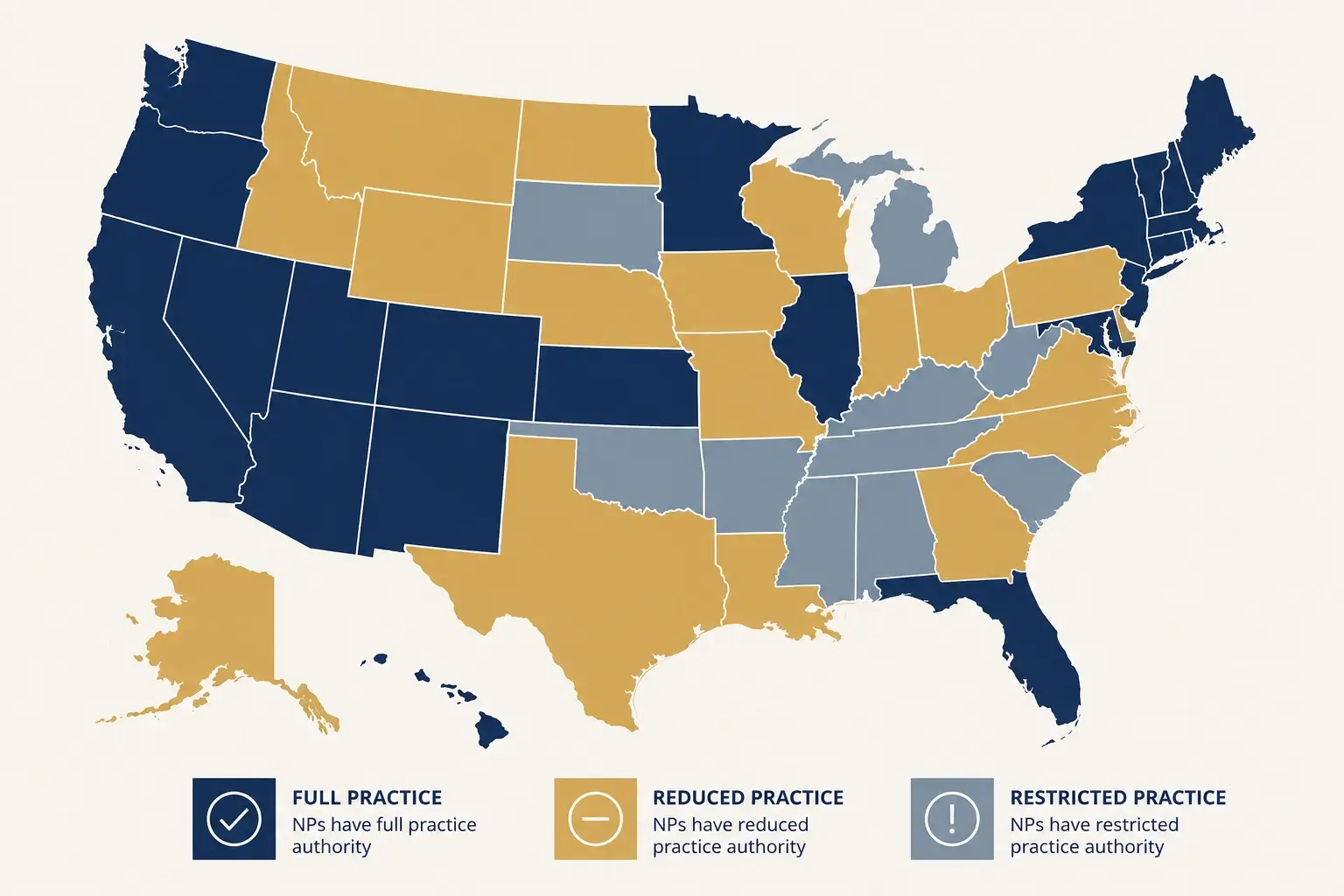
Who can hold prescribing authority in the professional entity depends heavily on the state. The American Association of Nurse Practitioners maintains a state-by-state practice environment map that categorizes states as full practice, reduced practice, or restricted practice. In full practice states, nurse practitioners can evaluate patients, order and interpret diagnostic tests, and initiate and manage treatments including prescribing medications and controlled substances under the exclusive licensure authority of the state board of nursing.
This distinction has direct commercial consequences for a hormone clinic. In a full practice state, an NP can own the professional entity and serve as the prescribing clinician, which is frequently a more accessible and less expensive arrangement than securing a physician medical director. In reduced or restricted practice states, a collaborative or supervisory agreement with a physician is required, which changes both the cost structure and the recruiting problem the entrepreneur needs to solve.
This is the single most important state-specific variable in a hormone clinic launch, and it should be resolved before a location is selected rather than after. An entrepreneur who has committed to a lease in a restricted practice state without having identified a collaborating physician has created an expensive sequencing problem.
What the Non-Physician Owner Actually Does
A recurring anxiety among entrepreneurs evaluating this category is whether they need to become clinically conversant enough to manage the medical side of the business. They do not, and the assumption that they do keeps otherwise well-suited operators out of a category they would run well.
The non-physician hormone clinic owner runs the business. They manage finances, hiring, marketing, patient experience, vendor relationships, real estate, and the operational systems that make the clinic function. They set pricing, build the referral network, and drive growth of the enrolled patient base. None of that requires a medical license.
What develops naturally over the first six to twelve months is genuine familiarity with the services the clinic offers — enough to speak intelligently with prospective patients, manage the clinical team effectively, and make informed decisions about the service menu. That familiarity is acquired through operating the business, not through formal medical education.
Where Non-Physician Ownership Structures Go Wrong
•Using a generic MSO template that does not address controlled substance prescribing or the specific state's corporate practice of medicine posture
•Setting the management fee at a level that cannot be defended as fair market value, which invites the argument that the arrangement is fee-splitting rather than a genuine services relationship
•Selecting a location before confirming whether the state permits NP-owned professional entities, then discovering a physician is required
•Treating the medical director as a signature rather than an engaged clinical overseer, which is both a compliance exposure and a patient care problem
ACG structures non-physician ownership for hormone clinics with healthcare counsel in the relevant state and facilitates introductions to prescribing clinicians appropriate to that state's practice environment. To discuss the structure for your specific market, visit altosconsultinggroup.com/survey.
What the MSO Structure Does Not Protect Against
A correctly drafted MSO establishes that the non-physician owner is not practicing medicine. It does not insulate the business from every other category of regulatory exposure, and entrepreneurs sometimes over-read what the structure accomplishes.
Marketing claims remain the owner's responsibility. If the clinic's advertising promises outcomes that constitute medical claims, the fact that a licensed clinician makes the prescribing decisions does not resolve the problem — the marketing was produced by the business entity the entrepreneur owns. Controlled substance record-keeping obligations attach to the registered location and prescriber, and deficiencies there create exposure regardless of how clean the ownership structure is. And an arrangement where the management fee is structured so that it functionally varies with the volume or value of clinical services can raise fee-splitting questions in states that scrutinize that relationship closely.
The practical takeaway is that the MSO is one layer of a compliance posture, not the whole of it. The clinics that operate cleanly in this category treat entity structure, prescribing framework, documentation standards, and marketing discipline as four separate things that each need to be right.
Frequently Asked Questions
Can a nurse practitioner own the clinical side of a TRT clinic?
In full practice authority states, yes — an NP can own the professional entity and hold prescribing authority including for controlled substances, under the exclusive licensure authority of the state board of nursing. In reduced or restricted practice states, a collaborative or supervisory relationship with a physician is required. Confirming which category your state falls into is one of the first steps in a hormone clinic launch.
Does the MSO structure work the same way for a hormone clinic as for other cash-pay clinics?
The framework is the same, but the prescribing layer is more specific. A hormone clinic prescribing testosterone is operating in controlled substance territory, which means DEA registration, controlled substance record-keeping, and a prescribing structure that a general wellness clinic MSA does not need to contemplate. The structure is the same; the drafting is not.
How much of the clinic do I actually own under an MSO structure?
You own the management services organization entirely — including the brand, the patient relationships from a business standpoint, the systems, the physical assets, and the enterprise value. You do not own the professional entity, which holds the clinical license. In practice this means the business you built and would sell is yours; the clinical license that permits patient care sits with the licensed clinician.
What happens if the state changes its practice authority rules after I open?
Practice authority has generally been trending toward expansion rather than restriction, but changes do occur. A clinic structured with healthcare counsel who continues to monitor the state's regulatory environment is positioned to adapt the prescribing arrangement if rules change. This is one reason the relationship with healthcare counsel should not end when the entity documents are signed.