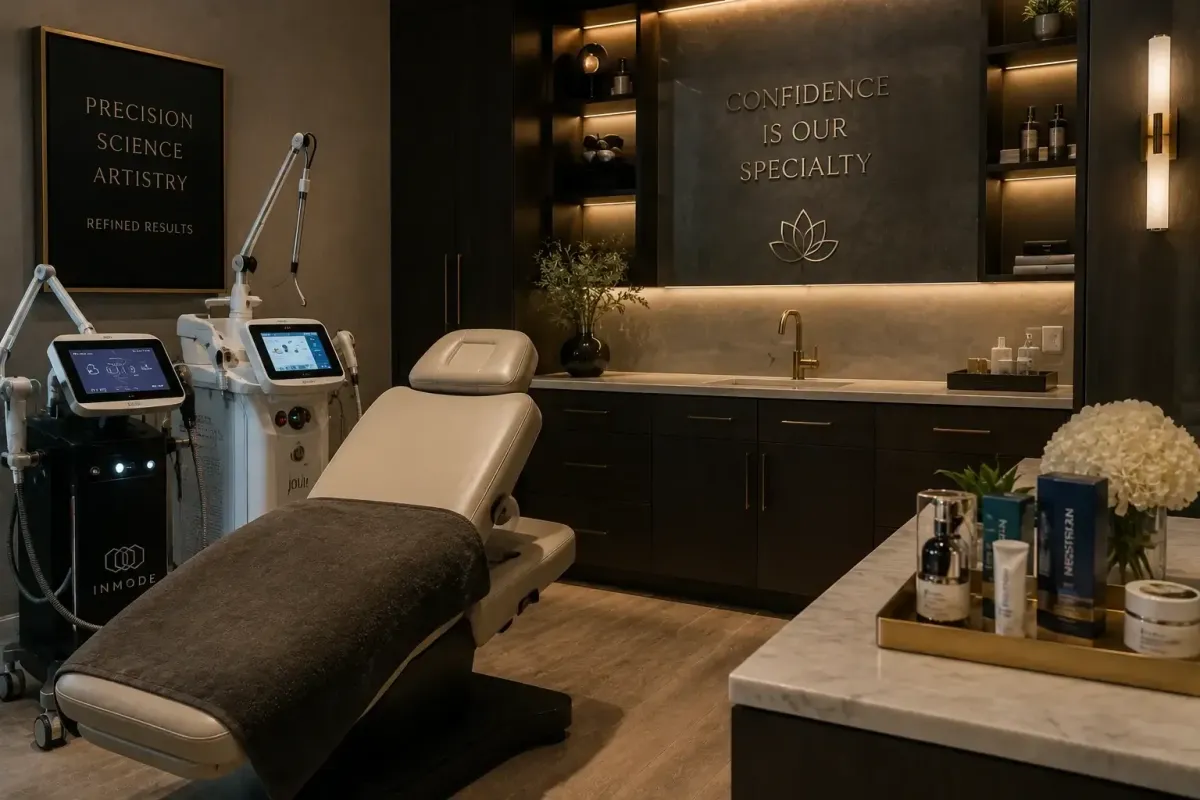
The Aesthetics and Med Spa Clinic Business Opportunity: How to Build a Premium Cash-Pay Aesthetics Practice That Competes on Clinical Depth, Not Price
The Largest Cash-Pay Health Market — and Why Differentiation Determines Survival
The U.S. medical spa market reached approximately $11 to $13 billion in 2026 and is growing at a consistent rate driven by aging demographics, social media influence, and the normalization of cosmetic aesthetic treatments across a broader age and income spectrum than any previous decade. Botox and dermal fillers alone account for the majority of aesthetic treatment revenue in most markets, and the consumer demand for these services — and for the increasingly sophisticated aesthetic treatments that surround them — shows no sign of plateauing.
But the market is also one of the most competitive in cash-pay health. The med spa that opens in 2026 offering the same menu of Botox, fillers, and laser treatments as the three practices already operating within three miles of its location is entering a pricing war that erodes margins and makes patient acquisition increasingly expensive over time.
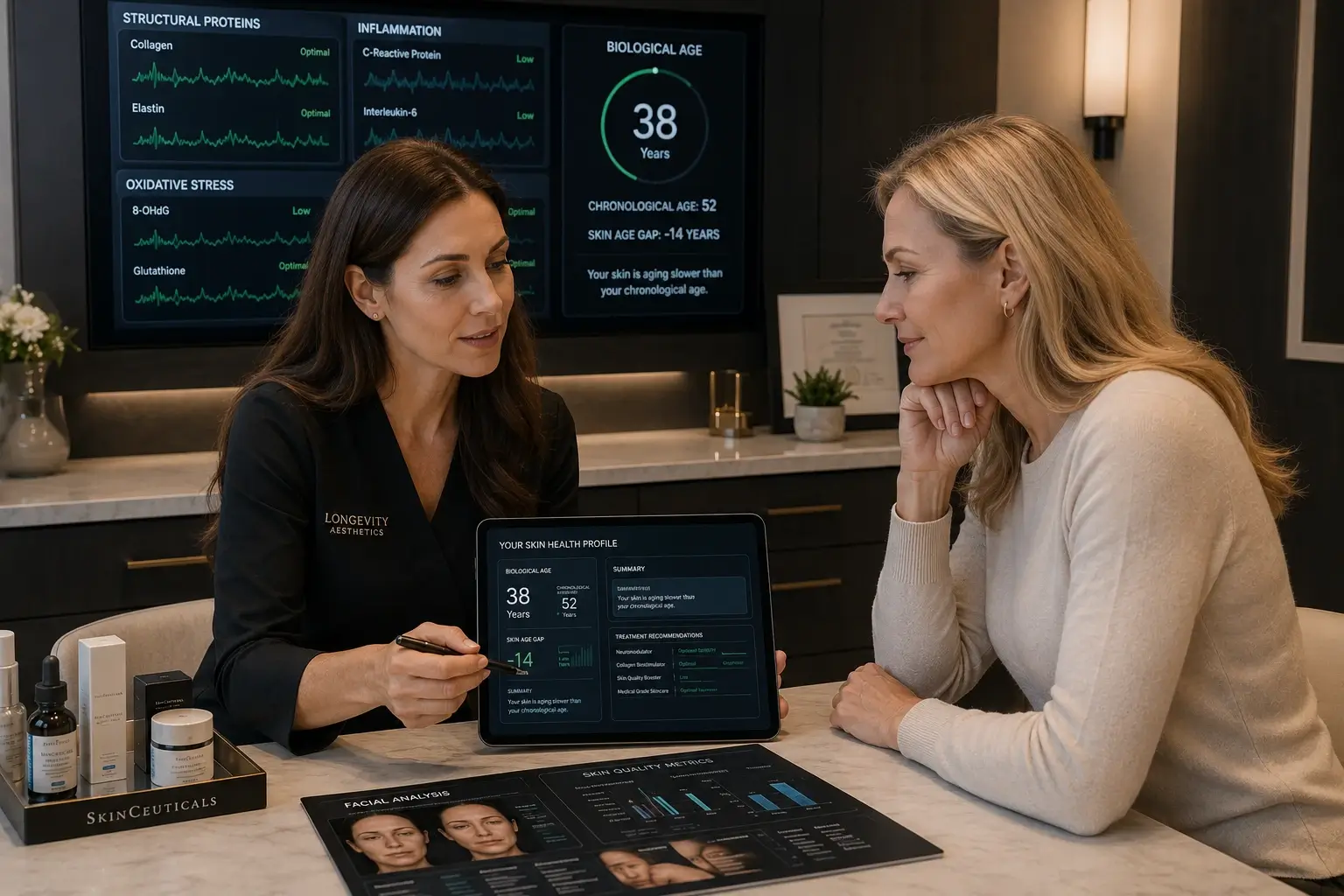
The med spa that opens with a clinical aesthetic framework — one that integrates conventional aesthetic treatments with regenerative and longevity-adjacent services including PRP, exosomes, peptide protocols for skin health, and biomarker-guided skin aging assessment — positions itself outside the commodity competition and commands premium pricing from the patient demographic that shops on clinical sophistication rather than coupon codes.
Altos Consulting Group has helped launch aesthetics and med spa clinics across the United States. To see the clinics ACG has supported, visit altosconsultinggroup.com/clinics-supported/aesthetics.
The Market Opportunity: Where Aesthetics Meets Longevity
The convergence of aesthetic medicine and longevity medicine is one of the defining trends in cash-pay health in 2026. The patient who was previously the core med spa demographic — a woman in her 40s or 50s seeking Botox and fillers for appearance management — is now also the patient who wants to understand her biological age, optimize her hormonal environment, and address the internal biological factors that govern skin quality from the inside out.
This patient does not choose between an aesthetics clinic and a longevity clinic. She wants a practice that addresses both dimensions of her health — the external presentation she cares about and the biological environment that produces it. The med spa that positions as a clinical aesthetic longevity practice — offering conventional aesthetic treatments alongside PRP, exosomes, peptide protocols for skin health, and hormonal assessment — is the one this patient chooses over the boutique Botox bar with competitive pricing.
The Service Stack: Building a Clinical Aesthetic Practice
Conventional Aesthetic Treatments — The Volume Foundation
Botox, dermal fillers, chemical peels, and laser treatments remain the highest-volume services in most aesthetic practices and serve as the foundation of the appointment schedule that sustains the business through the ramp period. These services attract a broad patient demographic, are relatively accessible for trained aesthetic practitioners to learn and deliver consistently, and create the recurring patient relationship that makes introduction to more clinical services natural over time.
PRP — Platelet-Rich Plasma for Skin and Hair
PRP facials and PRP hair restoration are the most common regenerative aesthetic services and the natural entry point into the clinical aesthetic conversation for a patient whose relationship with the practice began with conventional treatments. PRP for skin uses the patient's own growth factors to improve skin texture, tone, and collagen production. PRP for hair restoration addresses androgenic alopecia with documented clinical outcomes. Both services generate premium pricing, create a clinical differentiation story, and naturally introduce the conversation about other regenerative services.
Exosome Therapy for Skin
Exosomes applied topically post-procedure or injected locally for skin rejuvenation represent the premium tier of aesthetic regenerative medicine. The exosome skin therapy patient is typically a health-sophisticated adult who has moved beyond conventional aesthetic treatments and is seeking the regenerative approach that addresses skin health at the cellular level. Premium pricing, strong clinical differentiation, and a growing patient awareness driven by longevity medicine consumer education.
GHK-Cu and Peptide Protocols for Skin Health
GHK-Cu — a naturally occurring copper peptide with documented effects on collagen synthesis, tissue repair, and skin quality — can be offered topically or as part of a compounded injectable protocol under medical director supervision. Peptide protocols for skin health bridge the aesthetic and longevity clinical conversations and position the practice as offering a biologically sophisticated alternative to conventional aesthetic filler and toxin approaches.
Hormonal and Metabolic Assessment for Skin Aging
The aesthetic patient who understands that hormonal environment, inflammatory load, insulin sensitivity, and oxidative stress are among the primary drivers of visible skin aging is a natural candidate for the hormonal assessment and optimization conversation. A med spa that includes hormonal and metabolic skin aging assessment as a service differentiates itself from every other aesthetic practice in most markets and creates a pathway to hormone optimization enrollment from the existing aesthetic patient base.
Compliance for Aesthetic Clinics
Aesthetics clinics require medical director oversight for all prescription-level procedures including Botox injections, dermal filler administration, PRP treatment with associated anesthetics, and any compounded topical formulations. Laser and energy-based device operations are subject to state-specific operator licensing requirements — some states require physician or RN operator credentials; others permit trained aestheticians under physician supervision. Building the right compliance structure before the first patient is seen is as important for an aesthetics clinic as for any other cash-pay health category.
What ACG Provides
ACG's launch engagement for an aesthetics and med spa clinic covers market validation, entity structure, medical director introduction with aesthetic medicine experience, supplier access for injectable and laser equipment at preferred pricing, PRP and exosome sourcing, clinical protocol setup, brand and website development positioning the clinical aesthetic longevity framework, and 60 days of post-launch advisory support.
To start the conversation about the aesthetics and med spa opportunity in your specific market, visit altosconsultinggroup.com/survey.
Here are 580+ words and one additional image placement. Paste before the FAQ block.
Why the Clinical Aesthetic Practice Wins on Retention Where the Traditional Med Spa Cannot
The fundamental financial vulnerability of the traditional med spa model is visible in its retention curve. A Botox patient returns every three to four months when the effect wears off — not because of a clinical relationship, but because of a biological inevitability. If a competitor opens nearby offering the same treatment at a lower price or with a promotional offer, that patient has no clinical reason to stay loyal. The switching cost is zero. The clinical relationship is zero. The only retention mechanism is habit and convenience, both of which are fragile in a competitive market.
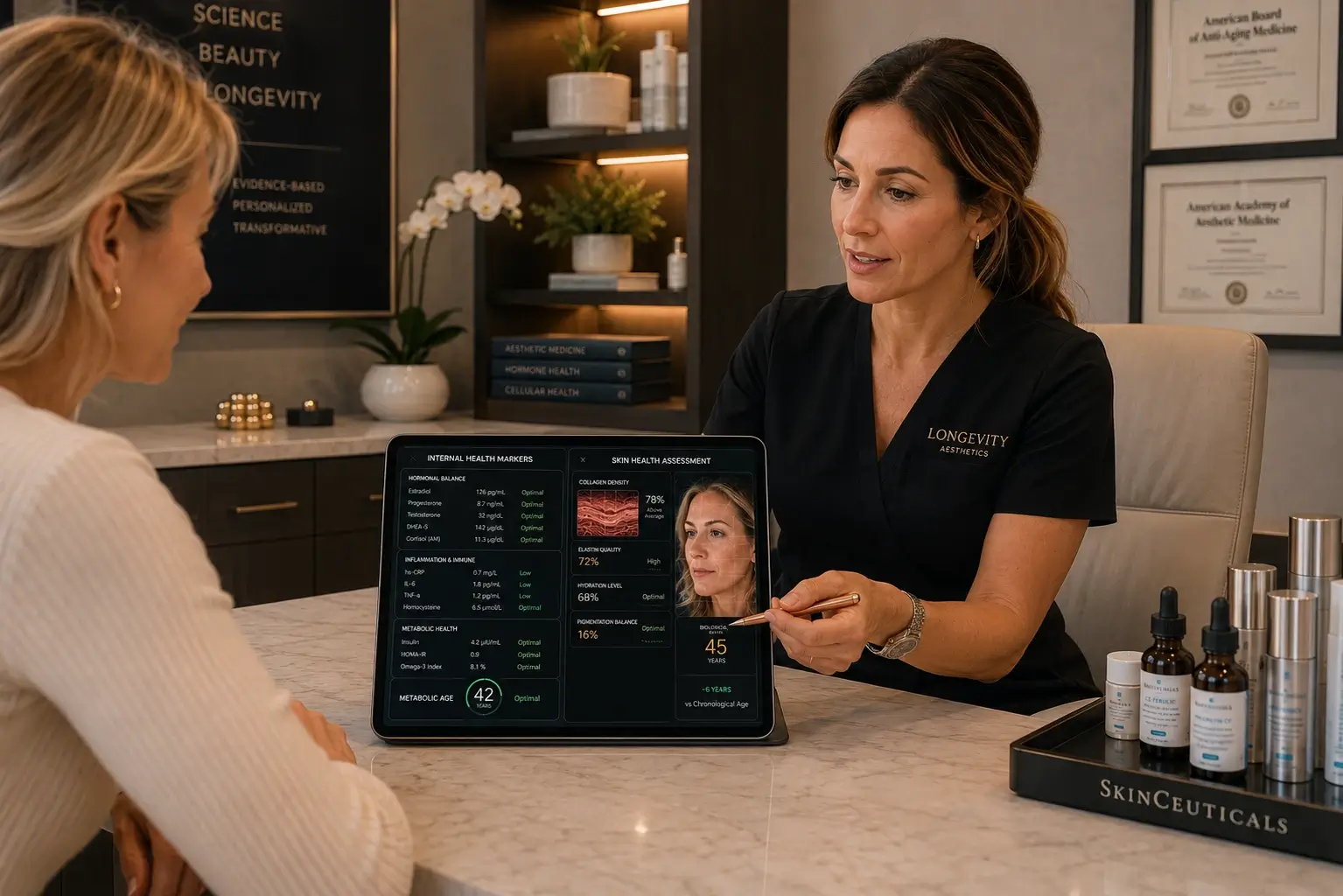
The clinical aesthetic practice that integrates regenerative medicine and longevity services into its offering changes this dynamic fundamentally. A patient enrolled in a PRP facial series, a GHK-Cu peptide skin protocol, and a quarterly hormonal skin aging assessment has a clinical relationship with the practice that goes significantly deeper than the transactional Botox appointment. The clinical team knows their hormonal environment, their inflammatory profile, their skin aging trajectory, and the specific biological factors that are driving the aesthetic concerns the patient is trying to address. That knowledge creates a switching cost that no competitor can match with a promotional offer, because the competitor does not have the patient's clinical history, their biomarker data, or the months of protocol adjustment that produced the results the patient is now maintaining.
This is the retention mechanism that the traditional med spa cannot build — not because it lacks the technical capability to add these services, but because adding them without the clinical philosophy that frames them as biologically meaningful rather than aesthetically indulgent requires a complete repositioning that is significantly harder to execute for an established practice than for one that opens with the clinical aesthetic framework from day one. The entrepreneur opening a new clinical aesthetic longevity practice in 2026 has an advantage over every established traditional med spa in their market that is not about equipment or services. It is about positioning — and positioning established at opening is significantly easier to defend than positioning retrofitted onto a practice that patients already know as something different.
The Referral Architecture That Builds a Clinical Aesthetic Practice Without Advertising Dependency
The referral dynamics of a clinical aesthetic longevity practice are significantly stronger than those of a traditional med spa — and they operate through different social mechanisms that compound faster once activated. The traditional med spa patient refers peers who want the same specific treatment at the same price point. The clinical aesthetic longevity patient refers peers who are experiencing the same cluster of biological concerns — declining skin quality, hormonal symptoms, fatigue, and the visible signs of accelerated biological aging — and who trust the referring patient's assessment that this specific clinic offers something genuinely different from what they have already tried.
This referral profile produces a higher-converting referred patient because the referral is not a recommendation of a service but a recommendation of a clinical approach. The referred patient arrives having already heard that this clinic understood the biological picture rather than just treating the surface presentation. That pre-established trust converts at significantly higher rates than any cold advertising-generated lead and produces a patient who is ready to engage with the clinical depth of the practice from the first consultation rather than evaluating whether the clinical approach is worth the price premium.
The physician referral channel is the most under activated referral source available to a clinical aesthetic practice and one that traditional med spas almost never develop systematically. Dermatologists, endocrinologists, and OB-GYNs regularly see patients whose skin health concerns have a hormonal component that conventional dermatological treatment alone is not addressing adequately. A clinical aesthetic practice that offers hormonal assessment integrated with skin health treatment is a referral destination for these physicians that genuinely serves their patients better than the conventional dermatology referral. A professional outreach program — presenting the clinical aesthetic practice's integrated approach to a local dermatologist or OB-GYN with the medical director present — builds referring physician relationships that produce consistent monthly referral volume from patients who arrive pre-qualified, clinically motivated, and ready for the comprehensive assessment conversation.
The third referral channel unique to the clinical aesthetic longevity practice is the corporate wellness referral. Executive wellness programs, high-performance coaching practices, and concierge medicine providers increasingly recognize biological skin aging as a legitimate component of comprehensive health optimization for their clients. A clinical aesthetic longevity practice positioned as the skin and aesthetic component of a comprehensive biological age reversal program is a natural fit for referral relationships with these providers — and a single concierge medicine practice with 50 to 100 active clients represents a patient acquisition opportunity that no amount of retail advertising spend can replicate at comparable cost.
Frequently Asked Questions
Is the med spa market too competitive to enter in 2026?
The generic med spa market — offering the same services as every other practice in the market at competitive pricing — is significantly saturated in most major and mid-size U.S. markets. The clinical aesthetic longevity practice — offering regenerative aesthetic services including PRP, exosomes, peptide protocols, and hormonal assessment alongside conventional treatments — operates in a significantly less competitive segment and commands meaningfully premium pricing.
Do I need a medical background to open a med spa?
No. The same MSO model that applies to other regenerative health clinics applies to aesthetic practices. The entrepreneur owns the business entity. A medical director provides clinical oversight and prescribing authority for medical procedures. ACG facilitates medical director introductions across 46 states.
What is the average revenue per patient at an aesthetics clinic?
Revenue per patient varies significantly by service mix and pricing structure. Conventional Botox patients may generate $400 to $800 per visit two to four times per year. A patient enrolled in a PRP facial and skin health protocol generates $800 to $2,400 per treatment course. An aesthetics patient who adds hormonal assessment and optimization becomes a membership revenue patient generating $500 to $1,000 per month in ongoing protocol management. The clinical aesthetic longevity framework maximizes both per-visit revenue and annual recurring revenue per patient.