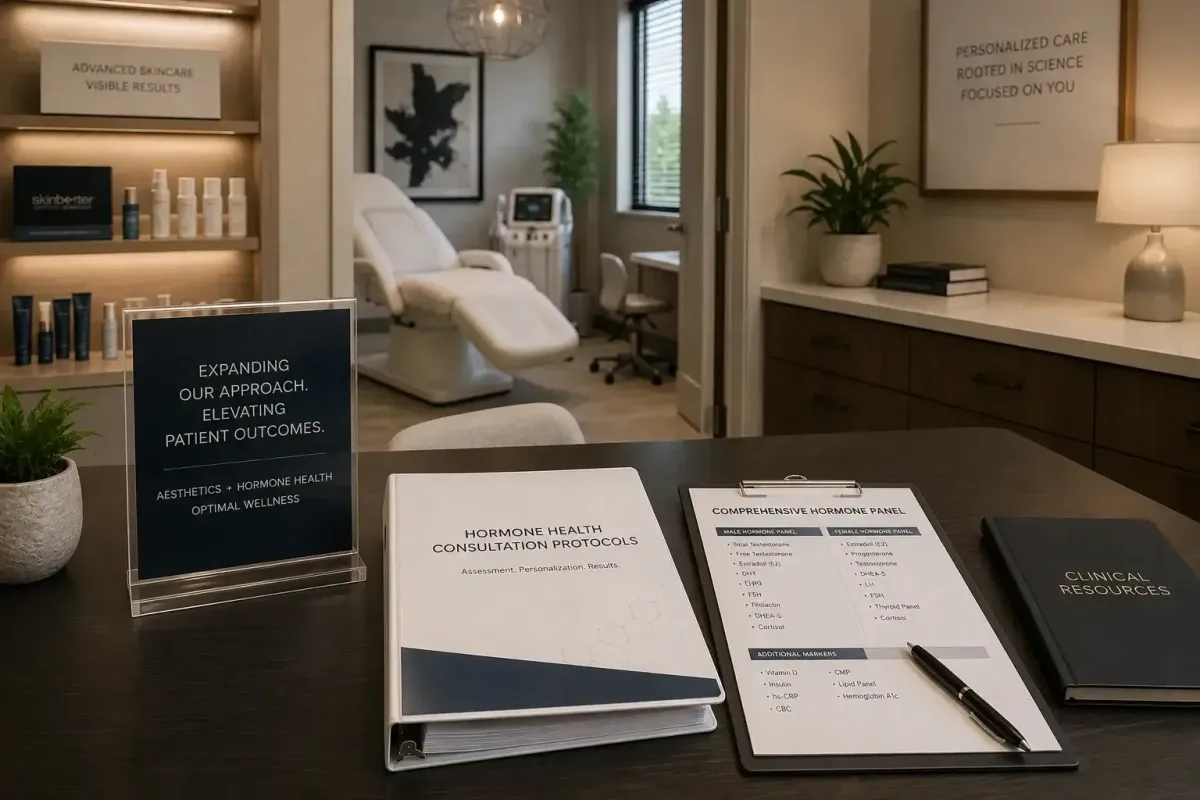
Adding Women's Hormone Services to a Med Spa or Wellness Practice
The Expansion That Turns an Appointment Business Into a Membership Business
Your Patient Panel Is Already the Target Demographic
A med spa's core patient is a woman between forty and sixty with discretionary income and demonstrated willingness to pay out of pocket for elective health and appearance services. That is, almost exactly, the women's hormone health patient.
The overlap is not approximate. It is close to complete. Which means this expansion does not require patient acquisition — it requires a clinical conversation with patients who are already in the building, already paying cash, and already trusting the practice.
For the market and business case behind this service category, see The Women's Hormone Health Clinic Business Opportunity.
What Actually Changes in the Business Model
This is the more important point, and it is easy to miss when the expansion is framed as adding a service line.
An aesthetics practice runs on appointments. Revenue resets monthly. A patient books when she wants a treatment, and the practice competes to be chosen each time. Growth requires either more patients or more frequent visits, both of which require marketing spend.
A hormone program runs on enrollment. A patient on therapy with quarterly monitoring generates predictable revenue whether or not she books an aesthetic treatment that month. Twenty enrolled hormone patients create a revenue floor beneath the appointment business that did not previously exist.
That structural change is worth more than the incremental revenue itself. It changes the financial character of the practice from precarious to predictable — and it changes what the owner can plan for.
The Prescribing Requirement
A med spa with a medical director who has appropriate prescribing authority has the most direct path. A practice without one needs to add a prescribing clinician, and what that requires depends on the state. The AANP state practice environment map identifies which states permit nurse practitioners to practice and prescribe independently and which require a collaborative or supervisory physician relationship.
For estrogen and progesterone therapy, no DEA registration is required — these are not controlled substances. That makes this expansion meaningfully simpler than adding testosterone therapy, which brings Schedule III requirements into scope.
Aestheticians cannot prescribe or manage hormone therapy under any state's scope of practice. The clinical side of this expansion belongs entirely to a licensed prescribing clinician, and practices should structure it accordingly rather than assuming existing staff can absorb it.
Formulary Decisions Before Launch
Practices adding hormone services are typically approached quickly by compounding pharmacies offering turnkey pellet programs with attractive margins. This decision deserves genuine clinical deliberation rather than a vendor's framing.
The Endocrine Society's position is that there is no evidence-based medical need for compounded hormone therapy when an FDA-approved preparation is available, and many FDA-approved preparations are themselves bioidentical. The companion post on this blog covers the formulary comparison in full detail.
A practice that builds primarily on FDA-approved bioidentical products, using compounding only where a documented clinical indication exists, occupies a more defensible position than the pellet-default model that dominates this category — and one that a well-informed patient increasingly recognizes.
The Integration That Works
The mechanism that converts existing patients is not an announcement. It is a screening question added to intake and annual review.
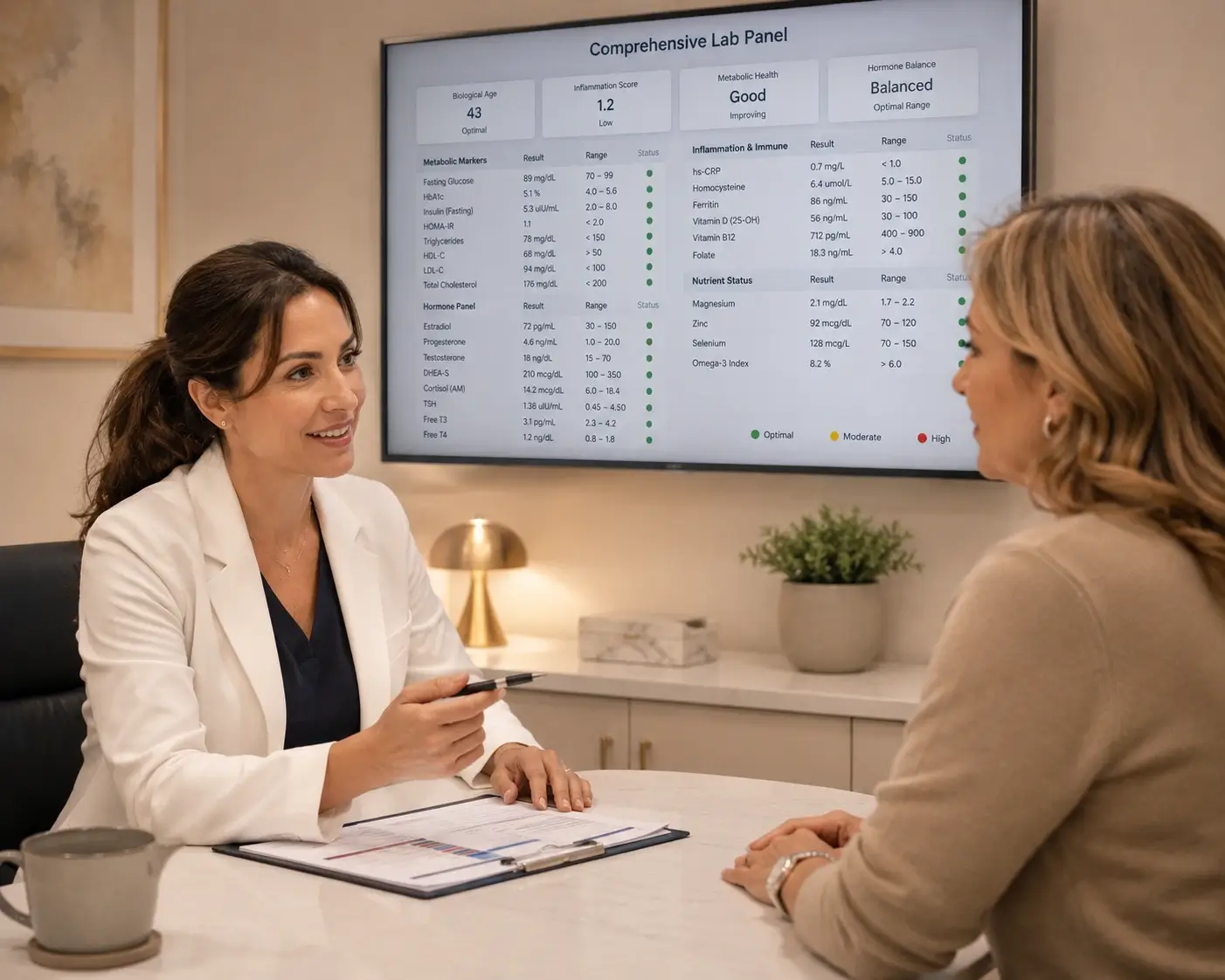
A patient presenting for aesthetic treatment who reports sleep disruption, fatigue, mood changes, or body composition shifts that have not responded to her usual approach is a candidate for a hormonal workup. Offering a comprehensive panel as clinical follow-up — not as an upsell — surfaces appropriate candidates steadily and keeps the conversation clinically grounded.
The lab result then drives the recommendation. This sequencing matters: therapy follows confirmed findings and documented symptoms, which is both the correct clinical standard and the structure that protects the practice.
Pricing the Program Alongside Aesthetic Services
Practices adding hormone services frequently misprice the program by anchoring to their aesthetic service pricing, which is transactional and per-treatment. A hormone program is neither.
The structure that works is a monthly membership covering protocol management and clinical oversight, with monitoring panels either included in the membership or billed at defined intervals. Including monitoring within the membership is generally the better choice — it removes the friction of an unexpected charge and reinforces that monitoring is integral to the program rather than an add-on the patient might decline.
Practices should resist the instinct to underprice in order to drive early adoption. This patient population is not price-shopping the way an aesthetic patient comparing injector rates might be. Pricing meaningfully below market signals a less serious clinical program to a patient who is specifically looking for the opposite.
Operational Changes the Practice Should Anticipate
Two things change operationally when a med spa adds hormone services, and practices that plan for them transition more smoothly.
Appointment length changes. An aesthetic appointment runs on a predictable clock. An initial hormone consultation with a thorough symptom history and panel review does not fit in that slot, and forcing it into one undermines the exact thoroughness that converts this patient. Most practices need a distinct, longer appointment type for initial hormone consultations and quarterly reviews.
Documentation load increases. Prescription management, monitoring schedules, and longitudinal lab tracking require EMR capability that a purely aesthetic practice may not currently have configured. Confirming the existing system can support this — or budgeting for the configuration — belongs in the planning phase rather than discovered in week three.
Sequencing and Revenue Impact
Confirm prescribing authority first, since the timeline is outside the practice's control. Build the clinical protocol and monitoring workflow second, with the prescribing clinician's direct input. Train the patient-facing team on the screening conversation third. Promote the service only after those three are settled.
A practice with 300 active patients converting 8 to 12 percent to hormone enrollment adds roughly 24 to 36 enrolled patients. At typical program pricing for this category, that represents meaningful annual recurring revenue from patients the practice already had — and it arrives as a floor beneath the appointment business rather than as more appointments.
These are illustrative planning benchmarks — actual results depend on patient demographics, conversion execution, pricing, and retention.
ACG's optimization engagement for existing practices begins with a structured audit identifying which expansion fits the practice's actual patient base. To learn more, visit altosconsultinggroup.com/existing-clinic-growth. To start the conversation, visit altosconsultinggroup.com/survey.
Frequently Asked Questions
Can a med spa legally offer hormone therapy?
Yes, provided the practice has or adds a clinician with appropriate prescribing authority in that state, and provided clinical protocols and monitoring infrastructure are built to standard. Estrogen and progesterone do not require DEA registration. Adding testosterone therapy for women does, since testosterone is Schedule III.
How long does this expansion take?
Four to eight weeks for a practice with prescribing authority already in place, once protocol documentation and monitoring workflow are complete. Eight to twelve weeks or longer for a practice adding a prescribing clinician, depending on recruiting and credentialing.
Will this cannibalize aesthetic revenue?
The evidence from practices that have made this expansion suggests the opposite. Patients enrolled in an ongoing clinical program visit more frequently and engage more deeply with the practice overall. The hormone program creates a recurring relationship that increases aesthetic service uptake rather than competing with it.
What is the most common mistake in this expansion?
Adopting a vendor's turnkey pellet program without independent clinical review, and treating monitoring as optional. The first creates a clinical position the practice may struggle to defend. The second removes the mechanism that drives retention — and a hormone program without monitoring is a prescription service, not a clinical relationship