NAD+ and Sermorelin: Why These Two Services Are the Anchor of Every Successful Longevity Practice in 2026
Two Services. Every Successful Longevity Clinic Carries Both.
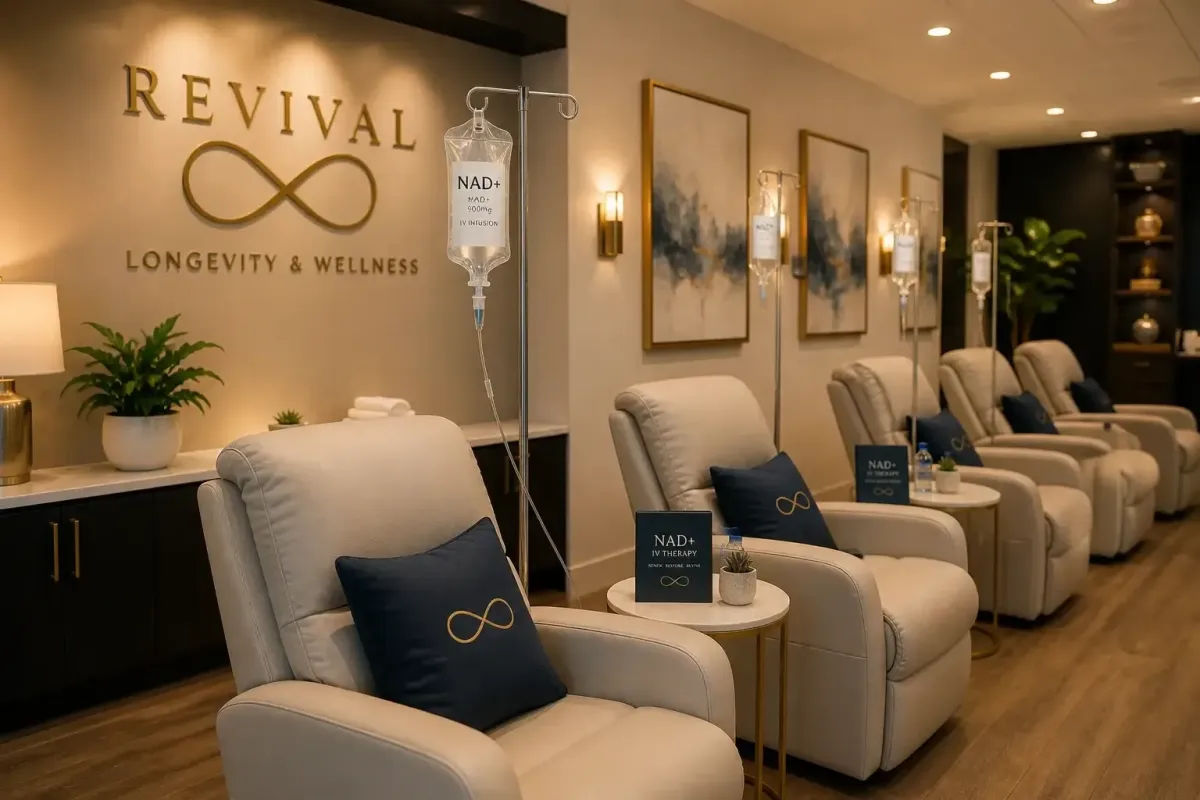
Across longevity medicine clinics operating at scale in the United States in 2026, two services appear with near-universal consistency in the revenue mix: NAD+ IV therapy and Sermorelin growth hormone secretagogue therapy. They are not the only services a longevity clinic offers. But they are the anchors — attracting the broadest segment of the longevity patient demographic, generating the most consistent recurring revenue, and creating the most natural pathways to deeper protocol enrollment.
For the full longevity clinic business case — including market sizing, the complete service ecosystem, and the financial model — see The Longevity Clinic Business Opportunity (altosconsultinggroup.com/post/longevity-clinic-business-opportunity-2026).
ACG includes both NAD+ therapy and growth hormone secretagogue protocols in the supplier access and clinical protocol setup provided through the launch engagement. To see the longevity clinics ACG has helped launch, visit altosconsultinggroup.com/clinics-supported/longevity.
NAD+ IV Therapy: Why It Is the Entry Point for the Longevity Patient
The Market Position of NAD+ in 2026
The NAD+ IV clinic market reached $512 million in 2025 and is projected to reach $1.05 billion by 2032 at a 10.8 percent compound annual growth rate. Search volume for NAD+ therapy was up 122 percent year-over-year as of August 2025. The search intent is increasingly clinical — people are not searching to understand what NAD+ is. They are searching for where to get it. NAD+ therapy has crossed the mainstream threshold and now represents a competitive baseline rather than a differentiator for longevity clinics.
Why NAD+ Anchors the Longevity Clinic Business Model
NAD+ IV therapy works as a clinic anchor service for three structural reasons. First, it attracts the broadest segment of the longevity patient demographic — virtually every performance-oriented adult in the 40 to 65 demographic is a candidate for a conversation about NAD+. Second, it is not a one-time treatment — clinical results accumulate over series of sessions, and most protocols recommend ongoing maintenance after the initial loading series. Third, it integrates naturally with every other service in the longevity clinic stack, creating multi-service patient relationships rather than single-service transactions.
The Revenue Profile of a NAD+ Program
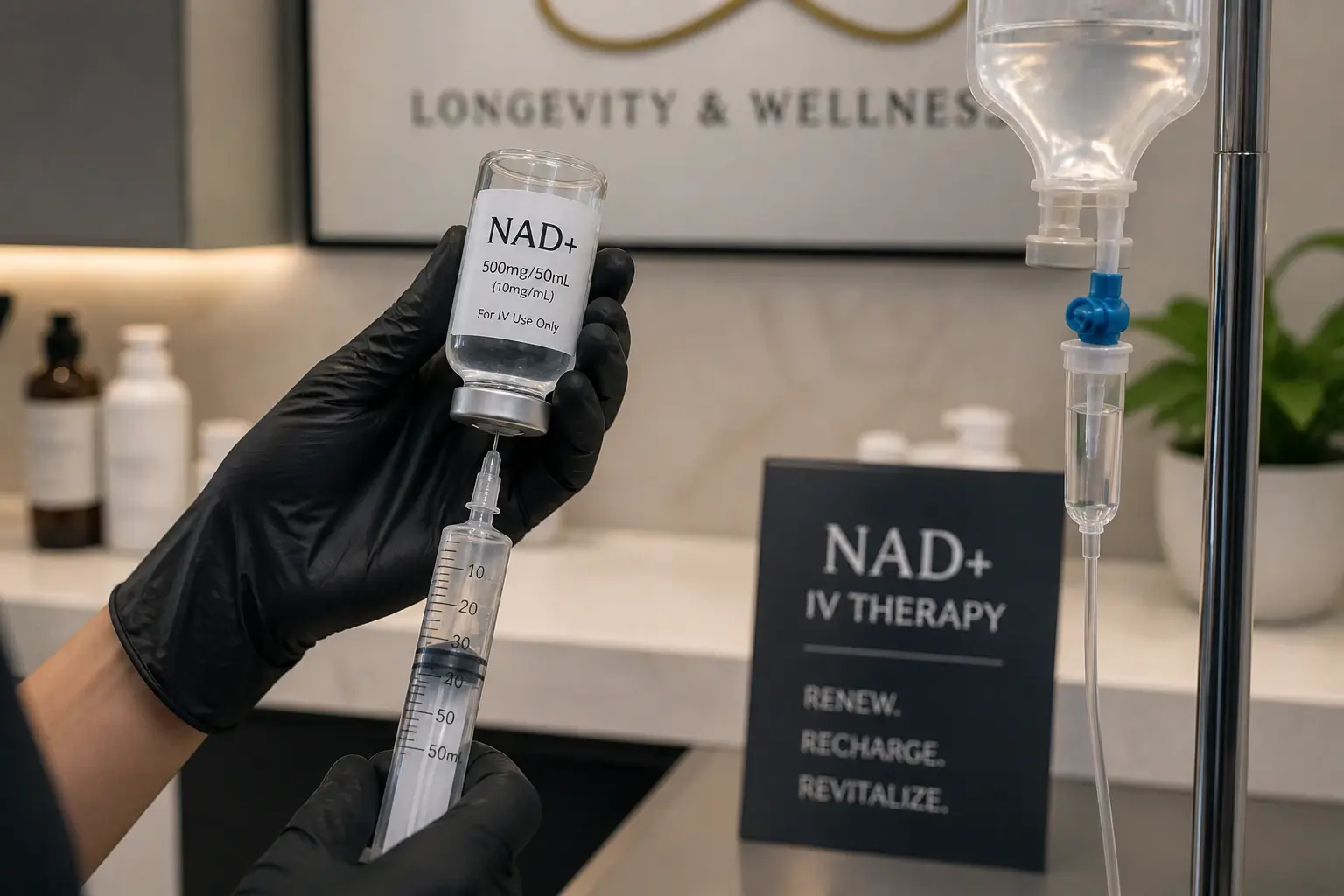
A NAD+ loading series — typically four to ten infusions over two to three weeks — generates between $1,200 and $3,000 per patient depending on infusion volume and market. Maintenance sessions generate $300 to $600 per session, typically monthly or quarterly. A patient enrolled in a monthly maintenance membership generates $300 to $600 per month in ongoing session revenue before any additional service revenue. These are illustrative benchmarks — actual results vary by market and execution.
Sermorelin: Why the Growth Hormone Category Generates the Strongest Retention
Patient Demographics and Demand
Searches for Sermorelin were up 233 percent year-over-year as of August 2025. The patient seeking Sermorelin is typically between 40 and 65, experiencing the biological effects of declining growth hormone — slower recovery, changing body composition, reduced sleep quality, declining energy — and motivated to address those changes with a clinically supervised program.
Why Sermorelin Generates the Strongest Long-Term Retention
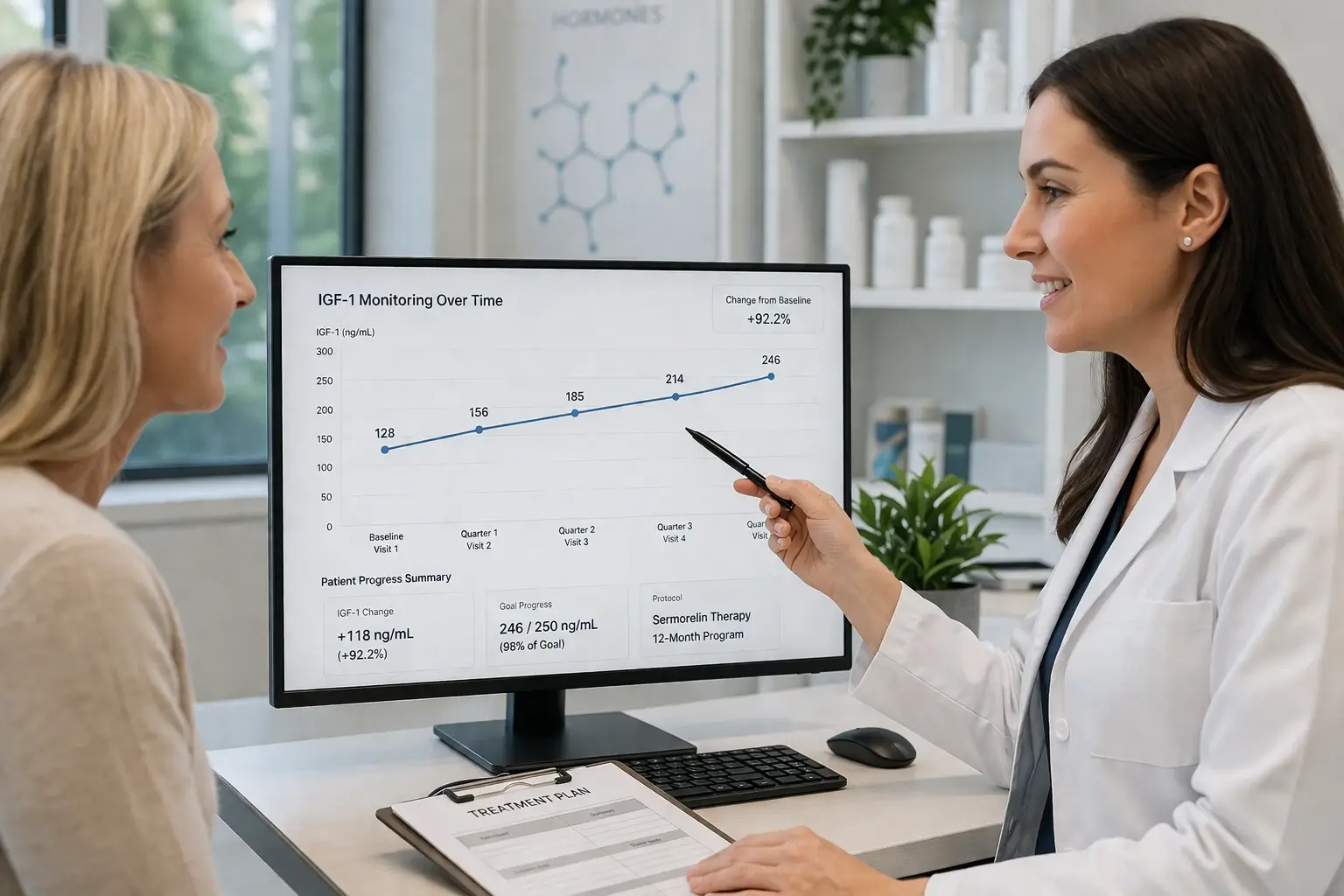
Growth hormone secretagogue protocols accumulate their clinical benefits over months of consistent use. A patient three months into a Sermorelin protocol who is seeing improvement in IGF-1 levels, experiencing better sleep quality, and noticing changes in body composition has objective, biomarker-supported evidence that the protocol is working. This patient does not discontinue. A twelve-month Sermorelin membership with quarterly IGF-1 monitoring generates between $6,000 and $12,000 in total revenue per patient.
How These Two Services Work Together
The most effective longevity clinic uses NAD+ therapy as the entry service — the lower-commitment, immediately perceptible intervention that introduces the patient to the clinic experience. Sermorelin is the retention service — the ongoing protocol relationship that keeps the patient engaged for months or years and generates the highest lifetime value.
In practice, a new patient who comes in for a NAD+ loading series has an objective clinical conversation about their energy, recovery, and hormonal health. Labs reveal a suboptimal IGF-1 level. The Sermorelin conversation is not a sales pitch — it is a clinical observation. The patient enrolls in a growth hormone optimization protocol. NAD+ maintenance sessions continue as part of a combined membership. The clinical relationship deepens, monthly revenue per patient grows, and the clinic has a patient who is not leaving anytime soon.
To discuss how ACG helps new longevity clinic owners build this service architecture, visit altosconsultinggroup.com/survey.
How NAD+ and Sermorelin Work Together to Build the Financial Foundation of a Longevity Clinic
The question every new longevity clinic owner eventually asks is whether to launch with the full service menu they envision for the practice or to start with a focused set of core services and expand from there. The answer is almost always the latter — and the core services to start with are almost always NAD+ IV therapy and Sermorelin. Not because they are the only valuable services in the longevity space, but because they attract the broadest relevant patient demographic, create the most natural clinical relationship for expanding into additional services, and generate the combined revenue structure — front-loaded IV series plus ongoing subscription protocol — that stabilizes clinic revenue faster than any other two-service combination.
NAD+ therapy and Sermorelin address different biological mechanisms and different patient goals, which means they attract patients who enter the clinic through different doors. The NAD+ patient is typically motivated by energy, cognitive function, and the desire to feel meaningfully better than they do currently. The Sermorelin patient is more specifically motivated by body composition, recovery, and the hormonal optimization conversation. In a longevity clinic that offers both services, these two patient streams feed each other — the NAD+ patient who has an energy conversation also learns about growth hormone optimization. The Sermorelin patient whose labs show declining NAD+ production pathways is a natural candidate for IV therapy. The clinical conversations cross-refer naturally because the underlying biology is genuinely interconnected.
The financial structure of each service is also complementary. NAD+ therapy is front-loaded — a loading series of four to ten infusions generates between $1,200 and $3,000 in the first three to four weeks of the patient relationship, followed by monthly maintenance revenue that is lower per month but highly recurring. Sermorelin is back-loaded — the monthly subscription generates $200 to $350 per month consistently for the six to twelve month duration of the initial protocol, with the revenue building as the protocol continues and the renewal conversation approaches. A new clinic with even a modest initial patient base of 20 enrolled patients across both services has a revenue profile that includes both front-loaded procedure revenue from new NAD+ starts and steady monthly subscription revenue from active Sermorelin protocols — which together provide a more stable monthly revenue picture than either service produces alone.
The operational simplicity of starting with these two services is also significant. NAD+ IV therapy is well-understood by nursing staff with IV therapy experience. Sermorelin protocols are subcutaneous injections — a straightforward administration method with a well-established monitoring framework. Neither requires the regulatory complexity of Schedule III controlled substances like testosterone, the specialized equipment of shockwave therapy or HBOT, or the legal nuance of the sexual wellness category. A new longevity clinic launching with NAD+ and Sermorelin can focus its first 90 days on building clinical excellence in two high-demand services — perfecting the patient experience, optimizing the monitoring protocols, and building the local reputation that makes word-of-mouth referrals reliable — before adding the complexity of additional service categories.
This is the sequencing logic that ACG applies across its 350+ clinic launches. Not because additional services are not valuable — they are — but because the clinic that does two things excellently for the first six months is better positioned to expand confidently than the one that does eight things adequately and discovers at month four that the operations are too complex to manage at the standard the patient demographic expects. NAD+ and Sermorelin build the financial floor. The rest of the longevity service stack builds on top of it.
Frequently Asked Questions
How much does a NAD+ IV therapy clinic charge per infusion?
Prevailing market rates for NAD+ IV infusions range from $300 to $600 per session depending on infusion volume, session length, and market. Initial loading series packages — typically four to ten infusions — are often priced at a bundled rate between $1,200 and $3,000. Maintenance session memberships generate $300 to $600 per month at one session per month.
What monitoring does a Sermorelin protocol require?
A Sermorelin protocol requires IGF-1 lab monitoring — typically at baseline, at three months, and at six months for an initial twelve-month protocol. IGF-1 levels provide objective evidence of the protocol's effect on growth hormone production and guide dosing adjustments. This monitoring creates recurring lab revenue alongside the monthly protocol subscription.
Can a new longevity clinic start with just NAD+ and Sermorelin?
Yes. Starting with two anchor services that are high-demand, well-understood, and supported by vetted supply chains is a significantly better approach than opening with a broad menu before core operations are mature. A clinic that does NAD+ and Sermorelin excellently for the first six months builds the operational foundation and patient base that makes adding hormone optimization, peptide protocols, and metabolic programs a natural expansion.
Written by Nova, Senior Content Strategist at Altos Consulting Group.