BPC-157, Sermorelin, and Ipamorelin: The Peptide Services Driving the Most Revenue at Clinics in 2026
The Protocol Stack Question Every New Clinic Owner Faces
One of the first decisions a new peptide therapy clinic owner makes is which compounds to build the clinical practice around. Getting this decision right from the start determines both the clinical quality of the care the clinic delivers and the revenue profile of the business.
For the full peptide therapy clinic business case — including market data, FDA reclassification update, and financial model — see The Peptide Therapy Clinic Business Model (altosconsultinggroup.com/post/peptide-therapy-clinic-business-2026). This post focuses specifically on the protocol stack that drives the most revenue.
Altos Consulting Group helps new peptide clinic owners design protocol stacks built around the compounds with the highest patient demand and strongest retention profiles. To see the peptide clinics ACG has supported, visit altosconsultinggroup.com/clinics-supported/peptide-therapy.
BPC-157: Tissue Repair and the Patient Who Stays
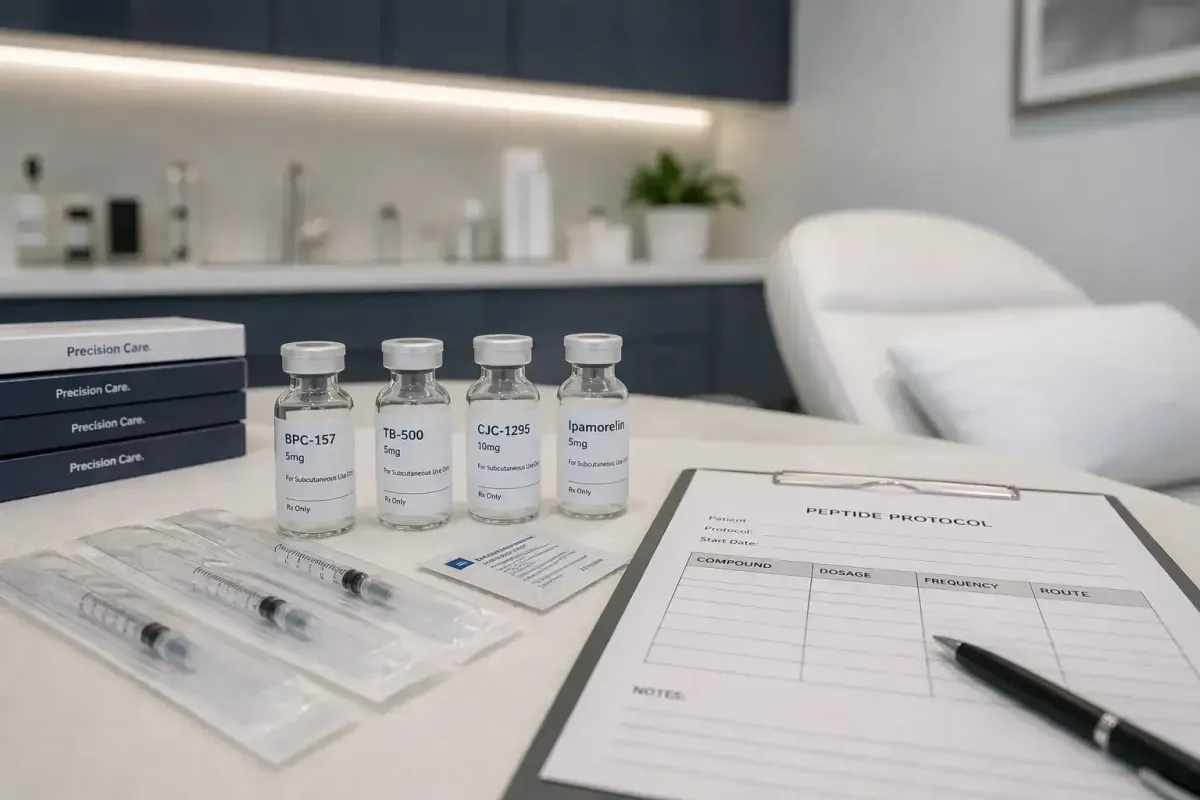
BPC-157 — Body Protection Compound 157 — is a synthetic peptide with extensively documented preclinical evidence for tissue repair, gut integrity support, inflammatory regulation, and musculoskeletal recovery. It was placed on the FDA's Category 2 restricted list in 2023 and is expected to have legal compounding access restored through Q2 and Q3 2026 as part of the announced reclassification process.
From a business perspective, BPC-157 attracts one of the most commercially valuable patient profiles in the peptide clinic space: the active adult managing a persistent tissue injury, chronic joint issue, or gut health problem that conventional medicine has not adequately resolved. This patient is motivated, outcome-oriented, and willing to invest in a clinical relationship that actually moves the needle. Protocol cycles run four to eight weeks and are frequently repeated, creating natural recurring engagement.
Sermorelin: The Growth Hormone Category's Strongest Revenue Generator
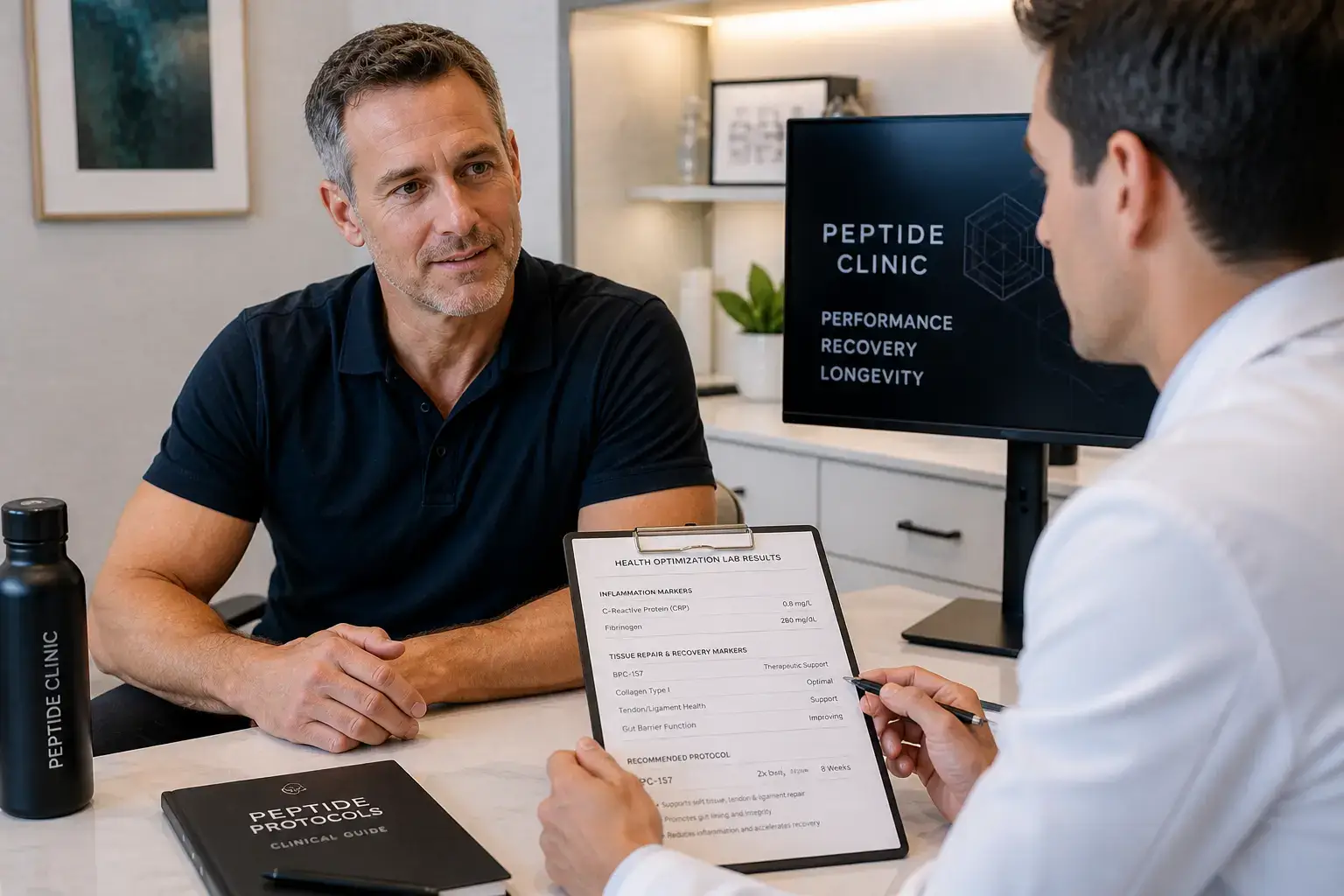
Searches for Sermorelin increased 233 percent year-over-year as of August 2025. Sermorelin works by stimulating the pituitary gland to produce and release growth hormone naturally, producing the hormonal optimization effects — improved body composition, enhanced sleep quality, accelerated recovery, increased energy — with a safety profile that supports long-term clinical use.
From a business perspective, Sermorelin is one of the strongest recurring revenue generators in the peptide clinic category. Protocols typically run six months to a year for initial therapeutic effect, and many patients continue on maintenance protocols for years. Monitoring through IGF-1 panels creates quarterly lab revenue alongside monthly protocol revenue. Sermorelin patients are among the highest-referring demographics in the longevity clinic space.
Ipamorelin and CJC-1295: The Stack That Deepens Revenue
Ipamorelin is frequently combined with CJC-1295 to create a more comprehensive growth hormone optimization protocol with stronger IGF-1 response than either compound alone. For a peptide clinic, offering the Ipamorelin/CJC-1295 combination as a premium protocol tier above standalone Sermorelin creates a natural progression that deepens the clinical relationship and increases monthly revenue per patient without requiring new patient acquisition. Both compounds are among those expected to be reinstated to Category 1 through the 2026 reclassification process.
Thymosin Alpha-1: The Immune and Longevity Compound
Thymosin Alpha-1 has the most robust clinical track record among immune-focused longevity peptides — holding regulatory approval in multiple countries for hepatitis and cancer adjunct therapy. In a clinic context, Thymosin Alpha-1 serves patients seeking immune resilience and longevity support, broadening the clinic's addressable patient demographic beyond performance and recovery.
Building the Protocol Stack for Revenue and Retention
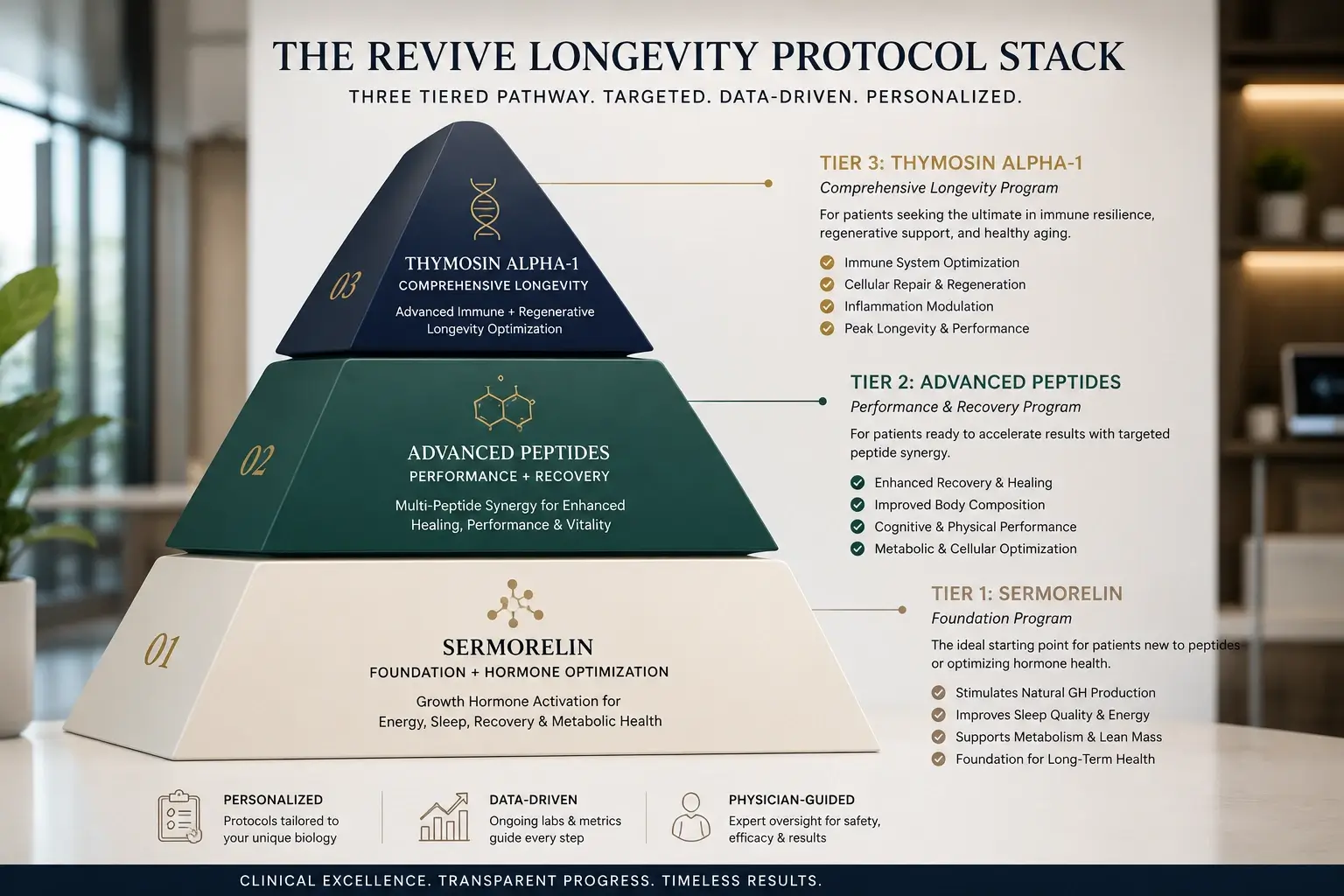
•Entry-level: Sermorelin or BPC-157 as a single-compound cycle. Accessible entry point. Designed to produce measurable results that open the conversation for deeper enrollment.
•Intermediate: Sermorelin plus BPC-157, or Ipamorelin/CJC-1295 combination. Higher price point, broader clinical scope. Targets patients who have completed an entry protocol and want to continue or escalate.
•Comprehensive: Full growth hormone secretagogue stack with Thymosin Alpha-1, quarterly biomarker panel, and hormone optimization assessment. Premium price point for the longevity-focused patient seeking a complete biological optimization program.
Each tier is the natural next step from the one before it — a progression within a single patient relationship rather than a separate product line. This is the protocol architecture that drives retention, referrals, and the compounding revenue growth that makes a peptide therapy clinic financially durable.
Selecting the Right Protocol Stack for Your Market — Why Starting Focused Beats Starting Broad
The peptide therapy clinic owner who tries to launch with ten compounds in the formulary on opening day is making the same mistake as the restaurant that opens with a hundred-item menu: the operational complexity is too high, the clinical mastery is spread too thin, and the patient experience suffers because no single protocol has been refined to the standard that produces the results that drive retention and referrals. The peptide clinic that launches with three to four compounds and delivers them excellently builds the reputation and the patient base that makes expanding the formulary commercially safe within twelve months.
The selection of the initial protocol stack should be driven by three criteria: patient demand in the specific market, operational simplicity for the clinical team in its first weeks of operation, and clinical coherence — the compounds should be ones that the medical director is comfortable prescribing, that the nursing team can administer confidently, and that produce the kind of measurable results that motivate patients to renew and refer. Applying these three criteria in most U.S. markets produces a starting stack centered on Sermorelin, Ipamorelin, and BPC-157 — with Thymosin Alpha-1 as a natural fourth compound for markets with a patient demographic oriented toward immune and longevity optimization.
Sermorelin earns its position as the anchor compound because it has the highest search demand in the growth hormone secretagogue category, the most established clinical familiarity among the patient demographic most likely to seek peptide therapy, and a monitoring framework — IGF-1 lab panels — that is well-understood and creates the recurring clinical touchpoint that drives retention. Ipamorelin works best as a companion to Sermorelin rather than a standalone, because the CJC-1295/Ipamorelin combination produces stronger IGF-1 response than Sermorelin alone and gives the clinic a natural protocol upgrade path for patients who complete an initial Sermorelin cycle and want to optimize further.
BPC-157 occupies a different patient segment entirely — the active adult with a tissue injury, a gut health issue, or chronic inflammation that has not responded to conventional approaches. This patient is not the same as the growth hormone optimization patient, and the marketing that attracts them is different. But the clinical infrastructure for offering BPC-157 in a peptide therapy clinic that is already set up for injectable protocols is minimal — the compound is injectable via the same administration pathway, the medical director oversight framework is identical, and the compounding pharmacy sourcing uses the same 503A relationship the clinic has already established. Adding BPC-157 to the initial formulary costs almost nothing in additional operational complexity and opens the clinic to a patient segment that growth hormone secretagogues alone do not capture.
The expansion logic from this initial stack to a broader formulary should be driven by patient demand data from the first six months of operation, not by the desire to offer everything that exists in the peptide category. If the clinic's first cohort of patients includes a significant number asking about Thymosin Alpha-1 or PT-141, those compounds earn their place in the formulary based on confirmed patient interest. If the data shows that 80 percent of patients are entering on Sermorelin and BPC-157 and staying there, the expansion priority is building deeper protocol management and monitoring quality around those two compounds rather than adding new ones prematurely.
The medical director is the clinical arbiter of formulary decisions. Their comfort, expertise, and genuine clinical judgment about what protocols are appropriate for the patient population the clinic serves should drive every formulary expansion. A clinic whose medical director is enthusiastic about the protocols being offered — because they reflect genuine clinical evidence and patient benefit — delivers better care and retains patients more effectively than one where the formulary was driven by what sounded commercially appealing rather than what the clinical team can deliver with excellence.
Frequently Asked Questions
Is BPC-157 available to prescribe at a clinic in 2026?
As of April 2026, the announced reclassification of BPC-157 from Category 2 back to Category 1 has not yet been formalized through Federal Register publication. The compound is expected to be available for 503A compounding once formal rulemaking completes — expected through Q2 and Q3 2026. Clinics currently building their compliance infrastructure are positioning to offer BPC-157 as soon as formal access restores.
What is the difference between Sermorelin and Ipamorelin?
Sermorelin is a synthetic form of growth hormone releasing hormone that directly stimulates the pituitary gland. Ipamorelin is a growth hormone secretagogue that stimulates GH release through a different receptor pathway, with fewer side effects and a more selective mechanism. In clinical practice, Ipamorelin is frequently combined with CJC-1295 to create a synergistic protocol with stronger IGF-1 response than either compound alone.
Which peptide generates the strongest patient retention?
Growth hormone secretagogue protocols — Sermorelin and the Ipamorelin/CJC-1295 combination — generate the strongest long-term patient retention because the results accumulate over months of consistent use and are measurable through IGF-1 monitoring. Patients who see objective improvement in their IGF-1 levels, body composition, sleep quality, and recovery speed over six months do not discontinue. They continue, often upgrading to more comprehensive protocol tiers.
Written by Nova, Senior Content Strategist at Altos Consulting Group.